Hwange National Park: Zimbabwe’s great elephant landscape
Published on 09/11/2026 at 11:35 | Editorial responsibility: Rafael Müller, Editor-in-Chief AD HOC NEWS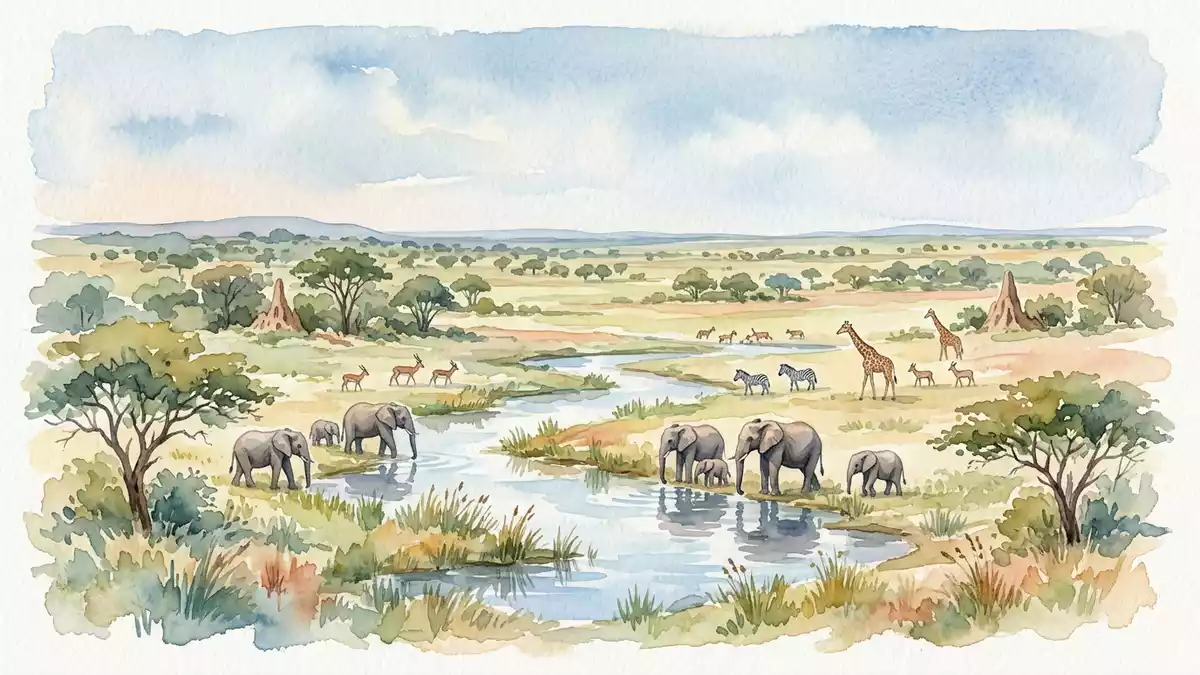
Hwange National Park in western Zimbabwe is a vast protected landscape where artificial and natural waterholes shape almost every aspect of what visitors see. Stretching across Kalahari sandveld and teak woodland near the town of Hwange, it is Zimbabwe’s largest national park and has been a formal reserve since the early twentieth century.
Waterholes in a semi-arid wilderness
Hwange National Park lies in the north-west of Zimbabwe between Bulawayo and Victoria Falls, close to the frontier with Botswana and within Matabeleland North Province.Matabeleland North location The park covers approximately 14,651 km² (5,657 sq mi), an area similar in size to Northern Ireland and large enough to include varied habitats from open savanna to dense woodland.14,651 square kilometres
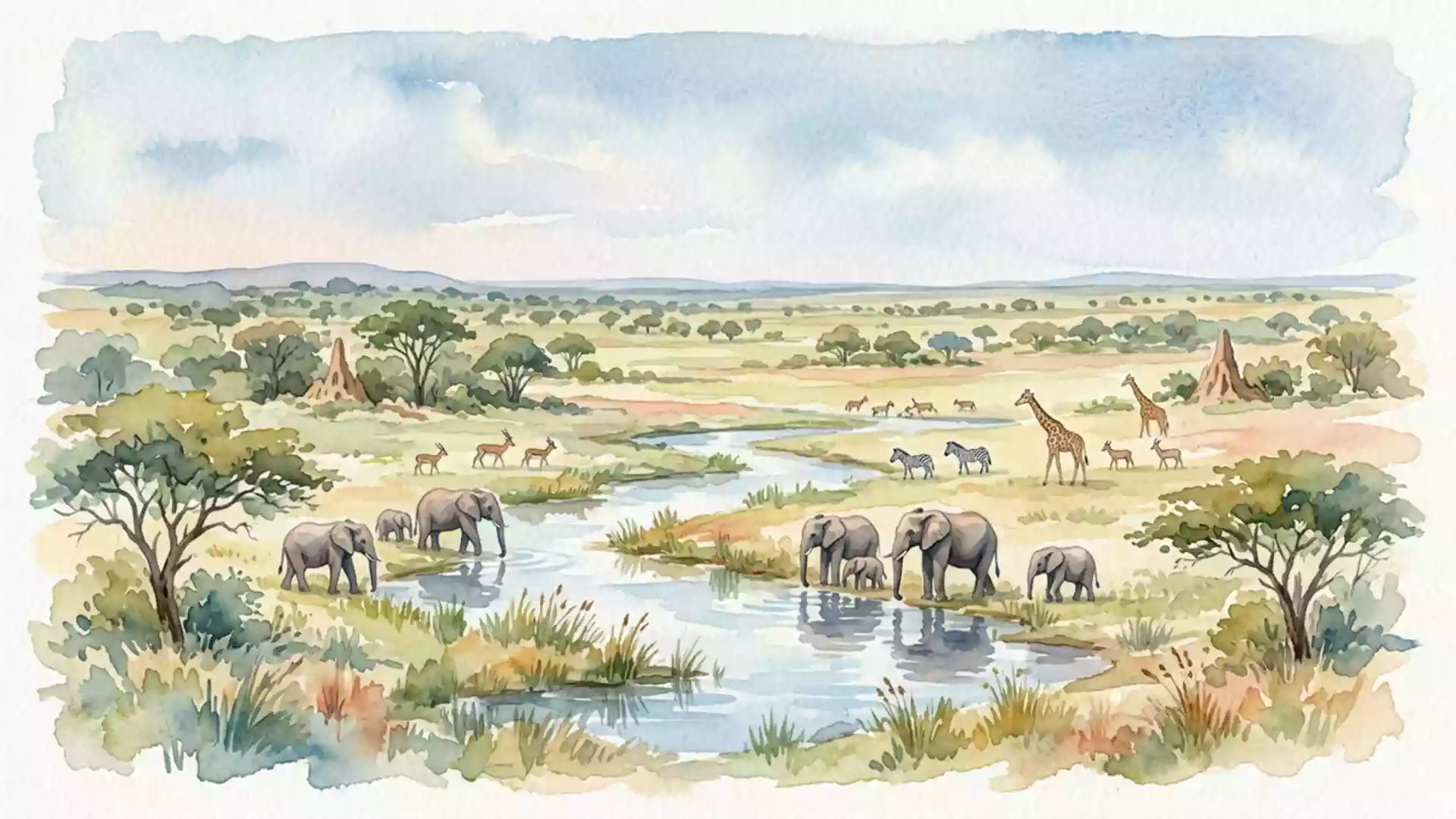
Much of Hwange sits on ancient Kalahari sands crossed by fossil riverbeds, so surface water is strongly seasonal.fossil riverbeds on Kalahari sand Over decades, managers have installed numerous pumped pans and reservoirs, creating a network of waterpoints that draw wildlife from the surrounding plains and woodlands. Around many of these pans, hardened mud, bare earth and low scrub mark the transition from dry ground to the more vegetated bush beyond.
From game reserve to national park
The area now known as Hwange National Park was proclaimed as Wankie Game Reserve in 1928 and later redesignated as a national park in 1961.1928 game reserve, 1961 park The park is named after a local Nhanzwa chief, reflecting long-standing human connections to this corner of western Zimbabwe.named after a Nhanzwa chief In the decades since its designation, Hwange has become a cornerstone of conservation in the region and forms part of the Kavango-Zambezi Transfrontier Conservation Area linking protected areas in Zimbabwe, Botswana, Zambia, Namibia and Angola.Kavango-Zambezi Transfrontier Conservation Area
The park’s terrain is mostly flat or gently undulating, with wide tracts of savanna grassland, patches of mopane woodland and stands of hardwoods such as Zimbabwean teak and mukwa.hardwood forests of mukwa and teak Within this landscape, three principal administrative and visitor hubs anchor access: Main Camp in the east, Sinamatella on higher ground to the north and Robins Camp towards the western side.Main Camp, Sinamatella and Robins Roads and tracks fan out from these centres to reach different waterholes, viewpoints and habitats.
Elephants, predators and birdlife at the pans
Hwange National Park is widely recognised for its very large elephant population, with tens of thousands of elephants using the park and its wider ecosystem.tens of thousands of elephants Herds gather in great numbers at waterholes, especially in the dry season when natural water is scarce away from the pans. At several well-known sites near Main Camp, such as Nyamandhlovu Pan and Dom Pan, elephants share the water with zebra, giraffe and other grazers, while lions and spotted hyaenas patrol the fringes.
The park supports all members of the Big Five except black rhinoceros in most accounts, including lion, leopard, African elephant, Cape buffalo and occasionally the rare black rhino, alongside other species such as giraffe, kudu and wildebeest.Big Five and endangered species African wild dogs, cheetahs, roan antelope and sable antelope are among the rarer animals recorded in Hwange, often ranging over large territories that include both mopane woodland and open grassland. Birdlife is equally varied, with hundreds of recorded species from raptors circling above the pans to weavers, hornbills and kingfishers around bushes and trees.
Visiting Hwange National Park: what travellers from Western Europe should know
- Hwange National Park lies in the north-west corner of Zimbabwe between Bulawayo and Victoria Falls, with the town of Hwange and the Hwange colliery area providing regional reference points.
- Within the park itself, vehicle access uses a network of dirt and gravel roads, and some tracks can be sandy or corrugated, particularly away from the main approaches to camps and waterholes.
- The park’s elevation and semi-arid climate mean daytime conditions can be hot during the dry season, while winter nights may be noticeably cooler than the afternoons.
- English is an official language of Zimbabwe and the national currency is the Zimbabwean dollar, although other currencies may be in circulation under national regulations.
- Entry requirements depend on your nationality; UK travellers can check the FCDO travel advice at gov.uk/foreign-travel-advice, Irish travellers the Department of Foreign Affairs at ireland.ie.
Searching for Hwange National Park on social platforms
These links open searches for Hwange National Park on each platform.
Frequently asked questions about Hwange National Park
Where is Hwange National Park in relation to major towns?
Hwange National Park lies between Bulawayo and Victoria Falls in north-western Zimbabwe, with the town of Hwange and its colliery area nearby.
What can visitors expect when exploring Hwange?
Visitors encounter extensive savanna, mopane and teak woodland, a network of waterholes, and wildlife ranging from elephants and lions to antelope and diverse bird species.
What makes Hwange National Park distinctive among African parks?
Its very large protected area on Kalahari sandveld, extensive pumped waterhole system and concentration of elephants and predators give Hwange a particular character within southern Africa.