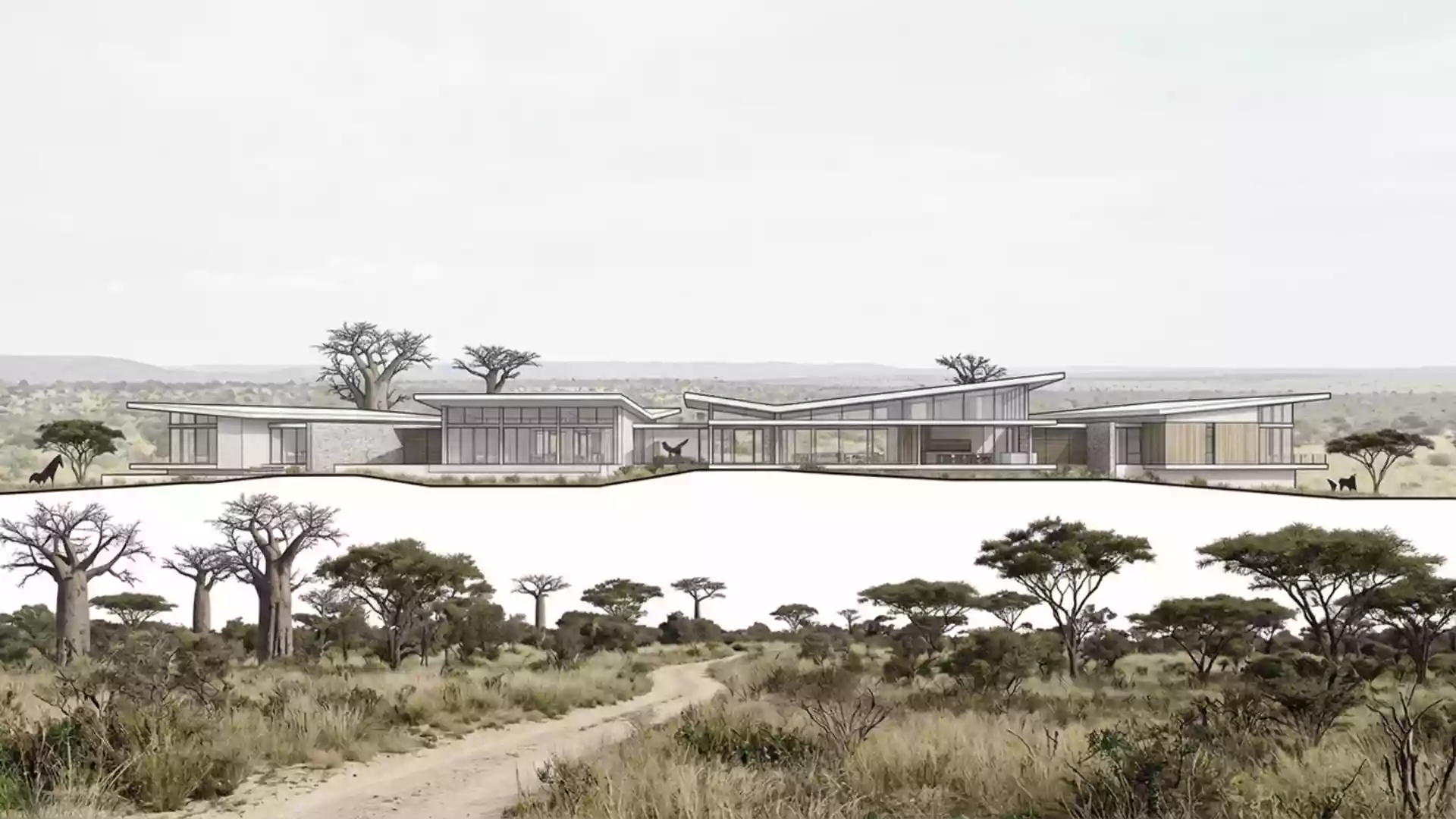
Hwange National Park: elephants, savanna and sky-wide horizons
Published on 08/12/2026 at 14:19 | Editorial responsibility: Rafael Müller, Editor-in-Chief AD HOC NEWS
Hwange National Park in western Zimbabwe spreads across a vast swathe of Kalahari sand and woodland, a landscape where elephant herds and open horizons dominate the scene. Established as a protected area in 1928, it remains the country’s largest national park and one of southern Africa’s most expansive wildlife reserves.
A giant of the Zimbabwean savanna
Hwange National Park covers around 14,650 km² (about 5,650 sq mi), making it the largest national park in Zimbabwe and placing it among the continent’s sizeable conservation areas.covers approximately 5,657 square miles The park lies in the north-west of the country between Bulawayo and Victoria Falls, with its western boundary running along the frontier with Botswana.located in western Zimbabwe between the cities of Bulawayo and Victoria Falls Much of the terrain is gently undulating and relatively flat, with an altitude generally close to 1,000 m (3,280 ft) above sea level.elevation 950 to 1100
The underlying geology is dominated by deep Kalahari sands that support extensive savanna, grassland and dry woodland. Zimbabwean teak and other hardwood trees form pockets of denser forest, while open vleis and pans punctuate the plains.contains fine hardwood forests of mukwa and Zimbabwean teak During the dry months the contrast between pale grasses, dusty tracks and dark tree trunks gives the park a distinctive palette, particularly in the long views across the interior.
From royal hunting ground to national park
Before it was gazetted for wildlife, the area that became Hwange National Park formed part of the hunting grounds associated with the Ndebele king Mzilikazi in the nineteenth century.royal hunting preserve for the Matabele king, Mzilikazi In 1928 the colonial administration set aside a large block of land as Wankie Game Reserve, marking the start of formal conservation in this corner of Zimbabwe.founded in 1928 The reserve was later expanded and in 1930 it was proclaimed a national park, paving the way for Hwange’s present role as a major wildlife sanctuary.established in 1928 as a game reserve, and as a national park in 1930
The park’s earlier name, Wankie National Park or Wankie Game Reserve, appears in older accounts and reflects the spelling conventions of the time.vormals Wankie National Park Over the decades Hwange has grown into a core part of a broader transboundary conservation landscape that links protected areas in Zimbabwe with those across the border in Botswana and further north towards the Zambezi basin.forms part of a broader transboundary conservation landscape This wider setting is part of its appeal, giving a sense that the savanna extends far beyond the park’s official boundaries.
Elephants, predators and bird-rich pans
Hwange National Park is renowned for its large elephant population and for a broad spectrum of other mammals, including buffalo, giraffe, zebra and various antelope species.one of Africa’s largest elephant sanctuaries Lion and leopard are present, and the park supports African wild dogs alongside cheetah and spotted hyaena.largest population of elephants in Zimbabwe and Africa’s largest population of the endangered wild dog The diversity of large mammals is striking, with more than 100 species recorded inside the park.has 100 mammal species
Birdlife is equally rich, with well over 400 species documented, from raptors circling above the plains to waterbirds around the pans and seasonal pools.over 400 species of birds The park is recognised as an Important Bird Area, and sightings range from broad-winged eagles to smaller woodland and grassland specialists.designated an Important Bird Area In the dry season, artificial and natural pans become focal points where elephants, antelope, predators and birds gather around the remaining water, giving Hwange many of its classic safari scenes.
Visiting Hwange National Park: what travellers from Western Europe should know
- Hwange National Park lies in western Zimbabwe between Bulawayo and Victoria Falls, with the park forming part of Hwange District and bordering Botswana on its western edge.
- The landscape consists largely of gently rolling Kalahari sand plains, with sandy tracks, patches of woodland and open pans that can involve stretches of driving on unpaved routes.
- The park is in Zimbabwe, where the official language is English and the currency is the Zimbabwean dollar, alongside the use of some foreign currencies in parts of the economy.
- Entry requirements depend on your nationality; UK travellers can check the FCDO travel advice at gov.uk/foreign-travel-advice, Irish travellers the Department of Foreign Affairs at ireland.ie.
Searching for Hwange National Park on social platforms
These links open searches for Hwange National Park on each platform.
Frequently asked questions about Hwange National Park
Where is Hwange National Park located?
Hwange National Park lies in western Zimbabwe between Bulawayo and Victoria Falls, in Matabeleland North Province close to the border with Botswana.
What can visitors expect to see in Hwange?
Visitors encounter open savanna, woodland and pans that attract elephants, buffalo, big cats and a wide range of antelope, together with hundreds of bird species.
What makes Hwange National Park distinctive among African parks?
Hwange’s combination of large elephant herds, extensive dry woodland on Kalahari sands and its size as Zimbabwe’s largest national park gives it a particular character.