
Hwange National Park and its Kalahari waterholes
Published on 09/22/2026 at 10:08 | Editorial responsibility: Rafael Müller, Editor-in-Chief AD HOC NEWS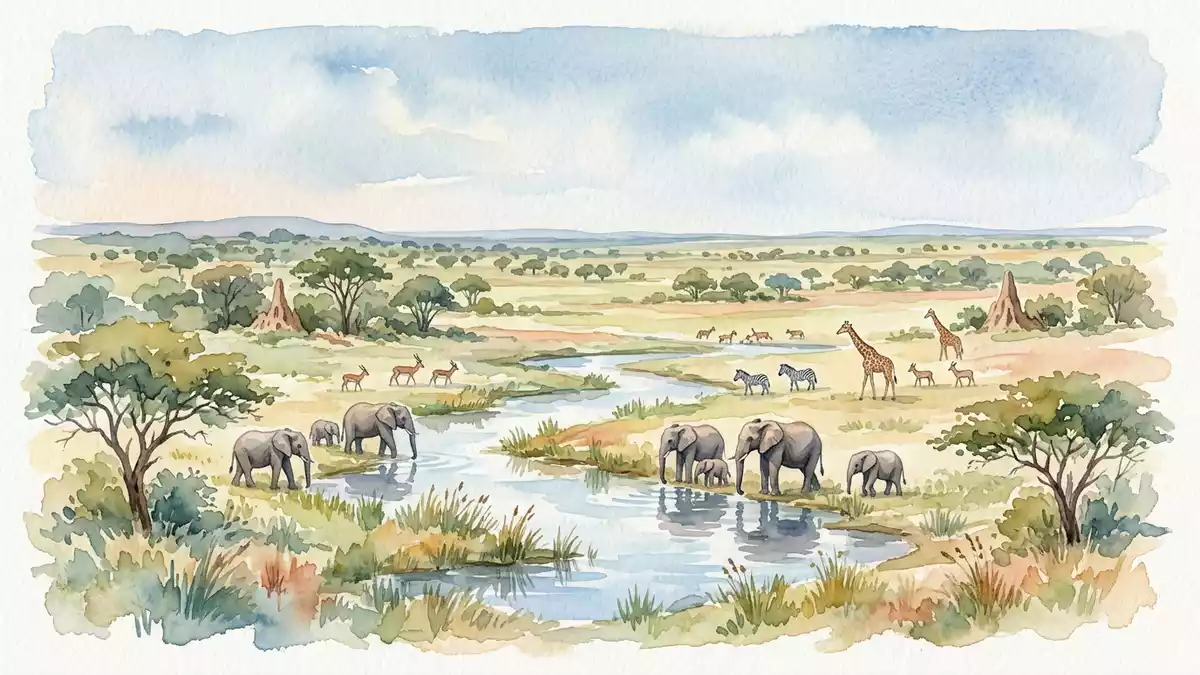
Hwange National Park is a vast protected landscape in north-western Zimbabwe, near the town of Hwange and the Botswana frontier. Its broad plains, teak woodland and shallow pans form a setting where elephants are central to the character of the park.
Hwange’s Kalahari sands and open plains
Hwange covers 14,651 square kilometres (5,657 square miles), making it Zimbabwe’s largest national park. The terrain is largely flat, with gentle undulations across the Kalahari Basin and long stretches of pale sand.
The park has no perennial surface rivers across much of its area. Fossil drainage lines, shallow pans and seasonal wetlands mark older water systems, while rainfall gathers in depressions after the wet season. The western and central areas contain aeolian Kalahari sand deposited in dunes during the Pleistocene.
Vegetation changes with the soils. Zambezi teak woodland grows in deeper sand, while mopane woodland occupies heavier clay and mudstone areas. Open grasslands, scrub, acacia woodland and vleis create a varied mosaic across the protected area.
Elephants, wild dogs and woodland wildlife
Hwange supports about 100 mammal species and nearly 400 bird species. Elephant, lion, leopard and buffalo are recorded among its large mammals, alongside giraffe, zebra, kudu, wildebeest and several antelope species.
Rare antelope include roan and sable. African wild dog is another important species in the park, and Hwange contains a significant population of this endangered carnivore.
Birdlife changes with the landscape. Woodland holds species associated with teak and mopane, while pans and marshes attract waterbirds when seasonal water is present. Grassland provides habitat for ground-feeding birds and grazing animals.
The park’s elephant population is a defining feature of Hwange. Elephants occur across woodland, grassland and waterhole environments, where their presence is visible in broken branches, broad tracks and tree-lined clearings.
From Wankie Game Reserve to Hwange National Park
The protected area was established as a game reserve in 1928. It became a national park in 1930, and its earlier name was Wankie Game Reserve.
The park takes its name from Hwange, a local Nhanzwa chief. Its history also connects with Mzilikazi, the Ndebele king whose territory extended across this part of southern Africa during the nineteenth century.
Conservation in Hwange developed within a landscape shaped by seasonal rainfall, sandy soils and limited natural surface water. Artificial water points form part of the park’s long conservation history, particularly during dry periods.
Hwange also belongs to the wider Kavango-Zambezi Transfrontier Conservation Area. This regional conservation landscape links protected areas across Zimbabwe, Botswana, Zambia, Namibia and Angola.
Visiting Hwange National Park: what travellers from Western Europe should know
- Hwange National Park lies south-east of Victoria Falls. The A8 road links Victoria Falls, Hwange and Bulawayo, with access roads leading towards Main Camp, Sinamatella and Robins Camp.
- Victoria Falls International Airport is the main air gateway for journeys into north-western Zimbabwe. Charter aircraft can use airstrips associated with Hwange National Park.
- The park is a broad wilderness of sandy ground, grassland, woodland and seasonal pans. Safaris take place by vehicle, with wildlife spread across a large protected area.
- The official language is English, Shona and Ndebele, and the currency is the Zimbabwean dollar.
- Entry requirements depend on your nationality; UK travellers can check the FCDO travel advice at gov.uk/foreign-travel-advice, Irish travellers the Department of Foreign Affairs at ireland.ie.
Searching for Hwange National Park on social platforms
These links open searches for Hwange National Park on each platform.
Frequently asked questions about Hwange National Park
Where is Hwange National Park?
Hwange National Park is in north-western Zimbabwe, south-east of Victoria Falls and close to the Botswana frontier. The town of Hwange lies beside the wider protected landscape.
What can visitors expect in Hwange?
Hwange offers vehicle-based wildlife viewing across teak woodland, mopane scrub, grassland, pans and seasonal wetlands. Elephants, lions, leopards, buffalo, wild dogs and many antelope species occur in the park.
What makes Hwange distinctive?
Its character comes from the combination of Kalahari sands, fossil drainage lines, seasonal pans and extensive elephant habitat. The park also forms part of the Kavango-Zambezi Transfrontier Conservation Area.


