Houmt Souk and the harbour fort of Djerba
Published on 09/14/2026 at 20:48 | Editorial responsibility: Rafael Müller, Editor-in-Chief AD HOC NEWS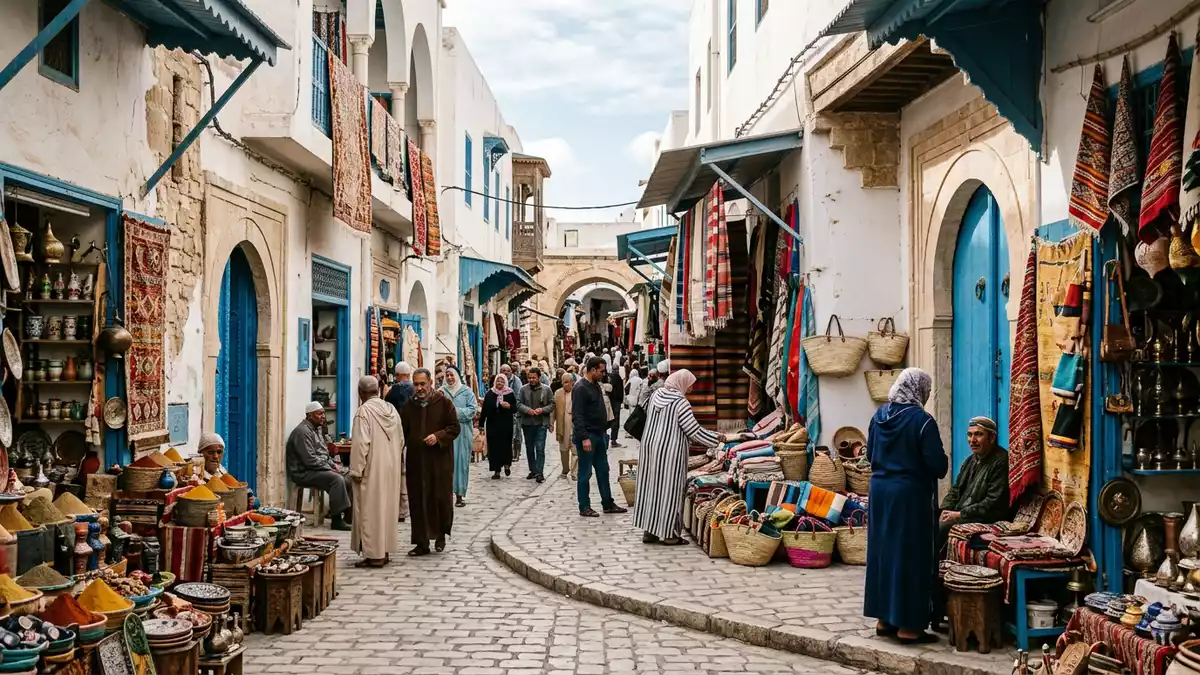
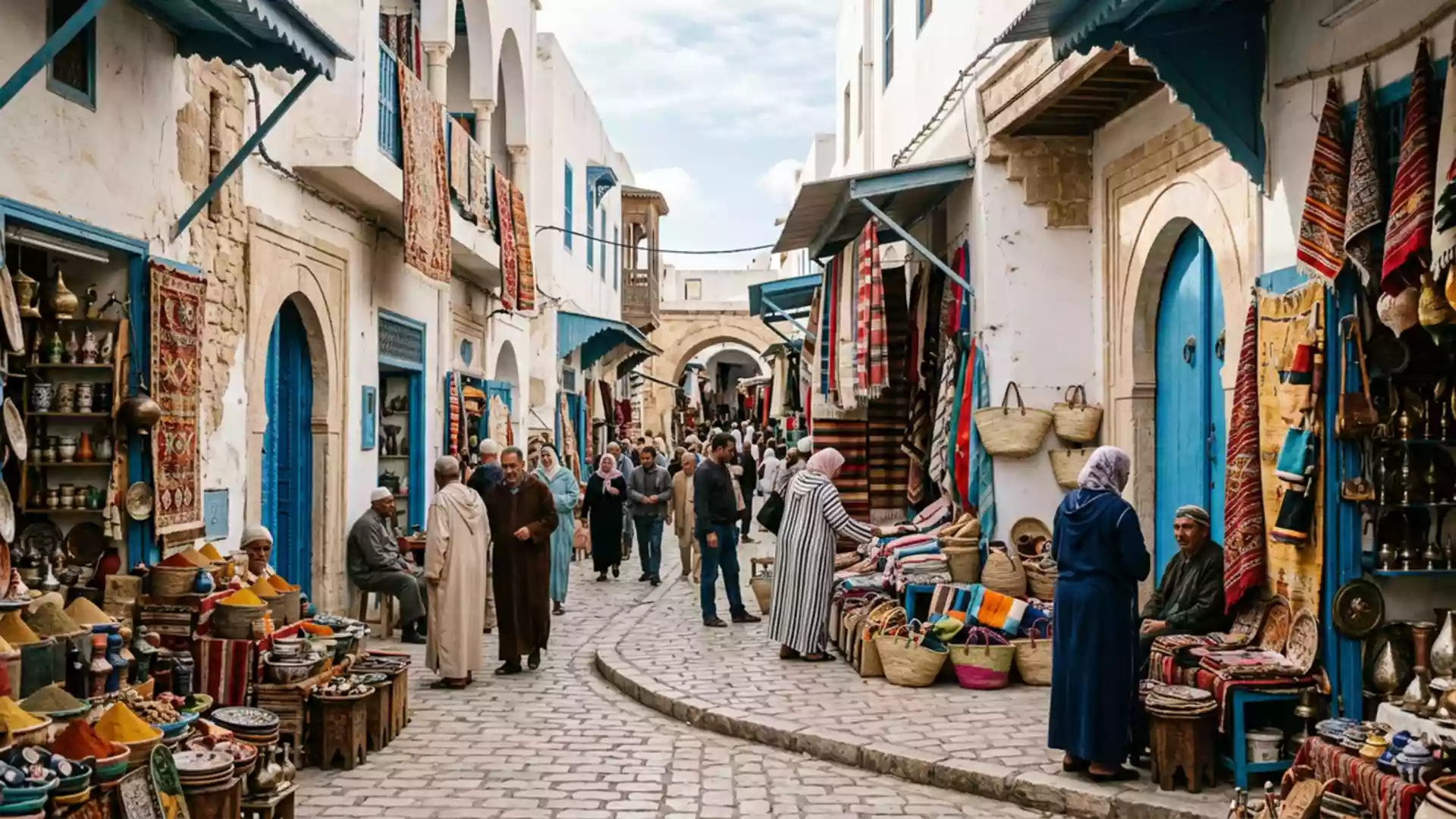
Houmt Souk sits on Djerba as the island’s main town, with a harbour edge, narrow streets and the dark mass of Borj El Kebir beside the water. Its name points to a market quarter, and the place still reads as a trading centre shaped by sea traffic and everyday commerce.
Houmt Souk’s harbour edge and market streets
The town’s fabric is compact and mixed, with whitewashed walls, passages, shops and small urban courtyards around the souk. The harbour lies close to the centre, and the waterfront gives the town a clear maritime edge rather than a purely inland market character. market quarter
Houmt Souk grew on ground associated with the ancient Roman city of Girba, and that older name survives in the island’s long memory. Roman city of Girba The town’s later life brought stronger links with the Ottoman period, commercial exchange and a dense urban core that still feels tied to movement between land and sea.
Borj El Kebir and the town’s older layers
Borj El Kebir, also called Borj El Ghazi Mustapha, is the fort that gives Houmt Souk one of its strongest visual anchors. The structure dates to the late fourteenth century, with later work in the sixteenth century, and it stands as a heavy masonry presence on the seafront. late fourteenth century
The fort is linked with Roger de Lauria, the Hafsid sultanate and Dragut in the island’s military history, while its later role as a museum gives it a different civic life. Houmt Souk also carries traces of broader island heritage, including the UNESCO-listed settlement pattern of Djerba, placed on the World Heritage List in 2023. Dragut and the Hafsids World Heritage List in 2023
Houmt Souk after the Roman city
The town’s deeper history is tied to Girba, the Roman settlement that gave Djerba its island name. That older layer adds a Roman horizon to a place that later took shape under Islamic and Ottoman rule, with a market town replacing a simpler harbour settlement in the historical record. gave the island its name
Houmt Souk therefore reads less like a single monument than a town of overlapping periods. The harbour, the fort and the souk sit close together, and the result is a compact urban centre where trade, defence and island life remain legible in the streetscape.
Visiting Houmt Souk: what travellers from Western Europe should know
- Houmt Souk lies on Djerba in Tunisia, and the town is reached through the island’s road network and ferry-linked access from the mainland.
- The central streets are narrow in places, with a harbour edge and a fort on the waterfront; the town is best read as a walkable historic core rather than a spread-out city.
- The official language is Arabic and the currency is the Tunisian dinar.
- Entry requirements depend on your nationality; UK travellers can check the FCDO travel advice at gov.uk/foreign-travel-advice, Irish travellers the Department of Foreign Affairs at ireland.ie.
Searching for Houmt Souk on social platforms
These links open searches for Houmt Souk on each platform.
Frequently asked questions about Houmt Souk
Where is Houmt Souk?
Houmt Souk is on Djerba, the island off Tunisia’s south-eastern coast. It is the island’s principal town and historic market centre.
What does a visit to Houmt Souk feel like?
The town combines a harbour-front fort, market streets and compact urban fabric. The experience is shaped by short distances between the souk, the waterfront and the older masonry landmark.
What makes Houmt Souk distinctive?
Its most distinctive feature is the way a market town, a seafront fort and the memory of Girba sit together in one compact place. The result is a town that reads as both commercial and historical.