
Hopewell Rocks and the sculpted tides of Hopewell Cape
Published on 09/14/2026 at 12:47 | Editorial responsibility: Rafael Müller, Editor-in-Chief AD HOC NEWS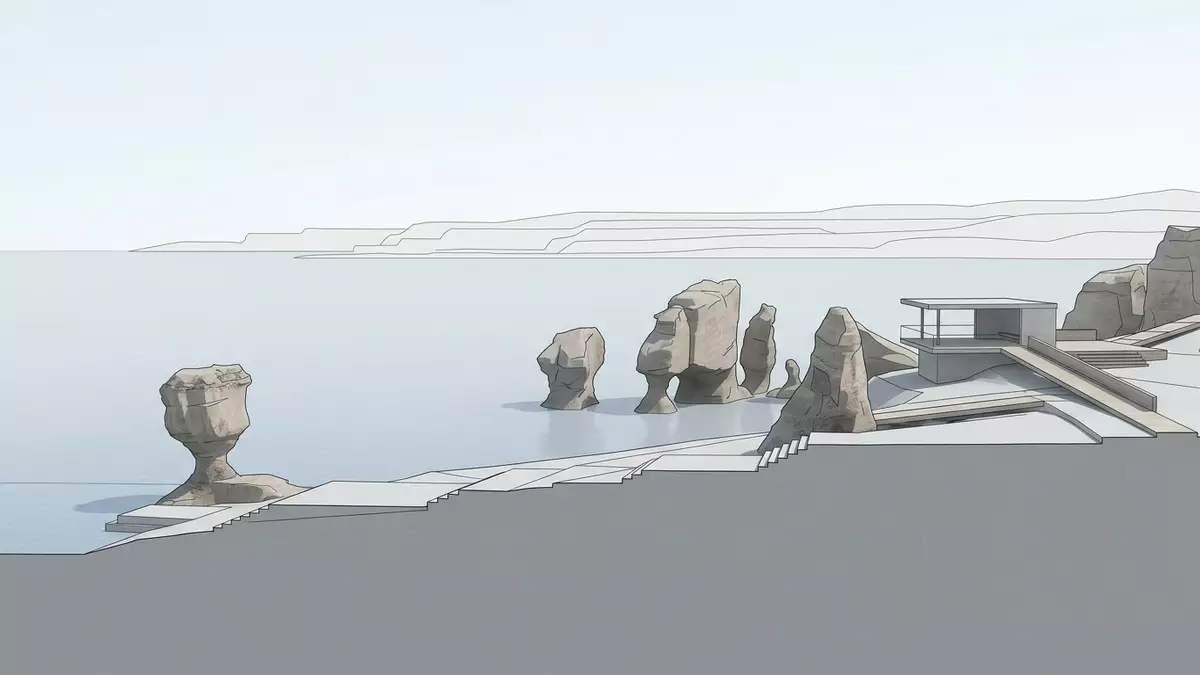
Along the shore at Hopewell Cape in New Brunswick, Hopewell Rocks presents a coastal landscape where sandstone pillars and narrow coves reveal the reach of the Bay of Fundy tides in exposed rock and sea stacks. The formations stand on the upper reaches of the bay and are part of a provincial park that has become a focal point for understanding this extreme tidal environment over generations.
Sandstone “flowerpots” shaped by Fundy’s tides
Hopewell Rocks consists of sandstone and conglomerate pillars carved from the Hopewell Cape Formation, a Lower Carboniferous unit that crops out along this stretch of the Bay of Fundy shoreline.Lower Carboniferous Hopewell Cape Formation The rock has been weathered and eroded by tides and waves into free-standing columns, arches and narrow passages that line a stretch of coast extending for several kilometres.stretch of shoreline
The erosion has produced what are widely known as “flowerpot” rocks, sea stacks topped by soil and vegetation so that each pillar carries trees and shrubs above bare sandstone walls.scenic flowerpot rocks At high tide these formations read as small islands separated by channels of water, while at low tide the sea retreats enough to expose the ocean floor around their bases and reveal the full height of the stacks.four-storey-high “flowerpots” The individual stacks stand in the order of tens of metres tall, giving the bay an intricate, vertical coastline.
A provincial park on the Bay of Fundy
The formations lie within Hopewell Rocks Provincial Park, a coastal park that protects this section of Shepody Bay on the Bay of Fundy and provides formal access to viewpoints, trails and the shore.Hopewell Rocks Provincial Park The park forms part of a wider sequence of Fundy coastal destinations that includes Fundy National Park and the Fundy Trail, linking different segments of the bay’s rugged shoreline.Fundy coastal tourism hubs
Within the park, constructed staircases connect clifftop viewing platforms to the beach, allowing visitors to move between elevated perspectives over the rocks and close views at their bases when conditions permit.beach staircase and viewing decks An interpretive centre near the entrance presents geological and tidal information, and walking trails lead through coastal forest areas to different vantage points along the bay.interpretive centre and walking trails Facilities are arranged as a day-use park, with longer-term camping provided by private sites in nearby communities rather than within the protected area itself.day-use destination
Experiencing the tides at Hopewell Cape
Hopewell Cape lies on Shepody Bay in southeastern New Brunswick, with Hopewell Rocks occupying a section of coast where the Bay of Fundy’s tidal range is among the largest on earth.Bay of Fundy shoreline The bay’s tides can rise and fall by many metres between high and low water, reshaping the visible coastline through each cycle and creating conditions in which sea stacks alternately resemble isolated islets and towering pillars on exposed seabed.tides that can rise and fall up to roughly 14 metres
At low tide, access to the ocean floor allows close inspection of the sandstone surfaces, revealing layers, joints and overhangs that record the combined work of tidal scour, frost and glacial modification.shaped by erosion and glaciation At high tide, some visitors choose to experience the rocks by kayak, paddling among the partially submerged stacks with forested tops rising above them.reserve a kayak tour This dual access from land and water, framed by tides rather than fixed water levels, gives the site a rhythm that underpins its character as a coastal landscape shaped by natural cycles rather than static shorelines.
Visiting Hopewell Rocks: what travellers from Western Europe should know
- Hopewell Rocks Provincial Park stands on Shepody Bay in southeastern New Brunswick, with the entrance on Discovery Road at Hopewell Cape, reached by road from MonctonHighway 114 in eastern New Brunswick.
- The terrain involves clifftop paths, constructed staircases with many steps and a shore of packed sand and rock, so movement between viewpoints and the beach includes steep sections on footbeach is not wheelchair accessible.
- The Bay of Fundy’s tidal range is substantial, exposing the ocean floor around the formations at low tide and surrounding the pillars with water at high tide, and conditions for access are tied closely to the tide tablestides rise and fall up to roughly 14 metres.
- Hopewell Cape is in Canada, where the official languages are English and French and the currency is the Canadian dollar.
- Entry requirements depend on your nationality; UK travellers can check the FCDO travel advice at gov.uk/foreign-travel-advice, Irish travellers the Department of Foreign Affairs at ireland.ie.
Searching for Hopewell Rocks on social platforms
These links open searches for Hopewell Rocks on each platform.
Frequently asked questions about Hopewell Rocks
Where are Hopewell Rocks?
Hopewell Rocks are on the shore of Shepody Bay at Hopewell Cape in southeastern New Brunswick, part of a provincial park on the Bay of Fundy.
What can visitors expect on a visit?
Visitors encounter sandstone flowerpot sea stacks, clifftop viewing platforms, staircases to the shore and trails through coastal forest framing different views of the tides and rocks.
What makes Hopewell Rocks distinctive?
The site is defined by its tall, vegetation-topped sandstone pillars and the way Fundy’s extreme tidal range alternately reveals and submerges the ocean floor around them.


