
Hofburg, Vienna’s layered imperial palace complex
Published on 09/16/2026 at 06:17 | Editorial responsibility: Rafael Müller, Editor-in-Chief AD HOC NEWS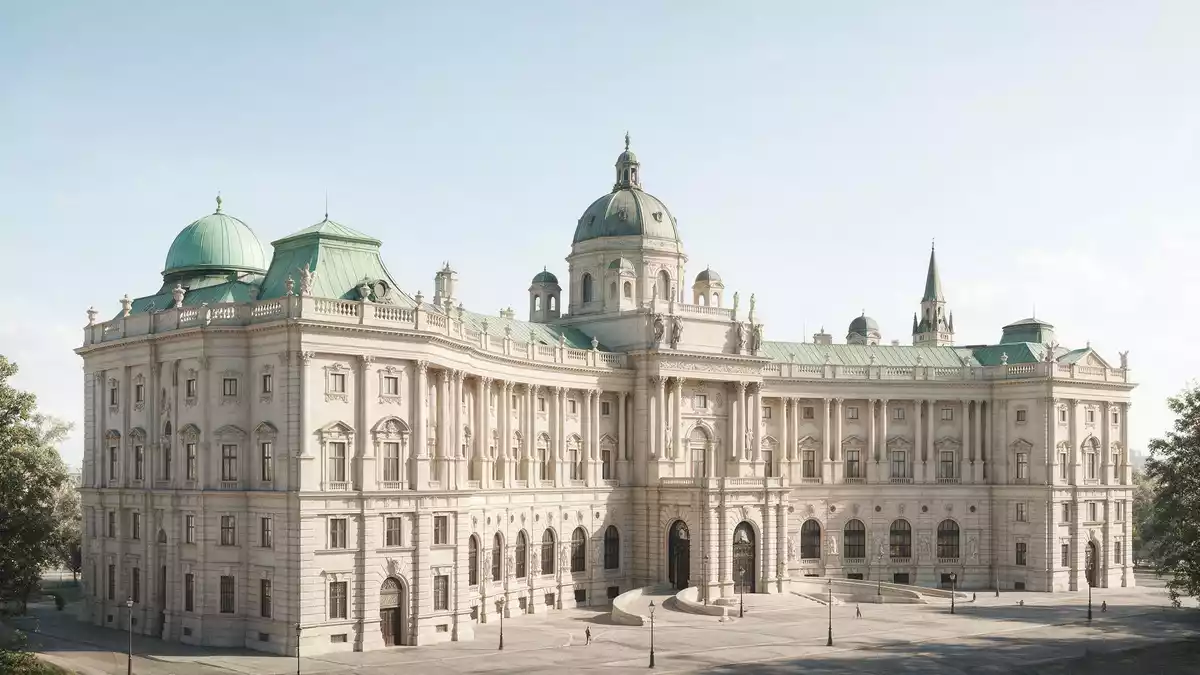
Hofburg in Wien is a palatial complex that grew from a medieval fortress into the main imperial residence of the Habsburg dynasty and the seat of Austria’s president.
From medieval castle to imperial residence
The story of Hofburg begins in the thirteenth century, when a fortified castle was established at the western edge of Vienna’s historic centre under the Babenberg rule.fortified castle Its earliest written record dates from 1279, during the reign of Rudolf I of Habsburg, reflecting a modest stronghold rather than a grand palace.earliest written record Around the same period, King Ottokar II of Bohemia was associated with a major phase of building, and the complex remained closely tied to the consolidation of Habsburg power in the region.Ottokar II of Bohemia
In the mid-sixteenth century Ferdinand I moved his residence to Vienna, turning the once defensive castle into a true court palace, a process that gradually transformed the “Burg” into the Hofburg over subsequent generations.Ferdinand I moved his residence For more than 600 years the complex served as the residence of Austrian sovereigns, and from 1452 it was the seat of emperors of the Holy Roman Empire, later housing emperors of Austria until the monarchy ended in 1918.seat of emperors
A city within the city: scale and layout
Hofburg today reads almost like a self-contained city district, extending between Michaelerplatz, Josefsplatz, Heldenplatz and Ballhausplatz in Vienna’s Innere Stadt.between Michaelerplatz and Heldenplatz The complex spreads over an area of around 24 hectares, with interconnected buildings enclosing courtyards, passages and halls that make orientation itself part of the experience.24 hectares
The palatial ensemble consists of numerous wings and courtyards, with thousands of rooms representing successive building campaigns from Gothic and Renaissance phases through Baroque and Neoclassical extensions.successive building campaigns Within this labyrinth, the Schweizerhof – or Swiss Courtyard – preserves the core of the medieval stronghold, while grand later additions such as the Neue Burg front Heldenplatz with monumental facades and broad stairways.Schweizerhof
Imperial heritage and modern uses
Architecturally, Hofburg is a catalogue of styles spanning several centuries, with elements ranging from late medieval masonry to Baroque, neo-Gothic and Historicist interventions that reflect changing tastes and political ambitions.catalogue of styles For much of its history it served as the imperial winter residence, balancing the summer functions of Schönbrunn Palace and anchoring ceremonial life in the heart of the city.imperial winter residence
After the Habsburg monarchy ended in 1918, ownership of the ensemble passed to the Republic of Austria, and Hofburg became a seat for state institutions and cultural bodies rather than a royal household.Republic of Austria Since 1946 it has been the official residence and workplace of the Federal President of Austria, sharing its rooms with the Austrian National Library, museums, chapels, event halls and offices that together house around several thousand people working in the complex.official residence and workplace
Visiting Hofburg: what travellers from Western Europe should know
- Hofburg stands within Vienna’s Innere Stadt, between Heldenplatz, Michaelerplatz and Josefsplatz, and is reached on foot or by tram and underground lines serving the historic centre.
- Moving through the complex involves walking across paved courtyards, climbing interior staircases and passing through historic passages that may include uneven stone steps.
- The official language is German and the currency is the euro.
Searching for Hofburg on social platforms
These links open searches for Hofburg on each platform.
Frequently asked questions about Hofburg
Where is Hofburg located within Wien?
Hofburg occupies a large area of the Innere Stadt, stretching between Heldenplatz, Michaelerplatz, Josefsplatz and Ballhausplatz near the Ringstrasse.
What can visitors expect when exploring Hofburg?
Visitors encounter interconnected courtyards, historic wings, grand halls, chapels and museums set within a dense ensemble of buildings spanning Gothic to Baroque and later styles.
What makes Hofburg distinctive among Vienna’s palaces?
Hofburg is distinctive as a layered complex that served for centuries as the Habsburg imperial residence and now houses Austria’s presidency alongside major cultural institutions.


