
Hofburg, Vienna’s layered imperial palace complex
Published on 09/15/2026 at 22:25 | Editorial responsibility: Rafael Müller, Editor-in-Chief AD HOC NEWS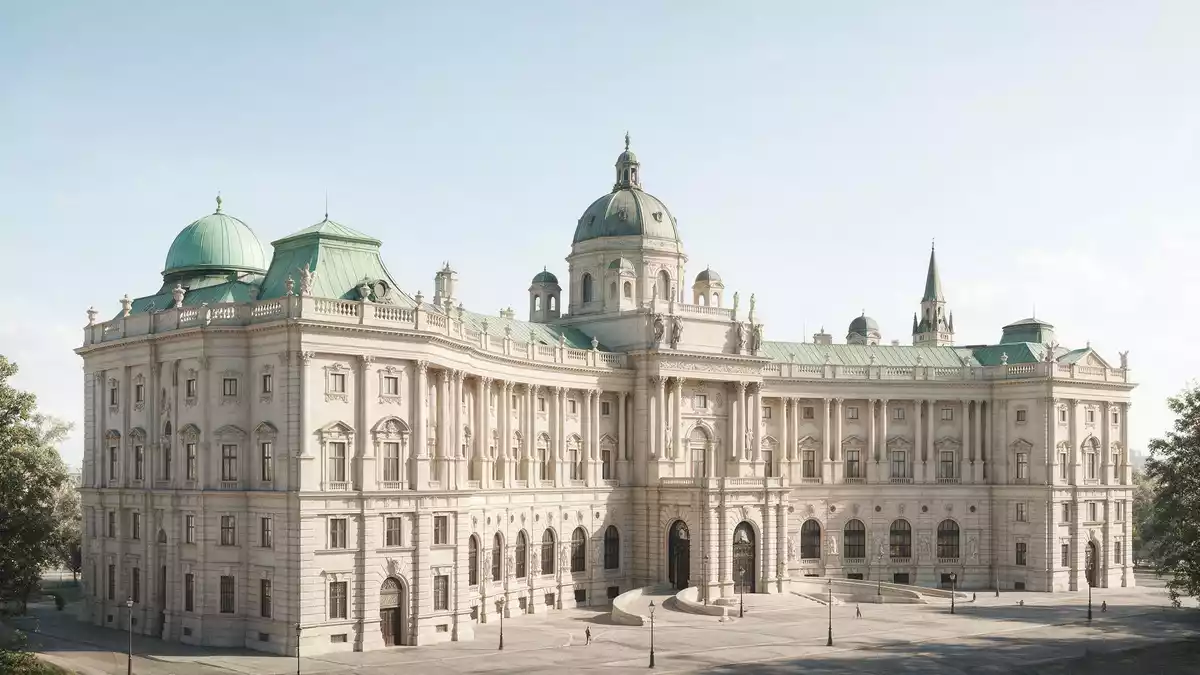
The Hofburg in Wien is a sprawling former imperial palace complex where the architecture itself reads as a timeline of Austrian history, from medieval fortifications to grand Baroque and neo-Baroque showpieces. For centuries it served as the principal residence and seat of power of the Habsburg dynasty, anchoring the political life of the monarchy in the centre of the city.
From medieval fortress to imperial residence
At its core, Hofburg began as a fortified medieval castle in the thirteenth century, rising within what is now Vienna’s historic inner district. Early rulers of the Austrian lands, including figures such as King Ottokar II of Bohemia and the Babenberg dynasty, were associated with these first fortifications, which laid the groundwork for later expansions into a permanent seat of government.first fortifications Over time the Habsburgs made the Hofburg their residence, and from the thirteenth century onwards they ruled their patrimonial lands, the Holy Roman Empire and the Austrian Empire from this address until the monarchy ended in 1918.
The palace complex developed in stages over several centuries, with rulers such as Emperor Ferdinand I and Leopold I associated with major building campaigns that transformed earlier defensive structures into residential and ceremonial wings. By the beginning of the twentieth century, Hofburg had grown into an extensive ensemble of buildings, squares and courtyards that reflected shifts in power and taste across successive reigns.built between the 13th and 21st centuries
An architecture of many periods and styles
Walking through Hofburg reveals a patchwork of architectural styles, with structures dating from the thirteenth century through the early twentieth century arranged around interlocking courtyards and passages. Medieval elements sit alongside Renaissance palaces, Baroque facades and later Historicist and neo-Baroque additions, each reflecting the aesthetic of its time.variety of architectural styles Among the oldest parts is the Schweizerhof, or Swiss Wing, associated with Duke Albert and marked by the Schweizertor, an elaborate sixteenth-century entrance that signals the transition from fortress to courtly residence.
Within the complex stand structures such as the fourteenth-century chapel, later palatial wings and the eighteenth-century Winter Riding School, which now houses performances of the Spanish Riding School. The accumulation of wings over time produced a palace environment with numerous rooms and interconnected corridors, shaping an enclosed urban world at the heart of Vienna’s Innere Stadt.Vienna's Imperial Palace
Seat of power and present-day functions
Hofburg long served as the winter residence and working palace of the Habsburg emperors, complementing Schönbrunn Palace in its role as the summer residence. For more than six centuries it functioned as the main seat of the dynasty, housing imperial apartments, administrative offices and ceremonial halls that connected the court to wider European politics. In 1918 the last emperor of Austria, Charles I, left office as the monarchy ended and the country became a republic, closing one chapter in the building’s political life.
Since 1946 Hofburg has been the official residence and workplace of the president of Austria, continuing its role as a seat of national government in a different constitutional era. Parts of the complex host museums, cultural institutions, the Austrian National Library and spaces for events, while glass-fronted additions reflect twenty-first-century interventions alongside historic masonry.glass architecture and modern conference technology The result is a palace that combines ceremonial state functions, cultural collections and congress facilities in one layered ensemble.
Visiting Hofburg: what travellers from Western Europe should know
- Hofburg stands in Vienna’s Innere Stadt, immediately west of the Graben and Stephansdom, and is reached on foot from central tram and underground stops serving the old town.
- The outdoor areas of Hofburg include paved courtyards, formal squares and broad approaches, with passages that involve walking on stone surfaces and crossing large open spaces between wings.
- Within individual wings, staircases, long corridors and historic interiors form part of the experience, and some routes involve climbing steps or moving through enclosed halls before emerging into courtyards.
- Nearby, Heldenplatz and the Ringstrasse frame the palace on its western side, while streets of the inner district connect Hofburg to other major sights and cultural institutions.
- The official language is German and the currency is the euro.
Searching for Hofburg on social platforms
These links open searches for Hofburg on each platform.
Frequently asked questions about Hofburg
Where is Hofburg located in Wien?
Hofburg stands in Vienna’s Innere Stadt, a central district bordered by the Ringstrasse, with Heldenplatz forming part of its western frontage.
What can visitors expect when exploring Hofburg?
Visitors encounter a sequence of historic courtyards, squares and palace wings, with interiors that include chapels, halls and former imperial spaces arranged around stone-paved approaches.
What makes Hofburg distinctive among European palaces?
Hofburg is distinctive for its long role as the Habsburgs’ principal residence and seat of government, combined with an accumulation of architectural styles spanning from medieval to neo-Baroque structures.


