
Hofburg, Vienna’s layered imperial palace complex
Published on 09/07/2026 at 21:12 | Editorial responsibility: Rafael Müller, Editor-in-Chief AD HOC NEWS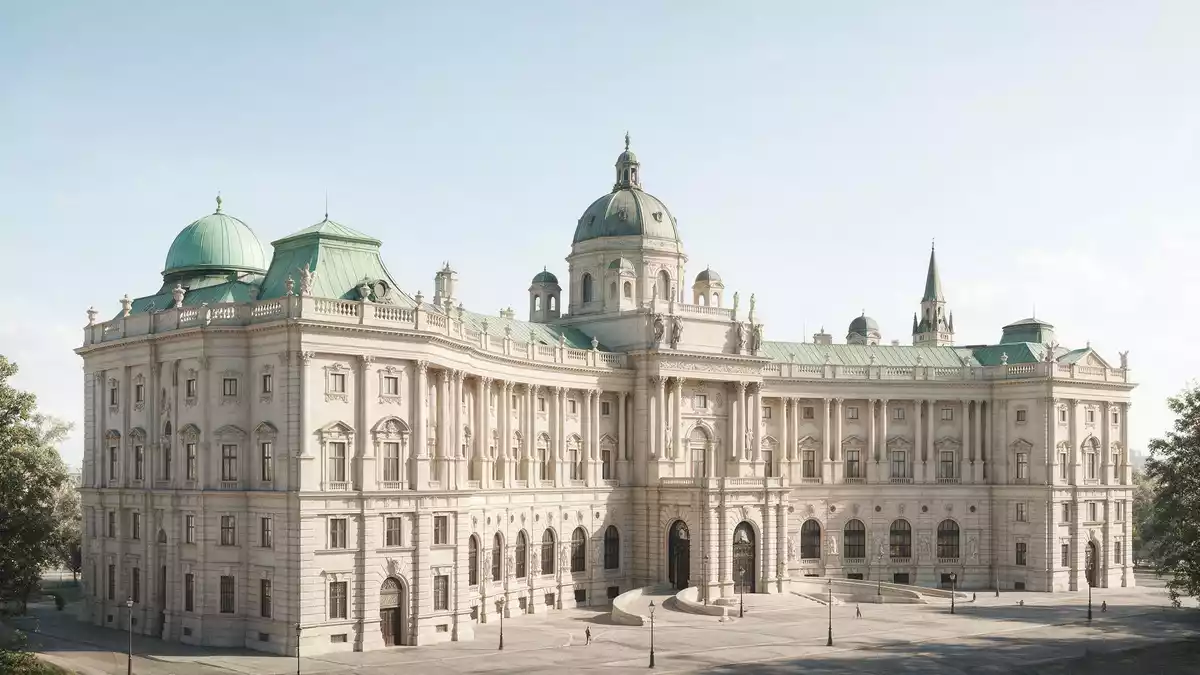
Hofburg in Wien is a palace complex rather than a single building, a dense ensemble of courtyards, wings and halls that grew with the Habsburg dynasty over several centuries. In the historic centre of Vienna, this former imperial winter residence now houses state institutions, museums and archives that continue its long role at the heart of Austrian power.
An imperial residence shaped over centuries
The origins of Hofburg lie in the thirteenth century, when a fortress was established on the site that later became the palace of the Habsburg rulers of Austria.Buildings within the complex date from the 13th century and extend into the early twentieth century, giving the site an unusually long architectural timeline.Despite its name, the Hofburg is one of the largest residential complexes in the world The palace served as the winter residence of the Habsburgs, complementing the summer retreat at Schönbrunn.
For more than six centuries, Hofburg was the residence and working seat of successive Austrian sovereigns, including rulers of the Holy Roman Empire and later emperors of Austria.The complex was at the centre of European politics from the Middle Ages to the twentieth century After the end of the monarchy in 1918, the palatial ensemble remained embedded in Vienna’s political life, and the office of the Federal President of Austria is now located in one of its wings.Since 1946, Hofburg has been the official residence and office of the president of Austria
Courtyards, wings and architectural styles
Hofburg reads as a catalogue of Central European court architecture, with elements ranging from Gothic and Renaissance to Baroque, neo-Baroque and other historicist styles.The complex incorporates styles including Gothic, Renaissance and Baroque The ensemble grew in stages as different rulers added their own wings: early cores such as the Schweizerhof, later additions like the Stallburg and Amalienburg, and nineteenth-century interventions that introduced sweeping facades and monumental gateways.Emperors from Ferdinand I to Franz Joseph I commissioned successive wings
Rather than a single palace volume, Hofburg consists of multiple interconnected wings framing a series of enclosed and semi-enclosed courtyards. The palatial area covers well over 200,000 m² (over 2,150,000 sq ft), with thousands of rooms and numerous wings that house both historical state apartments and working offices.The complex extends over 240,000 m² with 18 wings, 19 courtyards and 2,600 rooms Within this matrix lie landmarks such as the grand Heldenplatz frontage, the Michaelertor gateway and the Stallburg, each representing a chapter in the palace’s expansion.
Living institutions inside the former court
Hofburg is still an administrative centre as well as a heritage site, with ministries, cultural organisations and international bodies based within its historic walls.The Hofburg houses museums, art galleries, concert halls and the Austrian National Library Around 5,000 people work in the complex, spread across institutions that range from the presidential office to courtly museums and archives.Nearly 5,000 people still work and live in Hofburg’s rooms This continued everyday use means that visitors encounter both ceremonial spaces and parts of a functioning seat of government.
The complex contains the Austrian National Library, museum spaces such as the Sisi Museum and the Imperial Apartments, and venues used for concerts and conferences.Institutions based in Hofburg include the Austrian National Library, the Sisi Museum and the Imperial Apartments The historic riding school buildings host equestrian performances, while former court halls serve as meeting rooms for international organisations. This mix of uses gives the former palace a character that is different from purely museumified royal residences.
Visiting Hofburg: what travellers from Western Europe should know
- Hofburg stands in Vienna’s historic first district, west of the old town streets and close to Heldenplatz and Michaelerplatz; several tram and underground lines serve the surrounding Ringstraße and nearby stations.
- Moving through the complex involves crossing paved courtyards and climbing staircases inside the palace wings, with some approaches passing through historic gateways and covered passages.
- Wien is the capital of Austria; the official language is German and the currency is the euro.
Searching for Hofburg on social platforms
These links open searches for Hofburg on each platform.
Frequently asked questions about Hofburg
Where is Hofburg and what kind of place is it?
Hofburg is a former imperial palace complex in the centre of Vienna, Austria, made up of multiple wings and courtyards rather than a single building.
What can visitors expect when exploring Hofburg?
Visitors move through historic courtyards and palace interiors that contain ceremonial apartments, museums, library halls and working offices, all within one extensive complex.
What makes Hofburg distinctive among European palaces?
Hofburg is distinctive for its layered architectural styles, large number of wings and courtyards, and its continued role as a political and cultural centre for Austria.


