
Hofburg, Vienna’s imperial city within a city
Published on 08/30/2026 at 11:34 | Editorial responsibility: Rafael Müller, Editor-in-Chief AD HOC NEWS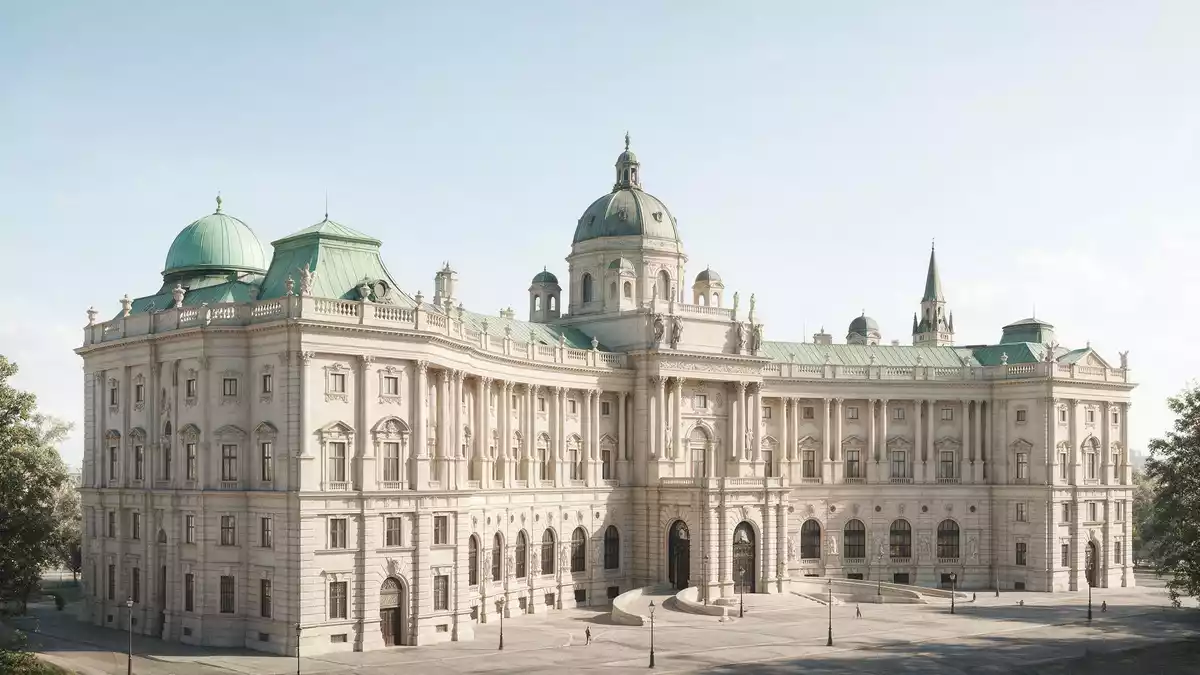
Hofburg in Wien is a palace complex where more than six centuries of Habsburg rule are written into stone, plaster and courtyards within the old city. Rising in the Innere Stadt district of Vienna, it began as a medieval fortress in the thirteenth century and grew into the principal imperial residence of the Habsburg dynasty and the seat of government for their lands.
An imperial residence shaped over centuries
The origins of Hofburg lie in the thirteenth century, when a fortified castle was established on this site as a power base in what became the Austrian patrimonial lands.Originally a medieval fortified castle dating from the 13th century the complex was later associated with figures such as King Ottokar II of Bohemia and Rudolf I, the first Habsburg ruler of Austria.Construction of the Hofburg did not start with the Habsburgs, but with King Ottokar II of Bohemia Over the centuries that followed, the palace expanded in stages as the Habsburgs rose from local rulers to emperors of the Holy Roman Empire and later Emperors of Austria.
From the fifteenth century the Hofburg served as the seat of Habsburg kings and emperors of the Holy Roman Empire, and after the end of that empire in 1806 it became the main residence of the Emperors of Austria until the monarchy ended in 1918.From 1438 to 1583, and again from 1612 to 1806, it was the seat of the Habsburg kings and emperors of the Holy Roman Empire For over 600 years, the Vienna Hofburg functioned as the residence of the Austrian sovereigns and the political centre of the monarchy, making it one of the most historically charged palace complexes in Europe.For over 600 years the Vienna Hofburg was the residence of the Austrian sovereigns
A city-sized palace in the centre of Wien
Today Hofburg occupies a large portion of Vienna’s first district, effectively forming a city within the city. The complex spans roughly 24 hectares in the Innere Stadt and contains numerous wings, courtyards and rooms connected by passages and arches.Size: 24 hectares Elements: 18 wings, 19 courtyards and over 2,000 rooms Its layered growth means that different periods of architecture sit side by side, reflecting more than seven centuries of additions and alterations.
Visitors encounter a complex that includes historic wings such as the Schweizerhof, or Swiss Wing, which preserves the core of the medieval castle and stands as the oldest part of the palace still in existence.The oldest part is known as the Schweizerhof or Swiss Wing Around it lie further sections including Amalienburg and the Leopold Wing, which forms part of the area housing the official seat of the federal president of Austria.Directly connected to it is the Amalienburg and the Leopold Wing, which today houses the official seat of the Austrian federal president Within this dense arrangement, internal squares such as Heldenplatz open views to monumental façades built in later centuries.
Architectural layers from Gothic to Baroque and Historicism
The architecture of Hofburg reflects successive styles from the thirteenth to the early twentieth century. Early structures retain Gothic elements, visible for example in the Hofburg Chapel, which carries features of medieval ecclesiastical design and continues to host liturgical music.The Gothic Hofburg Chapel, where the Vienna Boys' Choir performs during High Mass every Sunday, is a lasting reminder of the original medieval castle Later additions brought Renaissance influences, Baroque grandeur and neo-Baroque façades, while elements of neo-Gothic and Historicist architecture appear in parts constructed in the nineteenth and early twentieth centuries.There are buildings within the complex dating from the 13th century through the beginning of the 20th century, and thus it features a variety of architectural styles, including neo-Gothic, Renaissance, and Baroque
Among the most prominent later structures is the Neue Burg, or New Palace, whose monumental curve on Heldenplatz forms one of the defining vistas of central Vienna. Completed in the early twentieth century, it added museums and state rooms to the complex and became the backdrop to events that tied Hofburg to broader European history.from a balcony of the Neue Burg (New Palace; completed in 1913) that he announced Germany’s annexation of Austria Taken together, these layers make Hofburg a place where stylistic transitions from medieval fortress to Baroque residence and nineteenth-century monumentalism can be read in the fabric of the buildings.
Imperial functions and modern uses
For centuries Hofburg served as both residence and seat of power. It was the winter palace of the Habsburg dynasty, complementing Schönbrunn Palace as the summer residence, and it housed imperial apartments, administrative offices and ceremonial halls.The Hofburg is the former principal imperial palace of the Habsburg dynasty in Austria Among its equestrian facilities is the Winter Riding School dating from the eighteenth century, which is now known worldwide as the performance space of the Spanish Riding School with its Lipizzaner horses.the 18th-century Winter Riding School, now the performance space of the Spanish Riding School
After the monarchy ended in 1918 and Austria became a republic, parts of the Hofburg complex continued to serve state functions. Since 1946 it has been the official residence and office of the president of Austria, anchoring the country’s federal institutions in a setting shaped by earlier centuries.has been since 1946 the official residence and office of the president of Austria Other areas host museums, exhibitions and a congress centre that uses historic rooms for meetings and events, combining imperial interiors with modern infrastructure.Guests meeting, dancing or celebrating at the Hofburg Vienna are treading on historic ground: Until 1918 the palace was the imperial residence of the Habsburgs, today, equipped with state-of-the-art technology, it provides a stylish setting for events
Visiting Hofburg: what travellers from Western Europe should know
- Hofburg stands in Vienna’s Innere Stadt around Heldenplatz, bordered by streets leading towards the Ringstrasse; tram and underground lines serve this central district.
- Exploring the complex involves covering substantial ground on foot between its wings and courtyards, with interior staircases connecting levels inside older palace sections.
- The terrain within Hofburg is urban and largely paved, with enclosed courtyards that can feel distinct from the surrounding street network of central Wien.
- Österreich is part of the European Union; the official language is German and the currency is the euro.
Searching for Hofburg on social platforms
These links open searches for Hofburg on each platform.
Frequently asked questions about Hofburg
Where is Hofburg located?
Hofburg stands in the Innere Stadt district of Wien, centred on Heldenplatz and extending between Michaelerplatz, Ballhausplatz and the area facing the Albertina.
What can visitors expect at Hofburg?
Visitors encounter a palace complex with historic wings, courtyards, chapels and state rooms, alongside museums and event spaces that occupy former imperial interiors.
What makes Hofburg distinctive among European palaces?
Hofburg is distinctive for its continuous use as a centre of power from the thirteenth century to the twentieth century, and for its dense layering of architectural styles within one integrated complex.


