
Hofburg in Wien: an imperial city within the city
Published on 09/08/2026 at 09:30 | Editorial responsibility: Rafael Müller, Editor-in-Chief AD HOC NEWS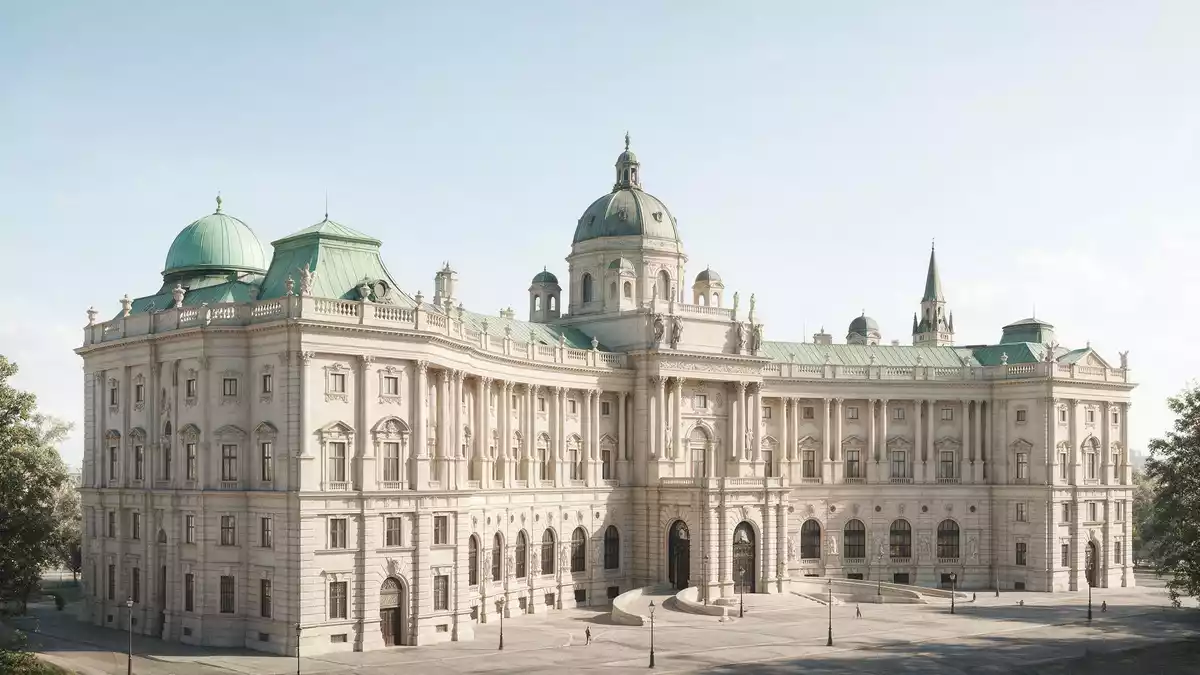
In the historic core of Wien, Hofburg unfolds as a vast imperial city within the city, where palatial wings, courtyards and state rooms still frame Austria’s political and cultural centre. Built as a fortress in the thirteenth century and expanded up to the early twentieth century, the former Habsburg winter residence now houses the Austrian Federal President, national institutions and major museums inside one sprawling complex.
A palace grown over seven centuries
Hofburg began as a fortified residence in the thirteenth century, laid out near today’s Schweizerhof and gradually transformed into a palatial seat of power for the Habsburg dynasty.thirteenth century origins Over more than 600 years it served as the residence of Austrian sovereigns, with successive rulers adding new wings, courtyards and ceremonial halls as political ambition and architectural fashion shifted.over 600 years as residence
The result is a layered ensemble of buildings dating from the Middle Ages through the nineteenth and early twentieth centuries, incorporating Gothic, Renaissance, Baroque and Historicist architecture in a single asymmetric complex.range of architectural styles From the older sections around the Schweizerhof to the later additions such as the curved Neue Burg facing Heldenplatz, Hofburg’s blocks form a continuous urban fabric rather than a solitary palace set in parkland.curved Neue Burg wing
Scale, layout and daily life inside Hofburg
Seen from above or walked at ground level, Hofburg’s defining feature is its sheer scale. The complex extends over about 240,000 m² and contains a network of wings, courtyards and internal routes that long ago spilled beyond its medieval core.240,000 m² complex Nineteen courtyards and eighteen wings form a kind of enclosed city, with more than 2,000 rooms hosting offices, galleries, libraries and ceremonial spaces where several thousand people still work and, in some cases, live.18 wings and over 2,000 rooms
The ensemble opens towards surrounding squares such as Heldenplatz, Michaelerplatz, Josefsplatz and Ballhausplatz, where monumental facades line open spaces that once formed the theatrical setting of imperial power.location between major squares Within the courtyards, passages lead past entrances to museums, chapels and administrative buildings, making it possible to cross central Wien through a sequence of sheltered spaces framed by historic masonry and stucco.
From Habsburg residence to republican centre
Until 1918 Hofburg functioned as the political centre of the Habsburg monarchy, concentrating court life, administration and ceremony in its halls and apartments.political centre of the monarchy After the end of the monarchy it took on a different but related role as a hub of the Republic of Austria, and since 1946 it has been the official residence and workplace of the President of Austria.residence of the president
The complex now houses the Austrian National Library, the Sisi Museum and Imperial Apartments, and several major collections and cultural institutions, alongside international bodies such as the conference centre of the Organisation for Security and Co-operation in Europe.national library and OSCE Museum spaces occupy former residential suites, stables and service ranges, while event halls on upper floors host conferences, concerts and receptions that keep ceremonial rooms in active use.imperial palace with museums and events
Visiting Hofburg: what travellers from Western Europe should know
- Hofburg stands in Wien’s Innere Stadt, bordered by Heldenplatz, Michaelerplatz, Josefsplatz and Ballhausplatz, and is reached on foot or by public transport serving the historic centre.
- Exploring the complex involves walking between multiple courtyards and wings, including staircases and long internal corridors inside former palatial buildings.
- The palace is in Austria, where the official language is German and the currency is the euro.
- Within the complex, attractions such as the Austrian National Library, the Spanish Riding School and several museums occupy different wings, so a visit typically includes multiple distinct interiors.
Searching for Hofburg on social platforms
These links open searches for Hofburg on each platform.
Frequently asked questions about Hofburg
Where is Hofburg in Wien?
Hofburg stands in the first district of Wien, the historic Innere Stadt, between Heldenplatz, Michaelerplatz, Josefsplatz and Ballhausplatz in the city centre.
What can visitors expect when exploring Hofburg?
Visitors encounter a large complex of historic wings and courtyards housing museums, the Austrian National Library, chapels, ceremonial halls and state offices inside the former Habsburg residence.
What makes Hofburg distinctive among European palaces?
Hofburg is distinctive for its scale and continuity, combining architecture from the thirteenth to the early twentieth century in an urban complex that still serves as Austria’s political and cultural hub.


