
Historisch Centrum van Brugge as a living medieval cityscape
Published on 09/16/2026 at 18:49 | Editorial responsibility: Rafael Müller, Editor-in-Chief AD HOC NEWS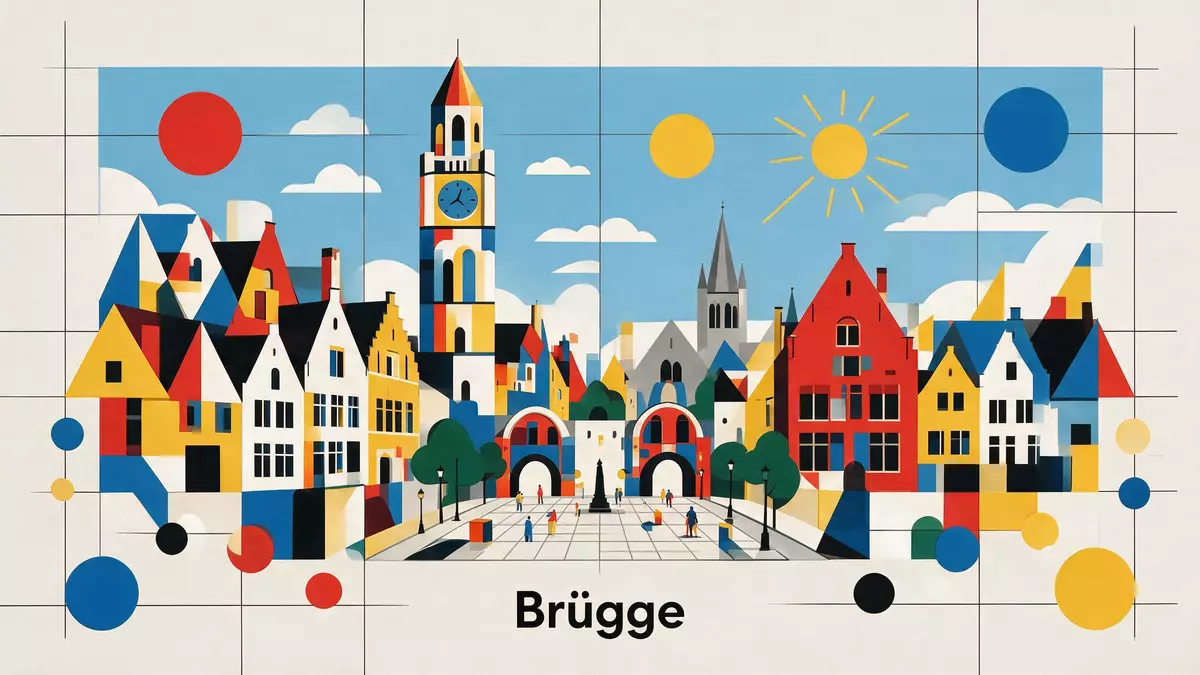
Historisch Centrum van Brugge is the medieval heart of Brügge in Belgium, a compact urban landscape of canals, brick façades and market squares recognised as a UNESCO World Heritage site since 2000. Within the old city boundaries the historic street pattern, Gothic architecture and waterfronts form an ensemble that still reflects Bruges’ role as a major commercial and cultural centre in medieval Europe.
A World Heritage city inside its canal ring
Historisch Centrum van Brugge occupies the old city within the canal ring of Brügge in the Flemish region of Flanders, with waterways and bridges defining a clearly legible historic core. The entire historic centre is inscribed on the UNESCO World Heritage List as property number 996, recognised as a cultural landscape that has maintained its medieval urban fabric over centuries.Historic Centre of Brugge This inscription covers streets, canals, plots and buildings together rather than singling out isolated monuments, reflecting the way the city grew as a trading hub shaped by waterborne routes.
The World Heritage status emphasises how the historic centre has retained its original Gothic constructions as part of the town’s identity, with brick churches, civic halls and merchants’ houses standing along the canals and squares.UNESCO description in Dutch Large parts of the medieval heritage remain intact, and neo-Gothic additions respect the older forms, creating a visual unity that makes Bruges a coherent historic city centre rather than a collection of fragments.Bruges' historic city centre
Brick Gothic architecture and canals as everyday backdrop
Walking through Historisch Centrum van Brugge means moving through streets lined with brick Gothic façades, where pointed gables, traceried windows and stepped rooflines rise above shopfronts and dwellings. The architecture shows how Flemish brick Gothic evolved over a long period, with churches such as the Church of Our Lady and civic buildings like the belfry and town hall illustrating the style in different scales.UNESCO photo gallery Towers and spires punctuate the skyline, visible from many streets as vertical markers amid the dense roofscape.
Water is integral to the historic centre, with canals known locally as “reien” winding between rows of houses and under stone bridges.Bruges as World Heritage city The canal network, combined with the preserved second defensive ramparts, recalls Bruges’ prominence as a trading city connected to maritime routes. Today the same waterways reflect the brick and stone façades, and boats pass beneath arches that were already part of the medieval transport system. Streets curve around former market squares and alongside quays, creating vistas where brick buildings, bridges and water align into long, layered prospects.
From medieval trading hub to living city of art
Historisch Centrum van Brugge developed as one of the commercial and cultural capitals of Europe during the medieval period, when merchants traded goods such as cloth and luxury items through its harbour connections.UNESCO video document The city is closely associated with the school of Flemish Primitive painting, with artists such as Jan van Eyck and Hans Memling linked to its artistic life. This artistic heritage is still visible in museums and churches, where altarpieces and panels form part of the historic fabric alongside the architecture.
The UNESCO inscription in 2000 under cultural criteria (ii), (iv) and (vi) highlights the historic centre as testimony to commercial, architectural and artistic developments that reached across Europe.Municipal World Heritage brochure Civic, religious and residential buildings stand in close proximity, with squares hosting town halls, guild houses and churches within the same urban fabric. Historisch Centrum van Brugge continues to function as a working city centre: people live in the historic houses, work in offices and shops behind Gothic façades, and cross the bridges on foot or by bicycle, using a medieval spatial structure adapted to contemporary life.Guide to the historic centre
Visiting Historisch Centrum van Brugge: what travellers from Western Europe should know
- Historisch Centrum van Brugge lies within the canal ring of Brügge in the Flemish region of Flanders in Belgium and is reached by rail services to Bruges railway station, with the historic streets beginning a short walk beyond the station area.
- The terrain of the historic centre is largely level but paved, with cobbled streets, narrow alleyways and bridges that require stepping up and down between different street and canal levels.
- Brügge stands in Belgium, where the official languages in the region are Dutch and French and the currency is the euro.
Searching for Historisch Centrum van Brugge on social platforms
These links open searches for Historisch Centrum van Brugge on each platform.
Frequently asked questions about Historisch Centrum van Brugge
Where is Historisch Centrum van Brugge located?
Historisch Centrum van Brugge is the historic city centre of Brügge in the Flemish region of Flanders in Belgium, enclosed within a ring of canals and old ramparts.
What can visitors expect on a visit?
Visitors encounter cobbled streets, canals, bridges, brick Gothic churches and civic buildings arranged around market squares, all forming a coherent medieval urban fabric that still serves everyday life.
What makes Historisch Centrum van Brugge distinctive?
The entire historic centre, including streets, canals and buildings, is recognised as a UNESCO World Heritage site for its preserved medieval structure, brick Gothic architecture and strong links to Flemish Primitive art.


