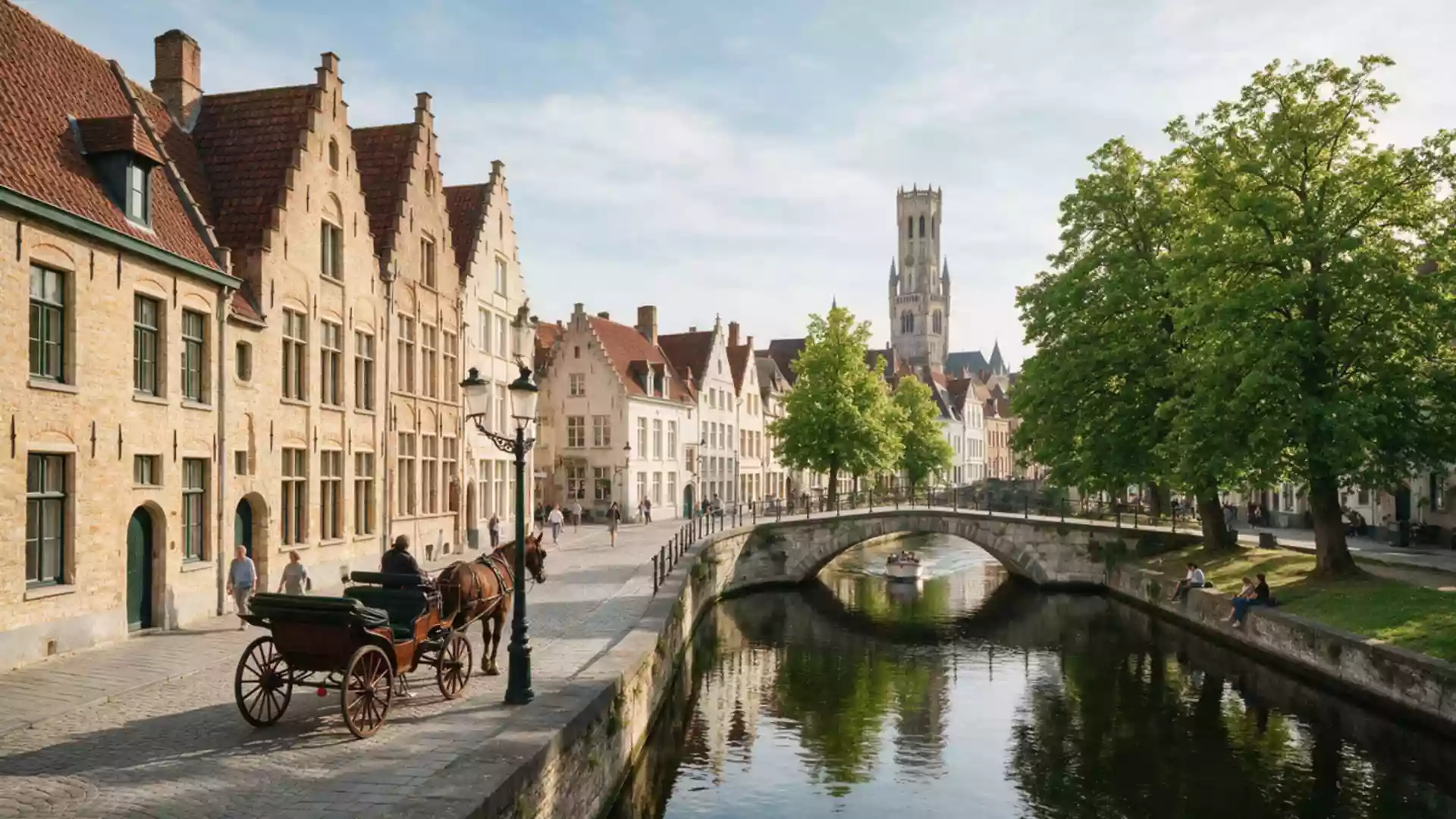
Historisch Centrum van Brugge as a living medieval cityscape
Published on 09/03/2026 at 22:12 | Editorial responsibility: Rafael Müller, Editor-in-Chief AD HOC NEWS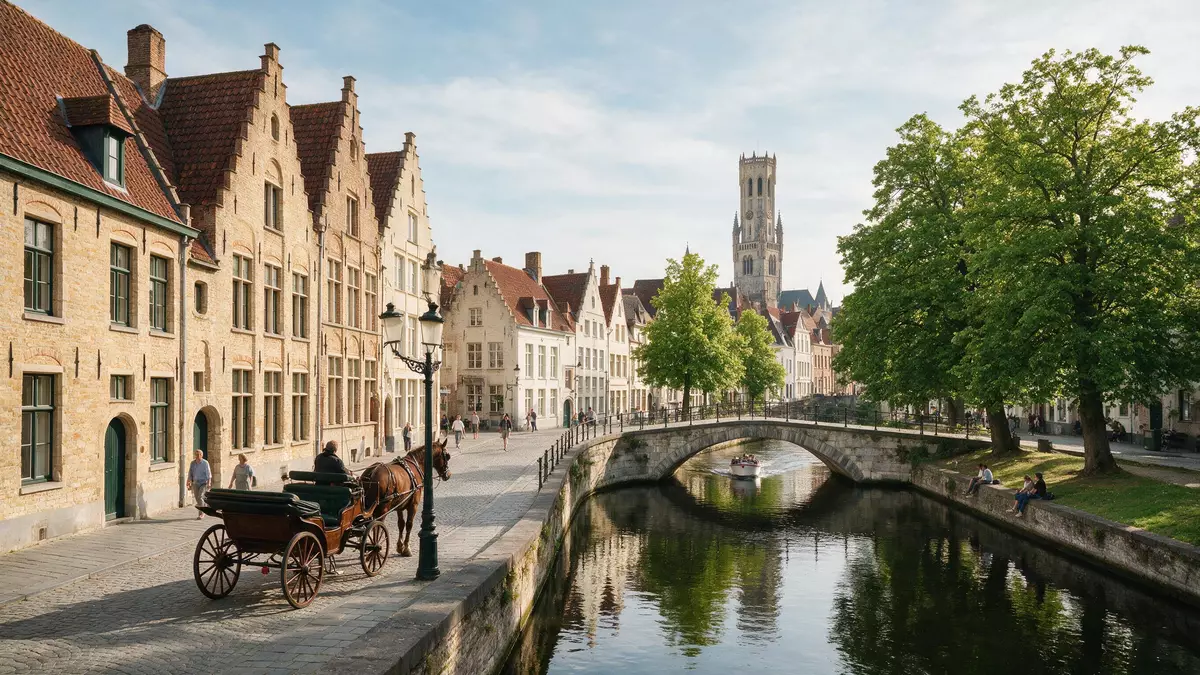
Historisch Centrum van Brugge is the medieval core of Brügge, a compact urban landscape of canals, cobbled streets and stepped gables where the town’s history as a Flemish trading centre remains visible in stone. Recognised as the “Historic Centre of Brugge” on the UNESCO World Heritage List since 2000, it preserves a dense ensemble of Gothic and later buildings that reflect the city’s role in medieval commerce and culture.
A UNESCO-listed medieval city fabric
The historic centre of Brugge is formally inscribed by UNESCO under the name “Historic Centre of Brugge”, recognising an architectural ensemble that illustrates major stages in medieval European trade and culture.Historic Centre of Brugge The designation emphasises how the town has maintained its historic fabric as it evolved over the centuries, with original Gothic constructions forming an integral part of its identity.medieval historic settlement
The protected area covers hundreds of hectares of streets, squares and canals within the ring of the old city, giving Brugge one of the largest contiguous historic centres in Belgium.historic city centre Local material such as brick and sandstone dominates the façades, while churches and civic buildings rise above the roofs with towers and spires that act as visual markers across the inner city.
Market squares, canals and trading history
At the heart of Historisch Centrum van Brugge lies Markt, the central square framed by guild houses and dominated by the tall brick belfry that long symbolised civic authority in the County of Flanders.Markt and Belfry Close by, the Burg square gathers administrative and religious buildings, including a town hall and a chapel, reflecting the centre’s role as a seat of both secular and ecclesiastical power.
The medieval prosperity of Brugge drew on its favourable position in Flanders and its access to the sea, allowing merchants to bring English wool and other goods into a growing market city from at least the twelfth century.medieval centre of commerce In the thirteenth century Brugge became one of north-western Europe’s leading trading centres, linked to Hanseatic networks and continental routes that connected England, the German and Baltic worlds, Italy and Iberia.Wall Street of the Middle Ages
Brugge’s canals and street pattern
The street pattern of Historisch Centrum van Brugge follows medieval lines that developed as the city expanded from its early stronghold into a major port and commercial hub.medieval street pattern Narrow lanes branch from broader thoroughfares leading to the main squares, and bridges cross the canals at regular intervals, creating a fine-grained network that still frames everyday movement in the old town.
Brugge’s canals, originally functional water routes connected to the sea, run through the historic centre and are lined with warehouses, houses and churches.guide to the historic centre They mirror the façades and towers above, giving many streets double perspectives along water and stone and linking residential areas with the former harbour districts that once handled international trade.
Visiting Historisch Centrum van Brugge: what travellers from Western Europe should know
- Historisch Centrum van Brugge occupies the inner city of Brügge in Belgium, enclosed by the old defensive ring and reached by rail services to Brugge station followed by a short walk into the historic streets.
- The terrain in the centre consists mainly of flat, cobbled streets and stone bridges over canals, with some church towers and the Belfry offering ascents on staircases for elevated views.
- Brügge stands in the Flemish Region of Belgium, where the official languages are Dutch and French and the national currency is the euro.
Searching for Historisch Centrum van Brugge on social platforms
These links open searches for Historisch Centrum van Brugge on each platform.
Frequently asked questions about Historisch Centrum van Brugge
Where is Historisch Centrum van Brugge located?
Historisch Centrum van Brugge occupies the old inner city of Brügge in the Flemish Region of Belgium, enclosed by the former defensive ring and canals.
What can visitors expect on a visit to the historic centre?
Visitors encounter a dense network of cobbled streets, canals, market squares and historic churches, with medieval and later architecture closely packed into a walkable area.
What makes Historisch Centrum van Brugge distinctive among European historic centres?
Its distinction lies in the extensive preservation of medieval urban fabric, recognised by UNESCO, combined with visible traces of Brugge’s past as a major trading and financial hub in Flanders.