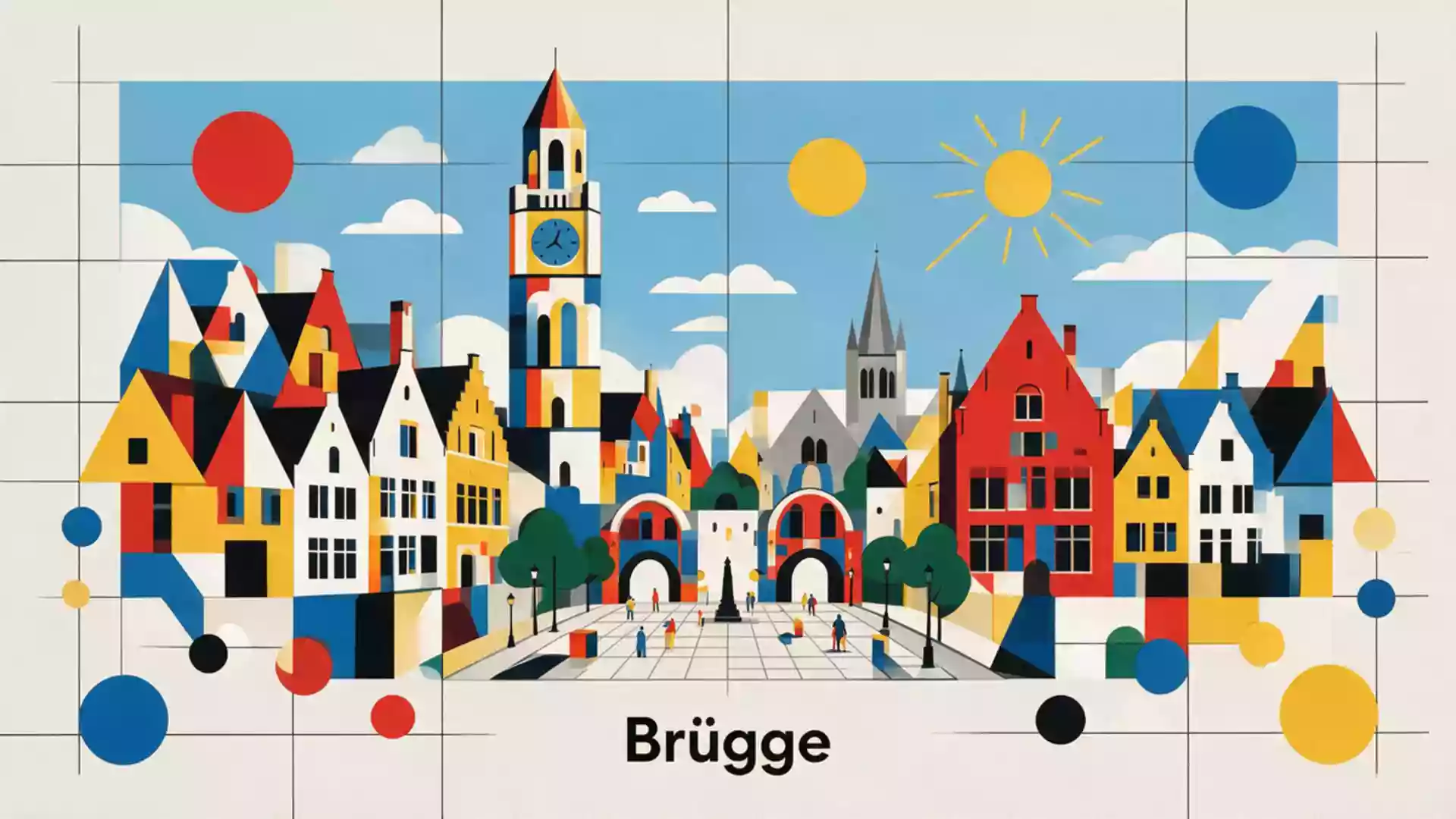
Historisch Centrum van Brugge and its medieval street pattern
Published on 09/11/2026 at 08:19 | Editorial responsibility: Rafael Müller, Editor-in-Chief AD HOC NEWS
Historisch Centrum van Brugge in Brügge is a UNESCO World Heritage site and a dense medieval city centre. Its streets, canals and Gothic buildings still form a continuous urban fabric.
Brugge’s medieval fabric in stone and brick
The historic centre presents brick Gothic facades, tall civic buildings and a street pattern that has survived in broad outline. UNESCO describes it as an outstanding medieval ensemble, and it was inscribed in 2000.
Brugge is also closely linked with the Flemish Primitives, including Jan van Eyck and Hans Memling. That association gives the centre a cultural weight beyond its architecture.
Canals, squares and the city’s public face
The canals remain part of the urban structure and sit with the market squares, churches and former charitable institutions that mark the centre. The Belfry and the Beguinage are among the best-known elements of the wider heritage landscape.
The city’s medieval growth left a compact core within the old walls, and the UNESCO listing covers the whole historic centre rather than one monument. The result is a place read through its public spaces as much as through its individual buildings.
A city centre shaped by trade and artistic exchange
Brugge developed as a commercial and cultural centre in medieval Europe, and that history is visible in the blend of mercantile, religious and civic buildings. The centre retains the character of a working city, not a frozen display.
The architecture carries layers from different periods, including later restoration traditions that respected the older urban grain. The world-heritage status reflects both the built fabric and the city’s role in artistic exchange.
Visiting Historisch Centrum van Brugge: what travellers from Western Europe should know
- Historisch Centrum van Brugge lies in the centre of Brügge, in Belgium. Bruges railway station provides the main rail arrival, and the old streets are reached on foot or by local transport.
- The centre is compact, with canals, bridges and cobbled streets. The historic core includes public squares and church areas, so the walk mixes open spaces with narrow lanes.
- The official language is Dutch and the currency is the euro.
- Entry requirements depend on your nationality; UK travellers can check the FCDO travel advice at gov.uk/foreign-travel-advice, Irish travellers the Department of Foreign Affairs at ireland.ie.
Searching for Historisch Centrum van Brugge on social platforms
These links open searches for Historisch Centrum van Brugge on each platform.
Frequently asked questions about Historisch Centrum van Brugge
Where is Historisch Centrum van Brugge?
It is the historic centre of Brügge in Belgium, arranged around canals, squares and the old urban core. The UNESCO listing covers the whole historic city centre.
What should be expected on a visit?
The experience is urban rather than monumental in isolation. Expect a compact network of streets, waterways, churches and civic buildings linked by short walks.
What makes it distinctive?
The combination of medieval street pattern, brick Gothic architecture and Flemish Primitive associations gives the centre its character. UNESCO also recognises it as a major example of a medieval European settlement.