

Historic Centre of Arequipa hosted Arte en Ruta on 7 October
Published on 10/11/2026 at 07:49 | Editorial responsibility: Rafael Müller, Editor-in-Chief AD HOC NEWSKey points in brief
- The Historic Centre of Arequipa (Centro Histórico de Arequipa) hosted Arte en Ruta on 7 October 2026.
- Arte en Ruta brought nine cultural institutions and the Provincial Municipality of Arequipa together for exhibitions, guided visits and talks.
- The programme ran from 6pm to 9pm on 7 October 2026, with free access and no fixed starting point.
- The World Heritage site in Arequipa contains 49 original blocks of the Spanish layout and buildings made largely from volcanic sillar.
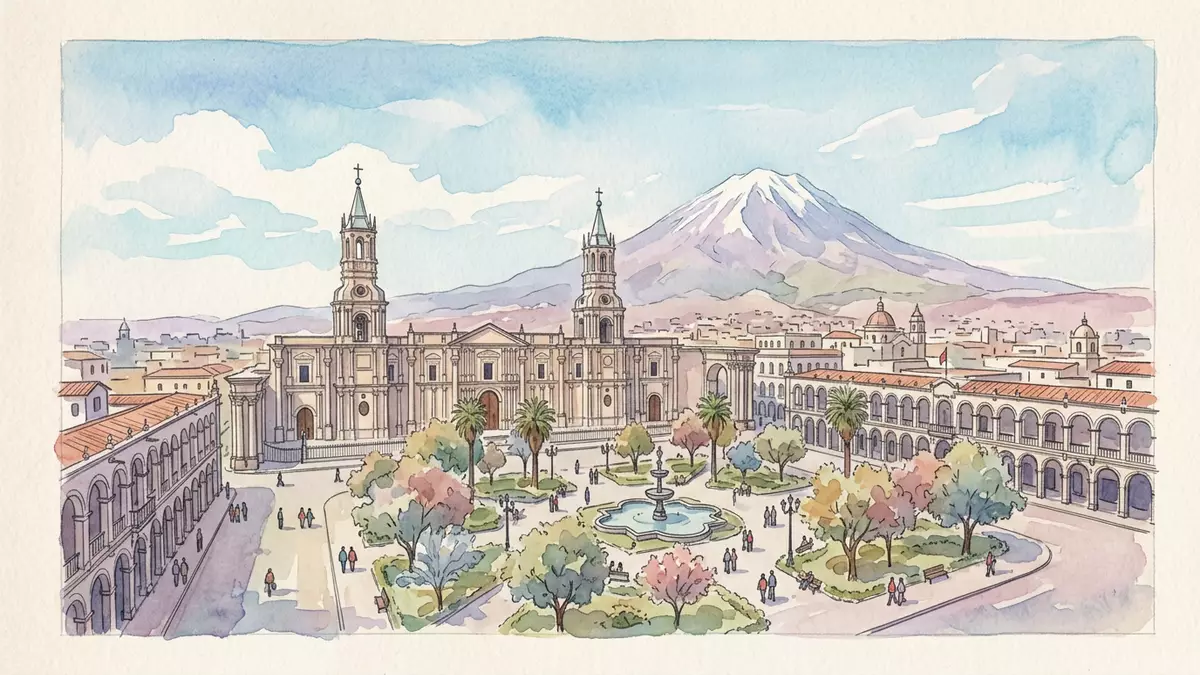
The Historic Centre of Arequipa (Centro Histórico de Arequipa) hosted Arte en Ruta on 7 October 2026, bringing a one-night public art circuit to the centre of Arequipa, Peru. The programme linked exhibitions, guided visits and talks across cultural venues in the historic urban area.
Arte en Ruta brought nine venues together on 7 October
Arte en Ruta ran from 6pm to 9pm on 7 October 2026. Visitors could choose where to begin and walk between venues, because the organisers set no compulsory starting point or fixed route.
The participating institutions included the National University of San Agustin of Arequipa, the Catholic University of Santa Maria, the Catholic University of Saint Paul, the University of San Martin de Porres, the Alliance Francaise, the Peruvian North American Cultural Centre, the Peruvian German Cultural Institute and the Peruvian Italian Cultural Institute. The Provincial Municipality of Arequipa also joined the programme with activities at two cultural spaces. The organiser's Arte en Ruta programme listed the event date, venue area and participating institutions.
The circuit included painting, photography, sculpture and ceramics. Named activities included the exhibitions The Last Hero, Huellas de la naturaleza, Fragmentos and Los Quijotes de Mingote, alongside guided visits and new displays. The Centro Cultural Peruano Norteamericano hosted a guided visit to The Last Hero, while the Galeria de Arte Jorge Vinatea Reinoso presented Huellas de la naturaleza. Reporting by El Buho described the shared circuit as a first collaboration of this scale between the participating institutions.
Art activities used Arequipa's historic urban fabric
The event spread cultural activity through streets and buildings rather than placing it in one hall. This arrangement connected contemporary exhibitions with the centre's established pattern of courtyards, arcades, churches, public squares and civic buildings.
UNESCO describes the site as a group of buildings made mostly from white or pink volcanic rock known as sillar. Its World Heritage description of the centre identifies 49 original blocks from the Spanish layout, together with 24 blocks from the colonial period and the nineteenth century. The Plaza de Armas forms the urban core, with the municipality and cathedral, while La Compania and Santa Catalina provide important religious ensembles.
That setting gave Arte en Ruta a clear relationship with the place itself: its format asked visitors to move through the historic centre on foot and encounter art in several existing cultural spaces. The programme therefore used the protected urban fabric as a connected cultural route, not simply as a backdrop for one event.
Arte en Ruta opened exhibitions across central Arequipa
Several addresses were named in the programme. Casa Museo Centro de Extension Cultural was at San Lazaro 120, the municipal Jorge Vinatea Reinoso Gallery at Portal de la Municipalidad 110 and the Centre for the Arts of the Catholic University of Saint Paul at Palacio Viejo 414. Other stops included the Cultural at Melgar 109, the Alliance Francaise at Santa Catalina 208 and Casa Gibson at La Merced 108.
The programme also included Arequipa 2050 at the Andean Sanctuaries Museum and six exhibitions at the UNSA Cultural Centre on Santa Catalina 101. A further conversation about the exhibitions was scheduled for 16 October 2026 at the Peruvian German Cultural Institute on Ugarte 207, extending the programme beyond the main evening.
Visiting Historic Centre of Arequipa: what travellers from Western Europe should know
- Arte en Ruta took place on 7 October 2026 from 6pm to 9pm across cultural venues in the Historic Centre of Arequipa.
- The programme offered free admission, and visitors could choose their own venue and walk between participating spaces without a fixed route.
- The central reference point is Plaza de Armas in Arequipa. Named venues included addresses on San Lazaro, Santa Catalina, Melgar, La Merced and Portal de la Municipalidad.
- The urban setting includes arcades, courtyards, vaulted spaces and streets built largely with volcanic sillar, so the route involves movement through a historic city centre rather than one modern gallery.
- Spanish is the official language used for local information, and Peru's national currency is the Peruvian sol.
- Entry requirements depend on your nationality; UK travellers can check the FCDO travel advice at gov.uk/foreign-travel-advice, Irish travellers the Department of Foreign Affairs at ireland.ie.
Searching for Historic Centre of Arequipa on social platforms
These links open searches for Historic Centre of Arequipa on each platform.
Frequently asked questions about Historic Centre of Arequipa
When did Arte en Ruta take place at Historic Centre of Arequipa?
Arte en Ruta took place on 7 October 2026 from 6pm to 9pm across cultural venues in the centre.
What is Historic Centre of Arequipa?
It is a World Heritage urban area built largely from volcanic sillar, with the Plaza de Armas at its core and 49 original blocks from the Spanish layout.
Where is Historic Centre of Arequipa and how do you get there?
The site is in central Arequipa, Peru, with the Plaza de Armas as its main reference point. Arte en Ruta connected venues on foot, including spaces on Santa Catalina, Melgar, La Merced and San Lazaro.


