

Hierve el Agua’s stone waterfalls above Oaxaca’s valleys
Published on 08/31/2026 at 15:23 | Editorial responsibility: Rafael Müller, Editor-in-Chief AD HOC NEWS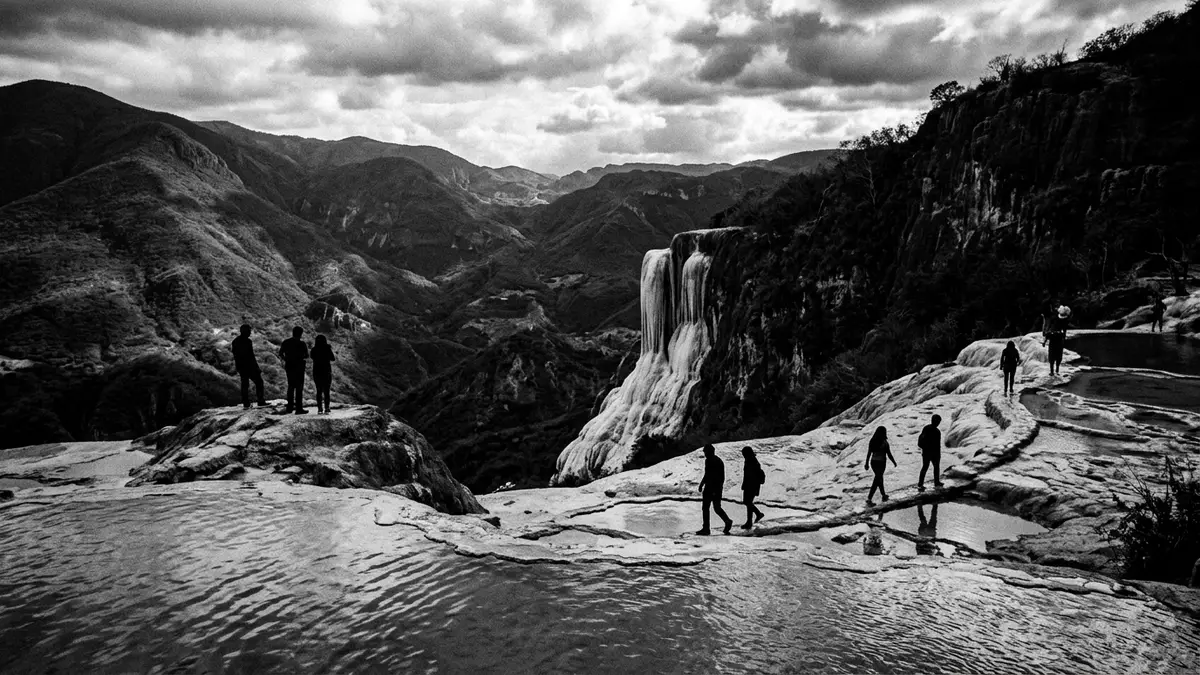
Hierve el Agua in southern Mexico is a rare landscape where pale travertine rock formations hang over a canyon like frozen waterfalls, while mineral springs feed terraces and pools on the cliff edge. Set in the municipality of San Lorenzo Albarradas in the Central Valleys of Oaxaca, the site combines striking geology with traces of ancient Zapotec water management from the pre-Hispanic period.
Petrified waterfalls above the Oaxaca valleys
Hierve el Agua lies east of Oaxaca de Juárez in the Central Valleys, where the plateau breaks into steep-sided canyons framed by mountain ranges such as the Sierra Juárez and Sierra Mixe.San Lorenzo Albarradas in Oaxaca The name, Spanish for “the water boils”, refers to springs that bubble at the ground surface as if heated, although the water emerging from them is not scalding.the water boils
The most striking feature is a pair of travertine formations that resemble cascades of water frozen in motion, spilling from rock shelves down towards the valley floor.petrified waterfalls above the valleys Over thousands of years, mineral-rich spring water has flowed over the cliff edge, precipitating calcium carbonate and building vertical ridges and draperies of stone that give the impression of great curtains of falling water.glowing white petrified falls
Travertine terraces, mineral springs and pools
On the upper plateau, mineral springs emerge near the cliff edge, their water saturated with dissolved calcium carbonate and other minerals that later harden into travertine, a kind of limestone.travertine rock structures As the water spreads across the surface, it leaves thin mineral films that build terraces and rims, forming basins where shallow pools collect at the top of the falls.
The springs create a small cluster of pools perched close to the canyon rim, with views across the surrounding valleys and ridges.stone waterfalls above Oaxaca’s valleys The water rises under gas pressure, producing the bubbling motion that gave the site its name, and as it spills over the lip of the plateau it continues the slow process of depositing mineral layers down the rock face. The result is a landscape where flowing water, terraces and calcified falls share the same cliff edge.
Zapotec irrigation traces in a mineral landscape
Hierve el Agua is not only a geological site; it also carries remains associated with Zapotec irrigation and terrace agriculture in the pre-Hispanic era.Zapotec irrigation system The broader region around San Lorenzo Albarradas and nearby Mitla contains evidence of ancient canal systems, channels and terraces that guided spring water towards cultivated plots on the slopes.
Archaeological remains at Hierve el Agua connect the mineral springs to this longer history of water use, linking the travertine formations to human settlement and farming in the Central Valleys of Oaxaca.cascadas petrificadas formadas por carbonato de calcio Standing on the plateau, the contrast between the pale stone waterfalls and the patchwork of valley agriculture below reinforces how central water has been to both the natural forms and the human story of the area.
Visiting Hierve el Agua: what travellers from Western Europe should know
- Hierve el Agua lies in San Lorenzo Albarradas in the state of Oaxaca in southern Mexico, reached by mountain roads east of Oaxaca de Juárez in the Central Valleys.
- The terrain combines a cliff-edge plateau with uneven travertine surfaces, terraces and paths that descend towards viewpoints above the petrified waterfalls.
- Nearby, the archaeological zone of Mitla and several mezcal-producing villages sit along the same valley routes, making Hierve el Agua part of a broader landscape of Zapotec sites and rural communities.
- The official language is Spanish and the currency is the Mexican peso.
- Entry requirements depend on your nationality; UK travellers can check the FCDO travel advice at gov.uk/foreign-travel-advice, Irish travellers the Department of Foreign Affairs at ireland.ie.
Searching for Hierve el Agua on social platforms
These links open searches for Hierve el Agua on each platform.Frequently asked questions about Hierve el Agua
Where is Hierve el Agua and what kind of place is it?
Hierve el Agua is in San Lorenzo Albarradas in the Central Valleys of Oaxaca, Mexico, where mineral springs have built travertine formations that resemble waterfalls on a canyon rim.
What can visitors expect when they arrive at Hierve el Agua?
Visitors encounter pale travertine cliffs with calcified waterfalls, terraces and spring-fed pools on a plateau above steep valleys, with paths leading to viewpoints over the formations.
What makes Hierve el Agua distinctive compared with other landscapes in Oaxaca?
The combination of travertine waterfalls formed by mineral springs, cliff-edge pools and visible traces of Zapotec irrigation systems creates a rare link between geology and long-standing water use.


