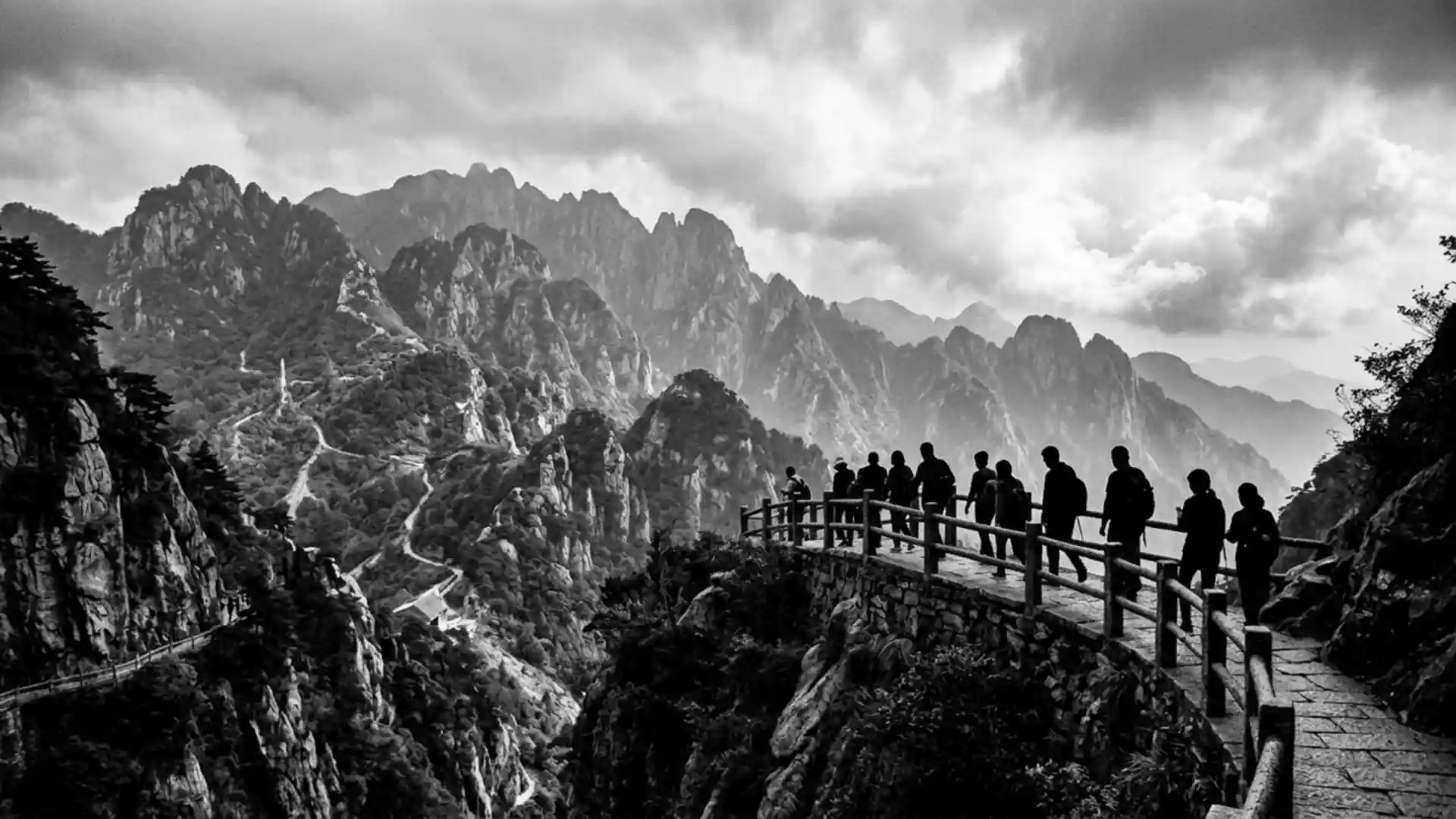
Heng Shan in Hengyang, the southern sacred mountain of granite ridges
Published on 09/12/2026 at 13:23 | Editorial responsibility: Rafael Müller, Editor-in-Chief AD HOC NEWS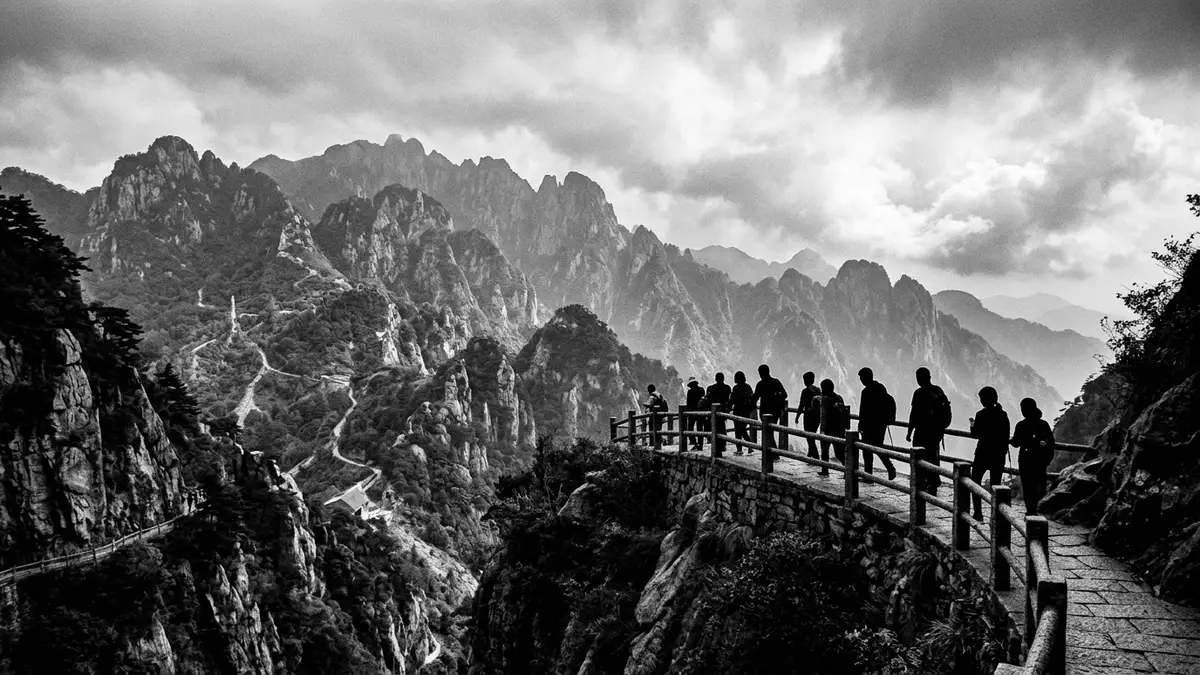
Heng Shan near Hengyang in China is not a single summit but a granite mountain range where sacred peaks, forested slopes and temple courtyards form one continuous mountain landscape. Rising across central Hunan, it is known in Chinese as Nanyue, the Southern Mountain, and is counted among the country’s traditional Five Great Mountains of ritual significance.
Granite ridges and the long spine of Nanyue
Heng Shan stretches across central Hunan Province between the basins of Hengyang and Xiangtan, forming a long spine above the wider Xiang River system. The range runs for about 150 km (93 mi) and is commonly described as having 72 distinct peaks that step northwards from the vicinity of Hengyang towards hills near Changsha, giving the mountain its reputation as a chain rather than a single isolated height.Heng Shan is a mountain range 150 km long Around this ridge, slopes drop towards valleys where streams feed into tributaries of the Xiang River, and narrow paths and stairways follow the contours of the granite.
The highest summit of Heng Shan is Zhurong Peak, which reaches an officially listed height of 1,300.2 m (4,268 ft) above sea level, giving a clear high point to the otherwise rambling skyline.Zhurong Peak at 1,300.2 m The wider range is noted as lying between Hengyang and Xiangtan and meandering across several counties and districts, with its main scenic and temple area focused on Nanyue District of Hengyang City.the main body lies in Nanyue District and neighbouring counties From the high ridgeline, views reach across basins and lowlands, while forested slopes and rock outcrops mark the transition from peak to valley.
Sacred mountain of Buddhism, Taoism and older cults
Heng Shan holds a defined place in Chinese religious geography as the southern member of the Five Great Mountains, a group known collectively as Wuyue that anchored imperial ritual and regional pilgrimage routes.Mount Heng as one of China’s Five Great Mountains The mountain is associated with the cult of Zhurong, a fire god in ancient legend who is described in later tradition as having lived and died at Heng Shan, and whose name is preserved on Zhurong Peak and in shrines and inscriptions across the range.Zhu Rong as the mountain god Over centuries, this older cult was joined by organised Taoist and Buddhist worship, giving the mountain a layered religious character.
On the lower slopes of Heng Shan stands the Nanyue Great Temple, a large temple complex that functions as a central focus for worship linked to the mountain and to the Southern Peak as a wider idea.the Nanyue Temple complex on the lower slopes Around the ridges and slopes lie more than 200 religious sites, including temples, nunneries and smaller shrines dedicated to Taoist deities and Buddhist figures, forming a dense pattern of built religious spaces set amid the natural landscape.more than 200 temples and abbeys on the mountain The coexistence of Taoist and Buddhist institutions, along with the older Zhurong cult, makes Heng Shan a major religious centre in southern China.
Temples, paths and the experience of the mountain
Heng Shan’s religious sites are threaded into the mountain terrain rather than gathered only at its base, and many of the shrines and temples sit beside stairways or paths that climb towards the high ridges. Stone steps lead through forest and past outcrops, linking courtyards with viewpoints and giving a direct physical connection between ritual spaces and specific peaks. Around Zhurong Peak and other named summits such as Tianzhu and Zigai, small halls and incense terraces mark places where worship takes place in close proximity to rock and sky, emphasising the relationship between built structures and the wider mountain form.Heng Shan as a religious sacred mountain with Zhurong Peak as main summit
Further down the slopes, temple complexes such as the Nanyue Great Temple form larger architectural ensembles, with gates, halls and enclosed courtyards laid out along axes that face towards the higher ridges. These structures sit among groves of trees and beside channels and ponds that collect mountain water, giving the sacred landscape both vertical and horizontal dimensions. The combination of granite ridges, forest, and long stairways means that a visit involves both architectural detail and sustained walking, with the religious sites encountered as part of a continuous ascent or traverse rather than as isolated buildings in a town.
Visiting Heng Shan: what travellers from Western Europe should know
- Heng Shan lies in Hunan Province in south-central China, with its main scenic and temple area focused on Nanyue District in Hengyang City, reached from the wider Hengyang urban area by regional roads and public transport links.
- The mountain terrain includes long flights of stone steps, uneven forest paths and sustained gradients between the lower temple complexes and the higher peaks, so walking on hard surfaces at altitude forms a central part of any visit.
- Heng Shan stands outside the UK, Ireland and the European Union. Entry requirements depend on your nationality; UK travellers can check the FCDO travel advice at gov.uk/foreign-travel-advice, Irish travellers the Department of Foreign Affairs at ireland.ie.
Searching for Heng Shan on social platforms
These links open searches for Heng Shan on each platform.
Frequently asked questions about Heng Shan
Where is Heng Shan located?
Heng Shan stands in Hunan Province in south-central China, with its main scenic and temple area in the Nanyue District of Hengyang City.
What should visitors expect on a visit to Heng Shan?
Visitors encounter a combination of granite mountain terrain, extensive flights of stone steps and a dense concentration of Taoist and Buddhist temples and shrines integrated into the slopes and ridges.
What makes Heng Shan distinctive among China’s mountains?
Heng Shan is recognised as the southern member of China’s Five Great Mountains, combining Zhurong Peak and other summits with the Nanyue Temple complex and numerous religious sites across a single continuous range.