
Heng Shan in Hengyang, China’s southern sacred mountain range
Published on 09/16/2026 at 07:30 | Editorial responsibility: Rafael Müller, Editor-in-Chief AD HOC NEWS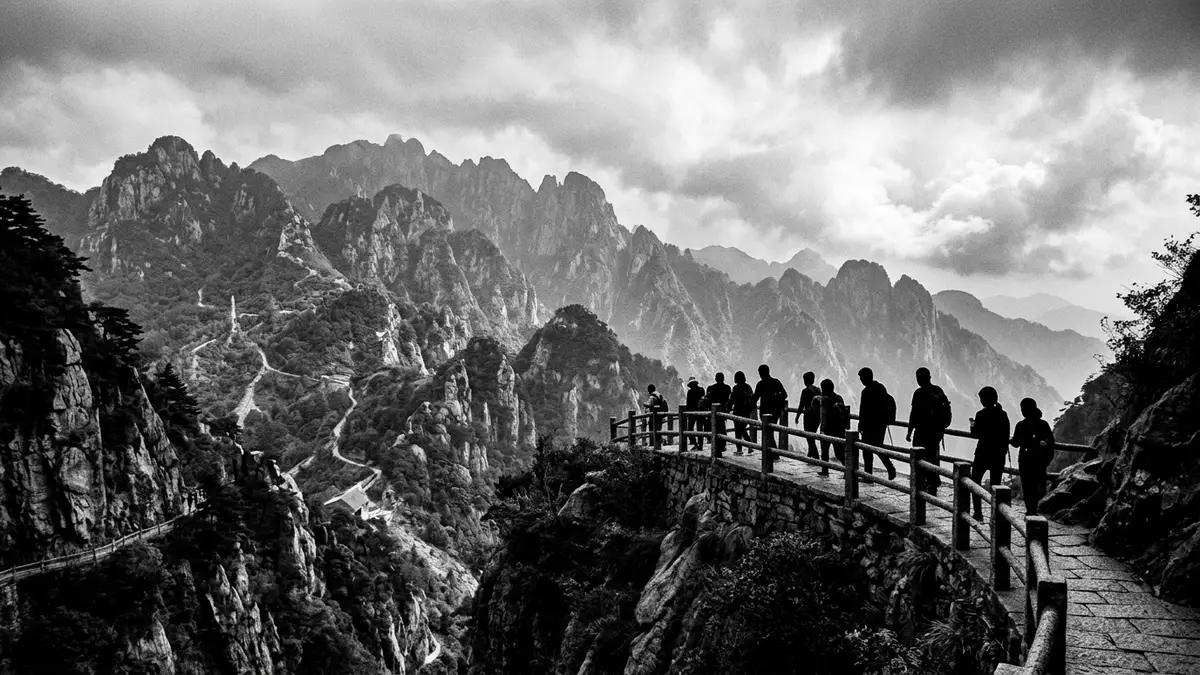
Heng Shan in Hengyang is a granite mountain range in Hunan Province in south-central China, known in Chinese as Nanyue and counted among China’s traditional Five Great Mountains.
Granite peaks and a long sacred ridge
Heng Shan is not a single summit but a mountain range that runs across Hunan Province between Hengyang and areas towards Changsha, forming a long spine above the Xiang River basin.a chain of 72 peaks is conventionally described for this range, stretching between Huiyan Peak near Hengyang and Yuelu Mountain near Changsha.Huiyan Peak and Yuelu Mountain mark its southern and northern ends in many route descriptions, and from this long ridge forested slopes drop towards valleys cut by tributaries of the Xiang River.
The highest point of Heng Shan is Zhurong Peak, which rises to around 1,300 m (4,265 ft) above sea level and carries a name linked with the ancient fire deity Zhurong.Zhurong Peak at about 1,300 m stands within the central part of the range above the main scenic area, where paths, stone stairways and smaller ridges converge. Standing on this upper ridge, the view takes in granite outcrops, patches of woodland and temple roofs below, with folds of hills running away towards the lowlands of central Hunan.
Five Great Mountains and the religious landscape of Nanyue
Heng Shan holds a formal place in Chinese culture as the southern mountain among the Five Great Mountains, a group of peaks that have carried ritual significance for over many centuries.one of the Five Sacred Mountains is a status repeated in official tourism material and nature reserve descriptions, and it ties the range to long traditions of state ritual and private pilgrimage. The mountain became both a Taoist and a Buddhist holy site, and its slopes and foothills carry temples, halls and smaller shrines spaced along old paths.
The core of this religious landscape is the Nanyue Grand Temple complex in Nanyue Town, which sits near the foot of the range and functions as a major ceremonial centre.Nanyue Grand Temple appears in descriptions alongside halls, pavilions and subsidiary temples scattered up the slopes, and stairways connect its courtyards to routes that continue towards Zhurong Peak. Around the temple complex, incense burners, carved gateways and tiled roofs form an architectural counterpart to the rock and forest higher up the mountain, and religious practice moves between these built spaces and the natural ridges above.
Nature reserve, climate and walking the mountain
Much of Heng Shan’s landscape is formally protected as the Nanyue Hengshan National Nature Reserve, which covers forested slopes, granite formations and cultural sites within the range.Nanyue Hengshan National Nature Reserve is described as safeguarding both ecological and cultural heritage, reflecting the way the mountain’s vegetation and wildlife coexist with long-established temple precincts and pathway systems. The area sits in a subtropical climate zone within Hunan, and descriptions emphasise dense greenery and rich plant life along the ridges and in sheltered valleys.a subtropical climate makes evergreen vegetation and varied forest common features of the slopes.
Walking routes across Heng Shan range from shorter paths near Nanyue to longer ridge traverses that link lower trailheads with the summit area around Zhurong Peak.essential day hikes on Heng Shan are described in detail by specialist walking guides, which note stone staircases, forest tracks and the use of cable cars and shuttle buses to connect higher and lower sections. On foot, the terrain involves sustained ascent on steps and slopes, and routes often pass small shrines, pavilions and viewpoints that look out over valleys, the Xiang River basin and distant lowlands.
Visiting Heng Shan: what travellers from Western Europe should know
- Heng Shan lies in Hunan Province in south-central China, with the main scenic and temple area focused on Nanyue Town in Nanyue District of Hengyang City; rail routes connect Hengyang with other major Chinese cities.
- The terrain on the mountain includes long flights of stone steps, forested slopes and exposed ridges, so visiting the higher parts of Heng Shan involves sustained uphill walking on stairways and paths.
- English is not an official language in China and the national currency is the Chinese yuan (renminbi).
- Entry requirements depend on your nationality; UK travellers can check the FCDO travel advice at gov.uk/foreign-travel-advice, Irish travellers the Department of Foreign Affairs at ireland.ie.
Searching for Heng Shan on social platforms
These links open searches for Heng Shan on each platform.
Frequently asked questions about Heng Shan
Where is Heng Shan located?
Heng Shan is in Hunan Province in south-central China, near the city of Hengyang, with its main scenic and temple area around Nanyue Town in Nanyue District.
What should visitors expect on a visit to Heng Shan?
Visitors encounter a combination of temple complexes, stone stairways and forested slopes, with paths and staircases leading from Nanyue up towards the summit area around Zhurong Peak.
What makes Heng Shan distinctive among China’s mountains?
Heng Shan is distinctive as the southern member of China’s Five Great Mountains, combining a formally recognised sacred status with a long granite ridge of multiple peaks and a concentrated temple landscape at Nanyue.


