Heiwa Koen in Nagasaki as a landscape of remembrance
Published on 08/20/2026 at 22:32 | Editorial responsibility: Rafael Müller, Editor-in-Chief AD HOC NEWS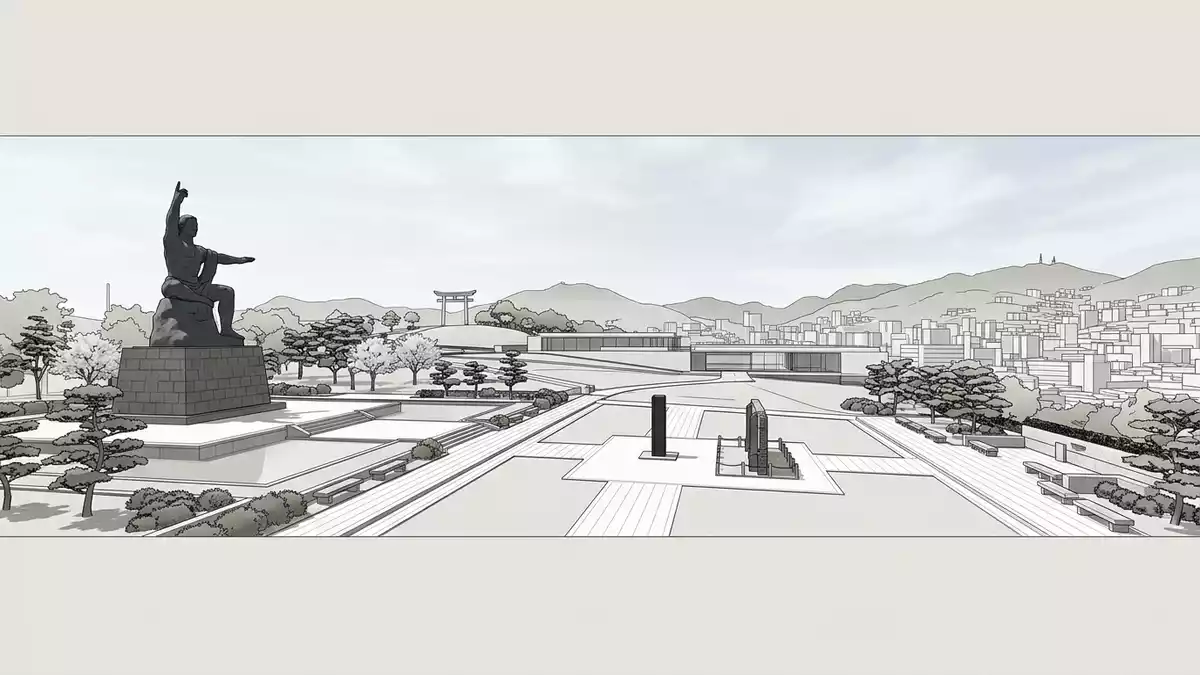
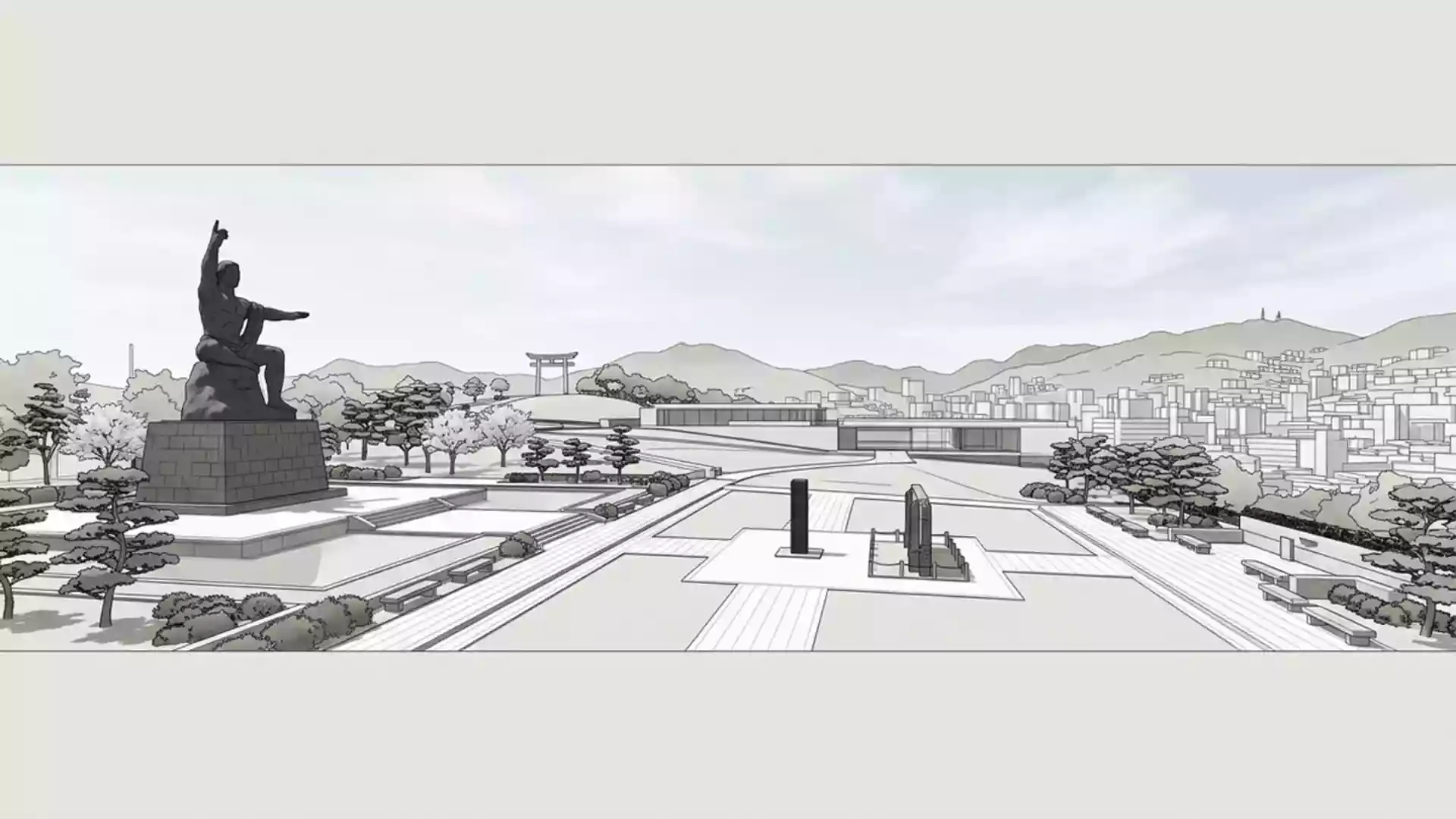
Heiwa Koen in Nagasaki is a memorial landscape built around the area where an atomic bomb exploded over the city on 9 August 1945, transforming devastated ground into a structured space of remembrance. The park lies in the Matsuyama-cho district, north of Nagasaki’s historic centre on the island of Kyushu, and its layered terraces, statues and open lawns give a physical form to the city’s memory of that day.
A memorial park shaped by post-war Nagasaki
The heart of Heiwa Koen is defined by its relationship to the atomic bomb’s hypocentre, which lay over the Urakami district of Nagasaki during the closing months of the Second World War. On 9 August 1945, an American bomber detonated a nuclear weapon over this part of the city, destroying a large area and killing many residents. In the years after the war, Nagasaki City designated the ruined neighbourhood as the site for a peace park and an atomic bomb museum, turning the scarred ground into a formal civic space dedicated to remembrance.Nagasaki Peace Park is described as a memorial to the 9 August 1945 bombing. Japanese and international sources trace the establishment of the park to the mid-1950s, with a formal opening date in 1955, placing its creation firmly in the decade after the end of the war.The Dutch-language entry for Park van de Vrede notes the 1955 creation date near the hypocentre
Heiwa Koen is not a single lawn, but a complex of linked memorial spaces that surround the hypocentre and extend onto a low hill above it. The lower area marks the approximate centre of the blast with a simple monument and plaza, while the higher ground carries sculptural works, lawns, trees and fountains. Together they form a sequence of outdoor rooms that visitors move through on foot, with views down towards the city and across to the slopes that frame the Urakami valley.
The Peace Statue, fountains and international sculptures
One of the most recognisable features of Heiwa Koen is the large Peace Statue on the upper terrace, created by the Nagasaki-born sculptor Seib? Kitamura. Standing close to 10 m (about 33 ft) high, the figure in bronze rises above a broad stone base and looks across the park with one arm raised and the other extended horizontally.The Park van de Vrede article attributes the Peace Statue to sculptor Seib? Kitamura and gives its approximate height The stone platform below serves as a focus for ceremonies and for quiet sitting at other times, and wide steps lead down towards lawns planted with trees donated from inside and outside Japan.
Water plays a central role in the composition. Near the Peace Statue a constructed pool and fountain commemorate the victims who died searching for water after the explosion, and further basins and channels mark the routes through the park. The fountain close to the hypocentre site sends arcs of water into the air at regular intervals, forming a counterpart to the stillness of the lawns. Around these core elements stand dozens of sculptures donated by different countries and regions, each interpreting the theme of peace through its own visual language.The Polish article on Park Pokoju w Nagasaki notes a “Zone of Symbols of Peace” with sculptures from multiple countries The effect is that of a small open-air sculpture park threaded into a memorial landscape.
Layout, materials and the surrounding city
Heiwa Koen sits on a shallow rise north of the hypocentre, with paths and terraces stepping up the hillside. The lower zone around the atomic bomb hypocentre monument is relatively open, with stone paving, low walls and sparse planting that keeps sightlines clear between the markers and the surrounding streets.Japan-guide describes the complex as two parks and a memorial museum located north of the city centre in Urakami From there, broad paths and flights of steps climb to the Peace Statue terrace, where stone, concrete and grass alternate in long horizontal bands. Rows of trees frame the edges, leaving the central axis open towards the statue and its water features.
Materials throughout the park are deliberately simple: dressed stone for walls and steps, concrete for platforms and bases, grass and trees for the planting, bronze and other metals for the sculptural works. Behind and around the park, the urban fabric of Nagasaki is clearly visible, with residential buildings, schools and the city’s tram line running nearby. The contrast between the everyday streets and the formally arranged memorial spaces is part of the experience, underlining how closely the site is woven into the living city.
Visiting Heiwa Koen: what travellers from Western Europe should know
- Heiwa Koen lies in the Matsuyama-cho area of Nagasaki, in the Urakami district north of the historic city centre on the island of Kyushu. The address given by local authorities places it within Nagasaki City in Nagasaki Prefecture.
- The park is reached by Nagasaki’s public transport network, with tram lines stopping at a station named Peace Park (Heiwa Koen) and bus routes serving nearby stops that also use the Heiwa Koen name.Japan-guide notes tram lines 1 and 3 to a Peace Park (Heiwa Koen) stop north of Nagasaki Station
- Movement within the park involves gentle slopes and several sets of outdoor steps between the lower hypocentre area and the upper Peace Statue terrace. Visitors who wish to reach viewpoints on the higher ground should be prepared for some uphill walking.
- Nagasaki lies on the western side of Japan’s Kyushu island, facing the East China Sea, and Heiwa Koen is surrounded by low hills that shape the city’s sheltered harbour setting.
- The official language is Japanese and the currency is the Japanese yen. Entry requirements depend on your nationality; UK travellers can check the FCDO travel advice at gov.uk/foreign-travel-advice, Irish travellers the Department of Foreign Affairs at ireland.ie.
Searching for Heiwa Koen on social platforms
These links open searches for Heiwa Koen on each platform.Frequently asked questions about Heiwa Koen
Where is Heiwa Koen located in Nagasaki?
Heiwa Koen is in Matsuyama-cho in the Urakami district of Nagasaki City on Kyushu, a short walk from tram and bus stops named Peace Park or Heiwa Koen.
What can visitors expect when walking through Heiwa Koen?
Visitors move between the atomic bomb hypocentre monument, lawns, fountains and terraces carrying the Peace Statue and international sculptures, with views of the surrounding city streets and hills.
What makes Heiwa Koen distinctive among memorial sites?
The combination of the Peace Statue by Seib? Kitamura, water features recalling the search for water after the bombing and donated international sculptures creates a memorial landscape tied closely to the original hypocentre.