
Haw Kham in Luang Prabang brings palace and museum together
Published on 09/23/2026 at 18:39 | Editorial responsibility: Rafael Müller, Editor-in-Chief AD HOC NEWS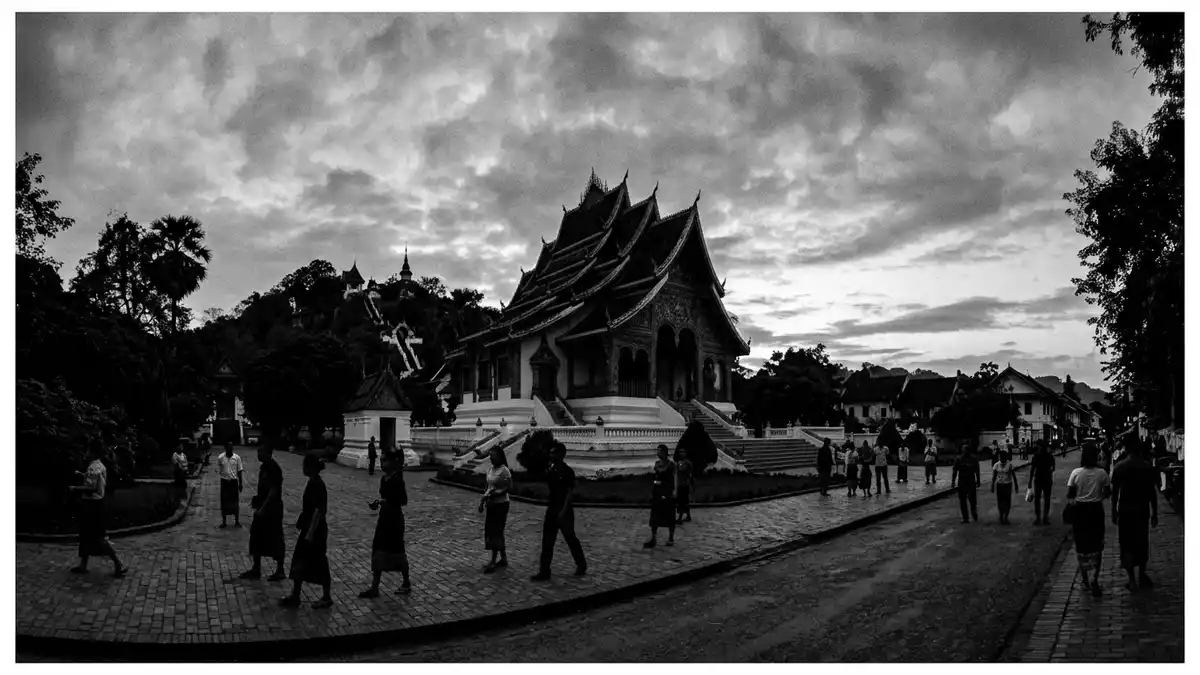
Haw Kham is a former royal palace in Luang Prabang, Laos, whose low profile combines Lao architectural forms with French Beaux-Arts details. Built between 1904 and 1909 for King Sisavang Vong, it is now the National Museum of Luang Prabang, with royal rooms and collections inside the original complex.
Haw Kham’s Lao and French architectural language
The palace belongs to the early twentieth century, when Laos formed part of French Indochina. Its name, Haw Kham, translates as “Golden Palace”, while the building combines rendered walls, tiled roofs, ornamental gables and gilded decoration.
The architecture joins two visual traditions without separating them into different buildings. Lao rooflines and decorative motifs appear alongside the symmetry and formal proportions associated with French Beaux-Arts design. The result belongs to the architectural character of Luang Prabang, where Lao urban forms meet colonial-era structures. Luang Prabang’s architectural heritage records that wider fusion.
From royal residence to National Museum
King Sisavang Vong and his family used Haw Kham as a royal residence. The palace remained connected with the Lao monarchy until 1975, when the Kingdom of Laos ended and the building changed function.
In its present form, Haw Kham houses the National Museum of Luang Prabang. The former reception areas, throne hall and residential wing contain displays of royal furnishings, portraits, ceremonial objects and religious artefacts. The arrangement keeps the museum closely connected with the building’s residential and ceremonial character.
The throne hall occupies the central part of the palace. Its walls carry cut-mirror mosaics on a red ground, with scenes connected to Lao life, ceremonies and traditional stories. The room also contains royal thrones, an elephant chair and Buddha images displayed in cases. The throne hall displays provide the clearest meeting point between palace ceremony and museum presentation.
Rooms, objects and the palace compound
Haw Kham is not limited to a single ceremonial hall. Its interior includes reception spaces, former royal apartments and rooms associated with everyday court life. Furniture, regalia and personal objects place political history beside domestic details.
The museum collection also connects the palace with Luang Prabang’s Buddhist culture. Crystal and gold Buddha images, religious objects and ceremonial pieces sit within the former royal setting. A separate pavilion, Ho Pha Bang, is associated with the Pha Bang Buddha image, a sacred object linked with the city.
Other parts of the compound include a royal theatre, a royal boat house, a royal hospital, a winter palace, a kitchen and a vehicle exhibition hall. These named structures broaden the site beyond the main residence. The museum compound includes these buildings and spaces around Haw Kham.
The palace stands within Luang Prabang’s historic centre, close to the Mekong and Mount Phousi. Its setting places a royal residence, Buddhist monuments, riverfront streets and colonial-era buildings within the same urban landscape. Haw Kham therefore presents both a building and a compact record of the city’s political, religious and architectural history.
Visiting Haw Kham: what travellers from Western Europe should know
- Haw Kham stands on Sisavangvong Road and Ounheun Road in central Luang Prabang, near the Mekong riverfront and Mount Phousi. The surrounding historic centre is accessible on foot from nearby streets.
- The visit moves through a palace compound rather than a single gallery. The central throne hall, former residential rooms, Ho Pha Bang and separate exhibition buildings each have distinct roles.
- Luang Prabang is in Laos. The official language is Lao and the currency is the Lao kip.
- Entry requirements depend on your nationality; UK travellers can check the FCDO travel advice at gov.uk/foreign-travel-advice, Irish travellers the Department of Foreign Affairs at ireland.ie.
Searching for Haw Kham on social platforms
These links open searches for Haw Kham on each platform.Frequently asked questions about Haw Kham
Where is Haw Kham?
Haw Kham is in central Luang Prabang, Laos, on Sisavangvong Road and Ounheun Road. The palace stands near the Mekong and Mount Phousi.
What does a visit include?
The museum includes the throne hall, former royal apartments, reception rooms and surrounding compound buildings. Displays include royal furnishings, ceremonial objects, religious artefacts and vehicles.
What makes Haw Kham distinctive?
Haw Kham preserves a royal residence built for King Sisavang Vong between 1904 and 1909. Its Lao forms, French Beaux-Arts details and red mirror-mosaic throne hall belong to the same museum complex.


