
Harvard Yard’s brick lawns at the heart of Cambridge
Published on 08/20/2026 at 09:31 | Editorial responsibility: Rafael Müller, Editor-in-Chief AD HOC NEWS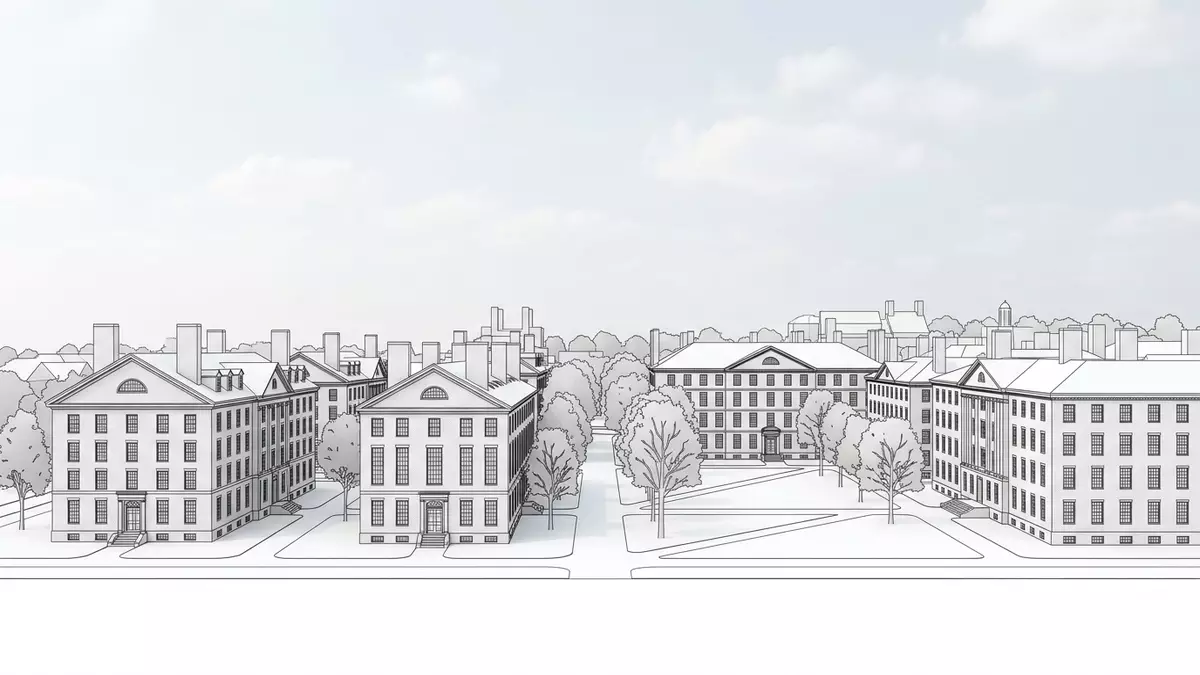
Harvard Yard is the historic heart of Harvard University in Cambridge, Massachusetts, a broad lawn framed by red-brick buildings and iron fencing where academic life and quiet green space meet.Harvard Yard The green traces its origins to the seventeenth century, when Harvard College emerged from a decision of the Massachusetts Bay Colony in 1636 to found a college, and an early parcel of land became the nucleus of the present campus.founding of Harvard College in the seventeenth century
Brick, lawn and gates: a defined campus green
Harvard Yard reads as a large rectangular park carpeted with grass and planted with trees, enclosed by a perimeter fence of iron and brick piers that separates the campus precinct from the surrounding streets.grassy area enclosed by fences with twenty-seven gates The green covers a little over 20 acres (about 9 ha), and is principally bounded by Massachusetts Avenue, Cambridge Street, Broadway and Quincy Street.bounded principally by Massachusetts Avenue, Cambridge Street, Broadway, and Quincy Street
The present enclosure grew from earlier pasture and town land into a defined campus landscape, completed by the installation of the wrought-iron perimeter fence and brick memorial gates around the turn of the twentieth century.installation of the wrought-iron perimeter fence and brick piers Within the fence, diagonal paved paths cross the lawn between mature trees and brick buildings, forming a network of routes that link dormitories, libraries and chapels around open grassy spaces.diagonal paths bisect open lawn and frame oblique and extended views
From College Yard to a layered architectural ensemble
The story of Harvard Yard begins with the College Yard, the early tract acquired in 1637 which became the nucleus of the campus and anchored the growth of Harvard College into a university.College Yard and forms the nucleus of what is now Harvard Yard Over the eighteenth and nineteenth centuries, Harvard added adjoining parcels and constructed academic and residential buildings, shaping a precinct whose architecture is dominated by Georgian and Colonial Revival brick structures arranged around courtyards and quadrangles.architectural character of the Yard is overwhelmingly Georgian and Colonial Revival
Among these buildings, Massachusetts Hall, completed in 1720 near Johnston Gate, stands as the oldest surviving structure on the campus and has long combined student rooms with senior administrative offices, including that of the president.Massachusetts Hall, built in 1720 and believed to be the oldest academic building in the United States Nearby Harvard Hall, rebuilt in 1766 after a fire, has housed both the college library and classrooms, reflecting the layered uses that academic buildings have carried through the centuries.Harvard Hall, rebuilt in 1766 Later additions such as red-brick Georgian Revival dormitories along the edges further strengthened the sense of a coherent architectural ensemble.Georgian Revival buildings accompanied a larger construction effort
Libraries, chapels and student life on the lawn
Harvard Yard today brings together many of the university’s central functions: most of the freshman dormitories, important libraries, Memorial Church, classrooms and departmental buildings, and offices of senior officials.contains most of the freshman dormitories; Harvard's most important libraries; Memorial Church; several classroom and departmental buildings; and the offices of senior university officials The grass between Widener Library and Memorial Church forms Tercentenary Theatre, a broad outdoor space used for commencement exercises and large academic gatherings.Tercentenary Theater
Scattered around the lawn are other named buildings that mark student and community life: Holden Chapel, one of the older chapels on campus, and Phillips Brooks House, a civic building designed by architect Alexander Wadsworth Longfellow Jr., which has long housed student-led public service organisations.Holden Chapel and the Phillips Brooks House, designed by Alexander Wadsworth Longfellow, Jr. Together with freshman dormitories in the Old Yard and libraries around the green, these structures create a setting where everyday student routes cross a landscape with centuries of academic history.
Visiting Harvard Yard: what travellers from Western Europe should know
- Harvard Yard lies in Cambridge in the state of Massachusetts, on the north bank of the Charles River, directly adjoining the district known as Harvard Square.
- The terrain inside the Yard is level grass and paved paths between buildings, with steps at some entrances and gates but generous open lawn for walking.
- Cambridge sits in the north-east of the United States; the official language is English and the currency is the US dollar.
- Entry requirements depend on your nationality; UK travellers can check the FCDO travel advice at gov.uk/foreign-travel-advice, Irish travellers the Department of Foreign Affairs at ireland.ie.
Searching for Harvard Yard on social platforms
These links open searches for Harvard Yard on each platform.
Frequently asked questions about Harvard Yard
Where is Harvard Yard located?
Harvard Yard is in Cambridge, Massachusetts, bounded by streets including Massachusetts Avenue, Cambridge Street, Broadway and Quincy Street near Harvard Square.
What can visitors expect when walking through Harvard Yard?
Visitors cross a fenced campus green of lawn, trees and brick buildings, with paved paths linking dormitories, libraries, chapels and administrative offices.
What makes Harvard Yard distinctive among university campuses?
Harvard Yard combines seventeenth-century origins, early buildings such as Massachusetts Hall and a defined lawn-and-brick layout that remains the symbolic core of Harvard University.


