
Hallasan, the volcanic summit that shapes Jeju Island
Published on 08/20/2026 at 22:54 | Editorial responsibility: Rafael Müller, Editor-in-Chief AD HOC NEWS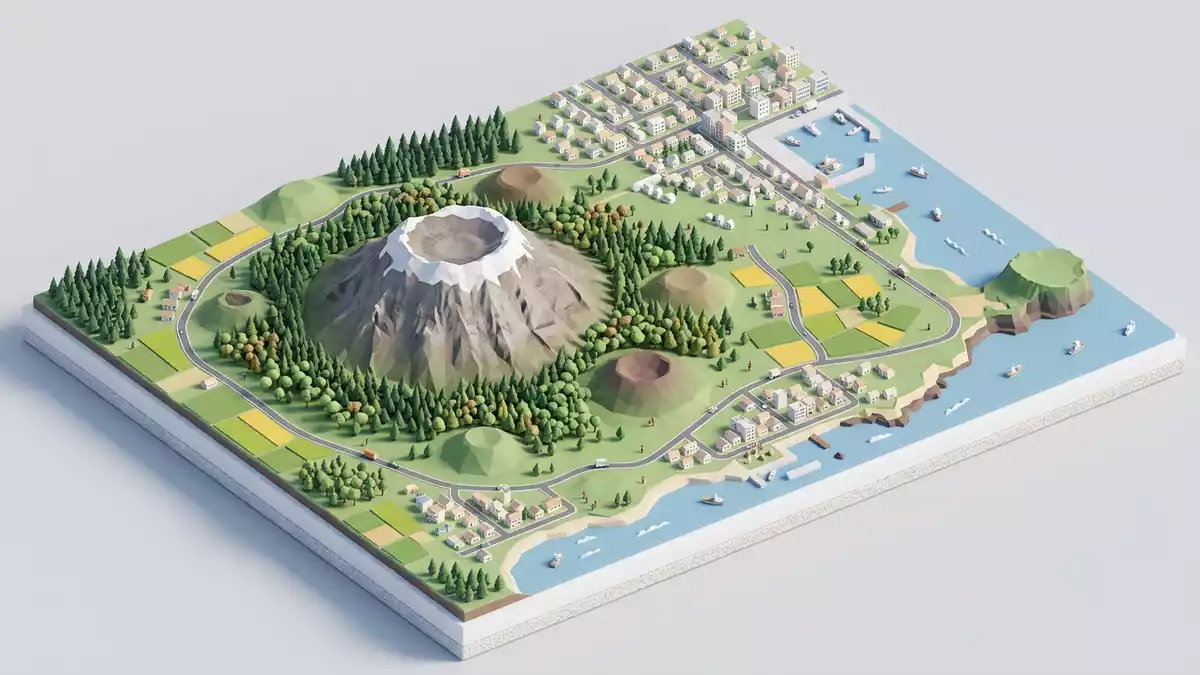
Hallasan dominates Jeju in South Korea, a shield volcano whose broad slopes fill most of the island and rise to the country’s highest summit. At its top lies the crater lake Baengnokdam, a feature that makes Hallasan both a landmark in the landscape and a mountain that repays careful exploration from sea level to the rim.
A shield volcano that is also an island
Hallasan is a massive shield volcano that forms the bulk of Jeju Island, with the mountain mass spreading outwards rather than rising as a narrow peak. The summit reaches about 1,947 m (6,388 ft), making Hallasan the highest mountain in South Korea and the highest point of the island’s terrain.highest mountain in South Korea The volcano’s flanks run down towards the sea in every direction, so that much of Jeju’s farmland, towns and smaller hills sit on its ancient lava.
The upper part of Hallasan and its surrounding slopes are protected as Hallasan National Park, which was established in 1970 as a national park of South Korea.Hallasan National Park The mountain and its lava landscape form part of the Jeju Volcanic Island and Lava Tubes World Heritage Site, recognised for volcanic landforms that range from sea level cliffs to the summit plateau of Hallasan.Jeju Volcanic Island and Lava Tubes
Baengnokdam crater lake and the high plateau
Hallasan’s summit is crowned by Baengnokdam, a crater that holds a lake in its basin when conditions allow.Baengnokdam crater lake The crater rim forms a rough ring around the water, with viewpoints where wooden walkways and platforms look across the basin towards the opposite side of the volcano’s crest. The lake surface and the steep crater walls give the summit area a very different character from the forested lower slopes.
Approach paths reach the rim from multiple directions, and on clear days the views sweep across the interior plateau of Hallasan towards Jeju City to the north and Seogwipo to the south. The upper slopes carry a mix of shrubs, grasses and patches of alpine vegetation that differs from the evergreen and deciduous forest lower down the mountain.range of biodiversity from boreal to alpine In this higher zone the paths cross exposed volcanic rock and sections of timber decking laid above the ground.
Trails that climb from forest to lava summit
Hallasan National Park is threaded with a network of marked hiking trails that connect different elevations and viewpoints. Several named routes climb through forest and shrubland towards the central plateau, with two of them reaching the summit crater and Baengnokdam itself.seven hiking trails including two summit routes The Seongpanak Trail approaches the volcano from the east, while the Gwaneumsa Trail climbs a steeper line from the north through rocky landscapes and valleys carved into the lava.
Other routes such as Eorimok, Yeongsil and Donnaeko stop short of the summit but still reach broad viewpoints on the upper slopes, where resting platforms and shelters provide landmarks along the way.Hallasan trails including Seongpanak, Gwaneumsa, Yeongsil, Eorimok and Donnaeko Shorter paths like the Eoseungsaengak and Seokguram trails give access to lower ridges and lookouts, creating options for visitors who prefer a shorter walk but still want a sense of Hallasan’s volcanic structure.
Visiting Hallasan: what travellers from Western Europe should know
- Hallasan rises in the centre of Jeju Island in South Korea, with main trailheads such as Seongpanak and Gwaneumsa reached by road from Jeju City or Seogwipo.
- The hiking routes involve sustained ascents on forest paths, stepped sections and rocky ground, and summit attempts require a long day on foot with significant height gain.
- The mountain lies in a national park, and weather on the upper slopes can differ markedly from conditions at sea level around Jeju’s coast.
- The official language is Korean and the currency is the South Korean won.
- Entry requirements depend on your nationality; UK travellers can check the FCDO travel advice at gov.uk/foreign-travel-advice, Irish travellers the Department of Foreign Affairs at ireland.ie.
Searching for Hallasan on social platforms
These links open searches for Hallasan on each platform.
Frequently asked questions about Hallasan
Where is Hallasan and what kind of mountain is it?
Hallasan is a shield volcano on Jeju Island in South Korea, rising from near sea level to the country’s highest summit within Hallasan National Park.
What can visitors expect on a first visit to Hallasan?
Visitors encounter forested lower slopes, long hiking trails and, on higher routes, exposed volcanic rock and views towards the summit crater lake of Baengnokdam.
What makes Hallasan distinctive among East Asian mountains?
Hallasan combines the role of national high point with that of a broad volcano forming almost the entire island, crowned by a crater lake reached only on foot.


