
Halaszbastya and its neo-Romanesque terraces in Budapest
Published on 09/16/2026 at 09:33 | Editorial responsibility: Rafael Müller, Editor-in-Chief AD HOC NEWS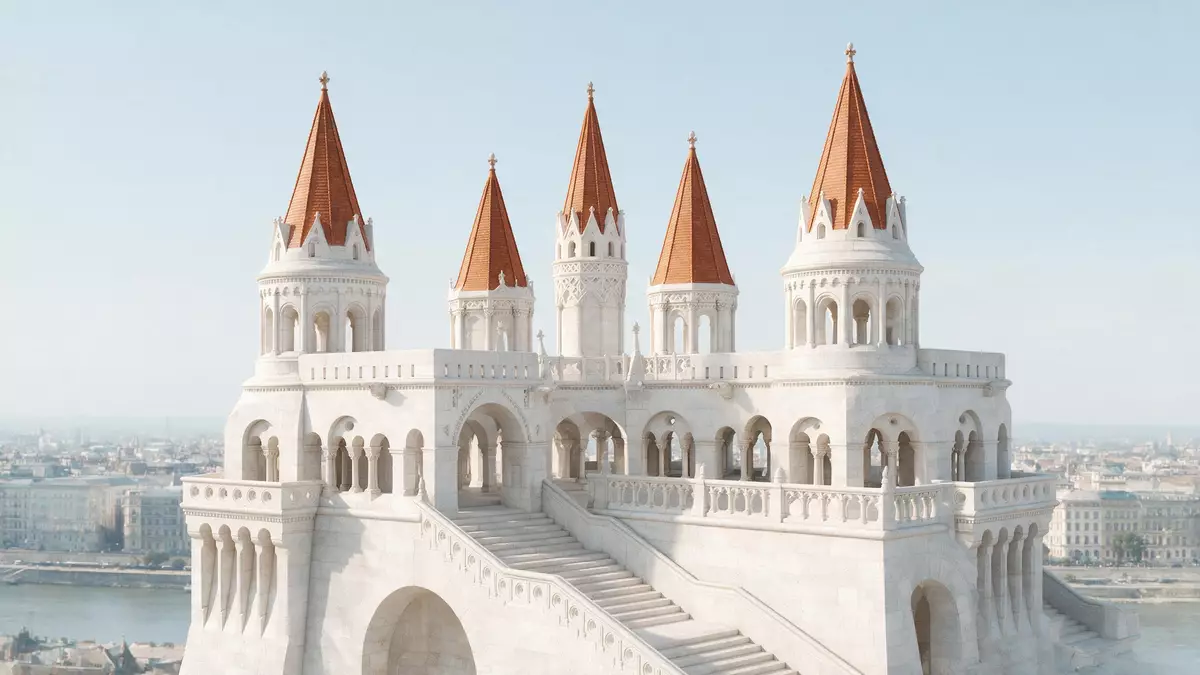
Halaszbastya, better known in English as Fisherman’s Bastion, is a Neo-Romanesque terrace ensemble on Castle Hill in Budapest. Frigyes Schulek’s name is tied to its form, and the structure belongs to the late nineteenth and early twentieth century.
Halaszbastya above Castle Hill
The place rises above the Buda side of the city as a white complex of arcades, walls and turrets. Its most recognisable feature is the long terrace edge, which opens towards the river and the Pest skyline.Neo-Romanesque lookout terraces
The bastion sits beside Matthias Church and forms part of the Buda Castle area. That setting gives it a clear place in Budapest’s historic hilltop landscape, with stone architecture gathered close together on the castle ridge.
Frigyes Schulek and the turn of the century
Schulek worked on the bastion between 1895 and 1902, and the building belongs to the world of historicist design. The date range places it at the threshold between the nineteenth century and the twentieth, when revival styles were still shaping major civic projects.built between 1895 and 1902
The name Halaszbastya has entered English writing alongside Fisherman’s Bastion. Schulek also restored Matthias Church, and the bastion’s materials and arcaded lines belong to the same architectural family as the church’s renewed historic character.
Stonework, arcades and the river view
The bastion combines stairs, parapets, openings and a broad viewing terrace. Its massing is lighter than a fortress wall, yet the white stonework and tower forms keep a castle-like outline.white Neo-Romanesque terrace
From the upper edge, Budapest spreads across the Danube with bridges, riverbank buildings and the parliamentary quarter in view. The terrace line, the masonry and the skyline form the core of the experience, rather than any military function.
Visiting Halaszbastya: what travellers from Western Europe should know
- The site stands on Castle Hill in Budapest, beside Matthias Church and within the Buda Castle District. Bus 16, the Buda Castle Funicular and steep streets connect the hill with the city below.
- The approach includes steps and a sloping hilltop setting. The terrain is paved and stone-built, with level terraces above the streets of the castle quarter.
- The official language is Hungarian and the currency is the forint.
- Entry requirements depend on your nationality; UK travellers can check the FCDO travel advice at gov.uk/foreign-travel-advice, Irish travellers the Department of Foreign Affairs at ireland.ie.
Searching for Halaszbastya on social platforms
These links open searches for Halaszbastya on each platform.
Frequently asked questions about Halaszbastya
Where is Halaszbastya?
Halaszbastya stands on Castle Hill in Budapest, in the Buda Castle District. It sits beside Matthias Church and faces across the Danube towards Pest.
What does a visit involve?
The place is an elevated terrace complex with steps, stone paths and open viewing spaces. The main impressions are its arcades, towers and wide outlook over the city.
What makes Halaszbastya distinctive?
Its Neo-Romanesque form and Frigyes Schulek’s authorship give it a clear identity. The white terraces and turreted outline make it read as a historic monument rather than a fortress in use.


