
Halaszbastya and its fairytale terraces above the Danube
Published on 09/14/2026 at 06:54 | Editorial responsibility: Rafael Müller, Editor-in-Chief AD HOC NEWS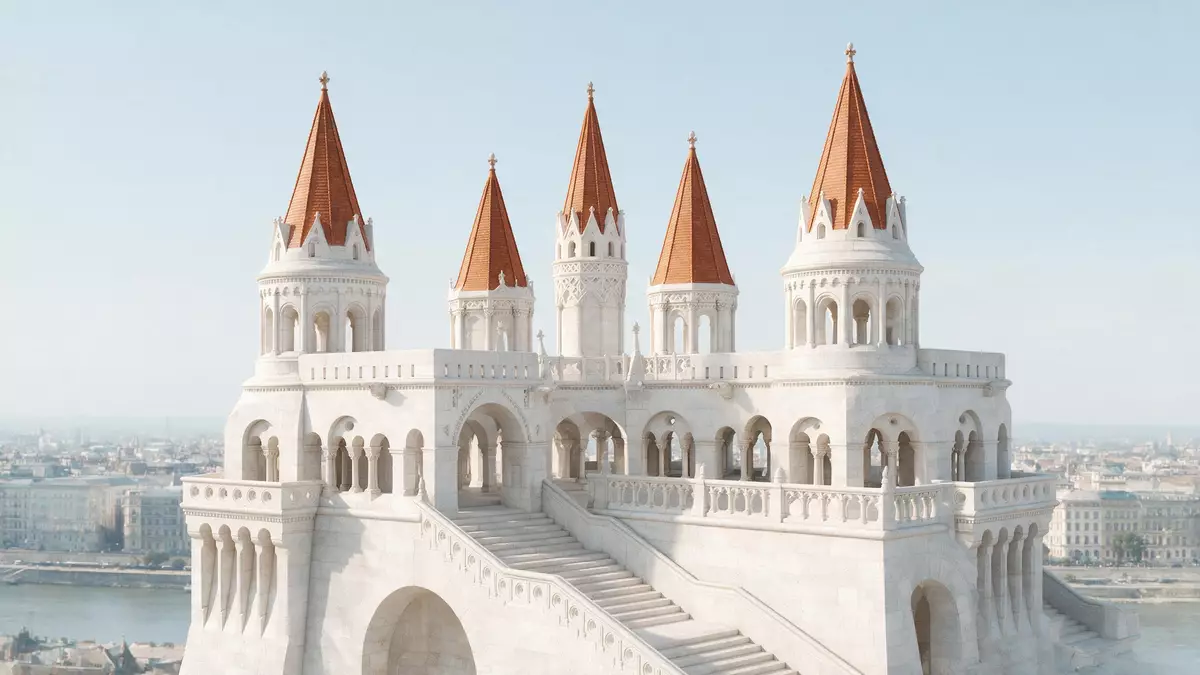
Halaszbastya, better known in English as Fisherman’s Bastion, is a neo-Romanesque terrace and ensemble of towers on Castle Hill in Budapest, looking out across the Danube towards the Pest side of the city. Completed in the early twentieth century and designed by architect Frigyes Schulek, it forms part of the historic Buda Castle District that has World Heritage status and clusters around Matthias Church.
Terraces, towers and a staged panorama
The defining experience of Halaszbastya is the way its terraces and towers step out over the slope above the river, creating a layered viewing platform over the Danube and central Pest. The structure runs along the western bank of the river on Castle Hill, curving around Matthias Church and enclosing Szentháromság tér with arcades, stairways and projecting walkways.a terrace in neo-Gothic and neo-Romanesque style From the upper levels, the line of the river, the outline of Margaret Island and the dense roofs of Pest form a broad panorama framed by stone balustrades.
Halaszbastya is built in pale stone, with parapets and staircases linking its different levels and towers. The terrace connects directly to the surroundings of Matthias Church, so that the stained walls and spires of the church rise immediately beside the walkways of the bastion.Designed by architect Frigyes Schulek Below the terrace, paths and staircases descend towards the riverbank, making the change in height between Castle Hill and the Danube part of the visit.
From fortress wall to neo-Romanesque monument
For centuries, a section of the Buda Castle wall occupied the site where Halaszbastya now stands, forming part of the fortifications that defended this side of Budapest.a section of the Buda Castle wall stood on the site In the nineteenth century the military role of the castle diminished, and new plans were drawn up to remodel the area around Matthias Church and the old walls into a representative urban ensemble.
Construction of the present Halaszbastya in neo-Romanesque revival style began in the 1890s, based on Schulek’s plans, and the bastion was opened to the public in 1905.Construction started in the 1890s The building was conceived as a promenade and viewing terrace, not as a fighting platform, and it draws on motifs from medieval castles – battlements, turrets and arcaded walks – translated into a monumental cityscape above the river. During the twentieth century it suffered damage in the Second World War and was restored afterwards, including work directed by János Schulek, son of the original architect.restored by János Schulek
Symbolic towers and the statue of Stephen I
The most recognisable features of Halaszbastya are its towers, which rise above the terraces and parapets and stand out in distant views of Castle Hill. There are seven of these towers, each associated with one of the Magyar tribes that occupied the Carpathian Basin in the ninth century and form part of the Hungarian origin story.seven towers in all Their pointed roofs and clustered arrangement give the bastion a fairytale silhouette among the more vertical masses of the castle and the church.
Between Halaszbastya and Matthias Church stands a bronze equestrian statue of Stephen I of Hungary, erected in 1906.A bronze statue of Stephen I of Hungary mounted on a horse, erected in 1906 The statue occupies a central position in the space framed by the terraces and arcades, with stone reliefs around its pedestal, and it anchors the ensemble in Hungary’s royal history as much as in its urban landscape.
Visiting Halaszbastya: what travellers from Western Europe should know
- Halaszbastya stands on Castle Hill above the western bank of the Danube in Budapest’s Buda Castle District, around Matthias Church and Szentháromság tér.
- The terraces are reached by exterior staircases and sloping paths, with flights of steps linking the lower levels near the river to the upper walkways around the towers.
- The official language is Hungarian and the currency is the Hungarian forint.
- Entry requirements depend on your nationality; UK travellers can check the FCDO travel advice at gov.uk/foreign-travel-advice, Irish travellers the Department of Foreign Affairs at ireland.ie.
Searching for Halaszbastya on social platforms
These links open searches for Halaszbastya on each platform.
Frequently asked questions about Halaszbastya
Where is Halaszbastya in Budapest?
Halaszbastya is on Castle Hill in the Buda Castle District, above the western bank of the Danube and adjacent to Matthias Church and Szentháromság tér.
What can visitors expect on a visit to Halaszbastya?
Visitors encounter stone terraces, staircases and towers arranged along the castle ramparts, with broad views across the Danube towards central Pest and the Parliament area.
What makes Halaszbastya distinctive among Budapest’s landmarks?
Its combination of neo-Romanesque revival architecture, symbolic towers linked to the Magyar tribes and the equestrian statue of Stephen I in front of Matthias Church gives it a character tied closely to Hungarian history and the city’s riverside skyline.


