
Halaszbastya and Budapest's neo-Romanesque terrace
Published on 09/07/2026 at 11:57 | Editorial responsibility: Rafael Müller, Editor-in-Chief AD HOC NEWS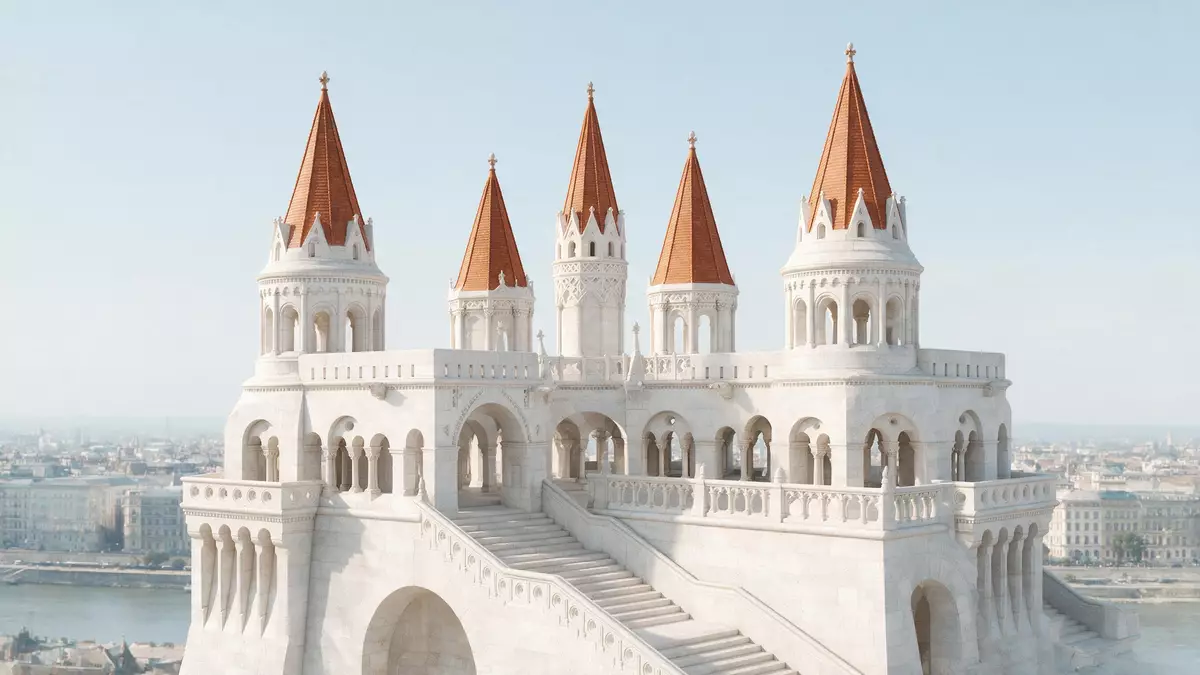
Halaszbastya rises above Budapest as a white neo-Romanesque terrace by Frigyes Schulek. Built between 1895 and 1902, it sits within the Buda Castle District and faces the Danube side of Castle Hill.neo-Romanesque terrace Buda Castle District
Frigyes Schulek’s terrace on Castle Hill
The structure is defined by pale stone, arcades and pointed rooflines that sit over the old castle walls. Seven towers rise above the parapets, and the composition gives the hilltop a layered silhouette.seven towers Frigyes Schulek
Its name recalls the fishermen’s guild linked with the medieval walls below the bastion. The present form belongs to the late nineteenth century, but the setting keeps the memory of older defensive walls and the castle hill above Budapest.fishermen’s guild late nineteenth century
Stone, arches and the hilltop setting
The bastion is not a fortress in the military sense that its profile might suggest. It works as a promenade and lookout terrace, with open walkways, stairways and balustrades arranged around the church and the old walls.promenade and lookout terrace 1895 and 1902
That mix of monument and walkable terrace gives Halaszbastya its lasting appeal as a piece of architecture rather than a relic sealed off behind walls. The building belongs to the late nineteenth-century revival of historic forms, yet its arches and towers remain easy to read from the surrounding streets and riverbank.historic forms Buda Castle District
Budapest’s hilltop terrace in historical context
Halaszbastya stands within a district shaped by the city’s castle complex and by centuries of change on Castle Hill. Its neo-Romanesque language sets it apart from the darker masonry around it, while Matthias Church sits close by as part of the same historic ensemble.Matthias Church neo-Romanesque language
The terrace is part of Budapest’s public face on the Buda side, where castle masonry, church spires and river views share the same slope. Halaszbastya reads best as an urban landmark: decorative, elevated and firmly tied to the city’s historic hilltop core.urban landmark
Visiting Halaszbastya: what travellers from Western Europe should know
- Halaszbastya stands in the Buda Castle District on Castle Hill in Budapest. It is reached on foot through the hilltop streets and by local transport serving the castle area.
- The approach includes steps, slopes and uneven paving. The terrace itself is arranged across several levels rather than one flat platform.
- The official language is Hungarian and the currency is the forint.
- Entry requirements depend on your nationality; UK travellers can check the FCDO travel advice at gov.uk/foreign-travel-advice, Irish travellers the Department of Foreign Affairs at ireland.ie.
Searching for Halaszbastya on social platforms
These links open searches for Halaszbastya on each platform.
Frequently asked questions about Halaszbastya
Where is Halaszbastya?
Halaszbastya stands on Castle Hill in Budapest, within the Buda Castle District. It overlooks the city from the Buda side.
What does a visit involve?
The place is a terrace with stairways, balustrades and walkways around the hilltop setting. The ground underfoot includes steps and slopes.
What makes Halaszbastya distinctive?
Its neo-Romanesque stonework, towers and arcades give it a strong outline against the castle hill. The name and form keep Budapest’s medieval and nineteenth-century layers close together.


