
HaKotel HaMa'aravi, the Western Wall of Jerusalem
Published on 09/08/2026 at 20:13 | Editorial responsibility: Rafael Müller, Editor-in-Chief AD HOC NEWS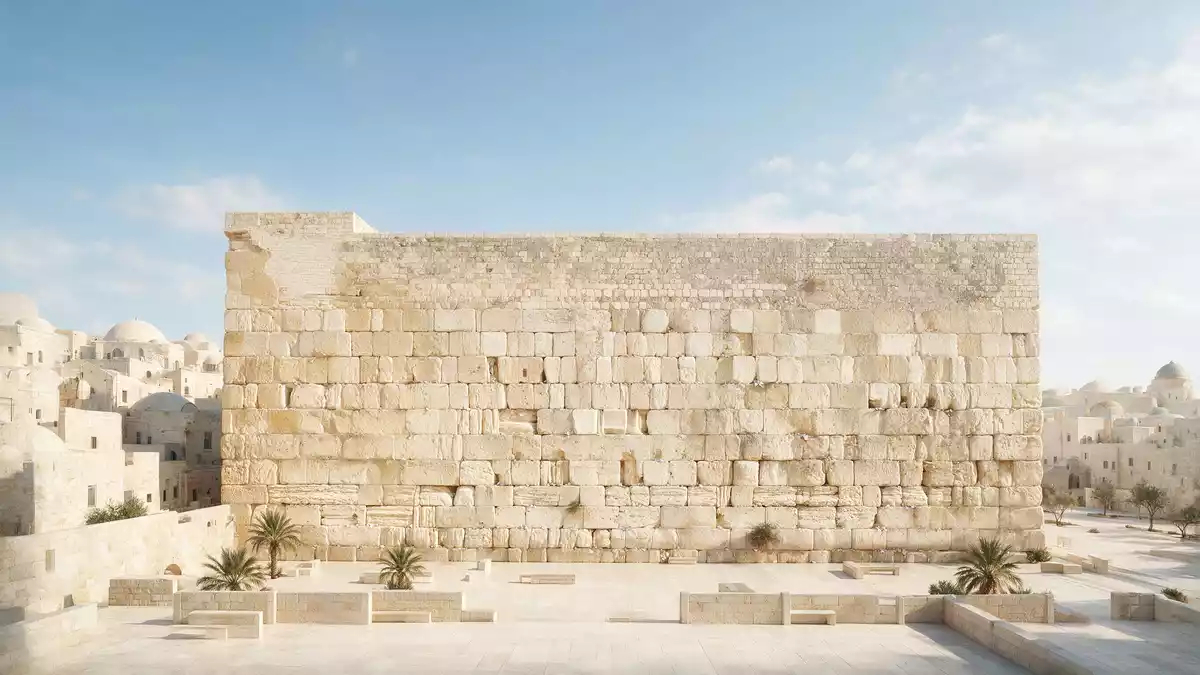
HaKotel HaMa'aravi, known in English as the Western Wall, is the western retaining wall of the Temple Mount in Jerusalem, where ancient limestone blocks rise above an open plaza dedicated to Jewish prayer. Built as part of the monumental expansion of the Temple Mount in the late first century BC under Herod the Great, the wall has become a central religious site in the Old City’s Jewish Quarter.
The western wall of the Temple Mount
HaKotel HaMa'aravi forms the western side of the man-made hill known as the Temple Mount, constructed as a giant platform to support the First and Second Temples of Jerusalem.retaining wall surrounding the Temple Mount The wall is part of a system of four support walls that were built to hold the vast stone terrace, and it remains the most accessible of these structures for visitors.one of four supporting walls of the Temple Mount As seen from the plaza, the exposed section of HaKotel HaMa'aravi is about 50 m (160 ft) long and roughly 20 m (65 ft) high, while further courses of stone continue below the current ground level.measures about 50 metres long and about 20 metres high
The wall’s core is built of large blocks of local limestone, many of them finely dressed and laid in horizontal courses without visible mortar. These stones date back to Herod’s expansion works, which are generally placed around 19 BC, when the Second Temple and its surrounding structures were enlarged.built by Herod the Great around 19 BCE Above them, smaller stones added in later centuries follow the same basic pattern, creating a layered facade that reflects different phases of Jerusalem’s history.
A place of Jewish prayer in the Old City
HaKotel HaMa'aravi stands within the walled Old City of Jerusalem, in or near the Jewish Quarter, and faces a paved plaza that serves as a major Jewish prayer site.place of prayer and pilgrimage sacred to the Jewish people In Hebrew, the site is typically called HaKotel HaMa'aravi, meaning “the western wall”, or simply HaKotel, “the wall”, while English usage has largely settled on Western Wall as the neutral geographical name.hebräisch ha-Kotel ha-Ma?arav?, deutsch Westliche Mauer The section most familiar to visitors is the open stretch of masonry where men and women pray in separate areas, with stone paving underfoot and the limestone blocks rising directly in front of them.
Beyond its exposed portion, HaKotel HaMa'aravi continues in length beneath later structures and streets, reaching a total of more than 400 m along the western side of the Temple Mount.entire 488-metre-long retaining wall on the western side Sections of the wall are accessible through underground passages and tunnel tours, where further courses of Herodian stone stand below the current ground level and under the fabric of the Old City. Together, the plaza and the tunnels show HaKotel HaMa'aravi as both a living prayer site and a substantial piece of ancient engineering.
Limestone blocks and layers of history
The most striking feature of HaKotel HaMa'aravi is its pattern of limestone blocks laid in regular courses, which gives the wall a strong horizontal rhythm. Herodian stones near the base are large, with finely bevelled edges and smooth faces, while later additions above them are smaller, reflecting periods of repair and change over many centuries.ancient retaining wall of the built-up hill known to Jews and Christians as the Temple Mount In several places, narrow plants grow in the joints between stones, emphasising the age of the structure and the way natural elements have found a foothold in the masonry.
Historically, the Western Wall is associated with the destruction of the Second Temple by Roman forces in 70 AD, after which the retaining walls survived while the central sanctuary was lost.a remnant of the Second Temple compound in Jerusalem’s Old City Over the centuries, Jewish communities have come to regard HaKotel HaMa'aravi as the holiest place where they can pray, due to its proximity to the former Temple site and the limitations on direct access to the Temple Mount itself.most sacred site recognized by the Jewish faith outside of the Temple Mount itself This combination of visible stonework, enduring religious practice and deep historical associations makes the wall a signature landmark of Jerusalem.
Visiting HaKotel HaMa'aravi: what travellers from Western Europe should know
- HaKotel HaMa'aravi stands in the Old City of Jerusalem on the western side of the Temple Mount, near the Jewish Quarter and reached through stone-paved alleys.
- The plaza in front of the wall is entirely paved, with a level surface and clear open space, but approaches from the surrounding quarters involve steps and short slopes.
- HaKotel HaMa'aravi lies within Israel, where the official language is Hebrew and the currency is the Israeli shekel.
- Entry requirements depend on your nationality; UK travellers can check the FCDO travel advice at gov.uk/foreign-travel-advice, Irish travellers the Department of Foreign Affairs at ireland.ie.
Searching for HaKotel HaMa'aravi on social platforms
These links open searches for HaKotel HaMa'aravi on each platform.
Frequently asked questions about HaKotel HaMa'aravi
Where is HaKotel HaMa'aravi located in Jerusalem?
HaKotel HaMa'aravi stands in the Old City of Jerusalem on the western side of the Temple Mount, close to the Jewish Quarter and reached via historic streets.
What can visitors expect when they reach the Western Wall?
Visitors encounter a paved open plaza facing the limestone wall, with separate areas for men and women and approaches that pass through narrow alleys and gateways of the Old City.
What makes HaKotel HaMa'aravi distinctive among Jerusalem’s sites?
HaKotel HaMa'aravi combines massive Herodian stonework, its role as the western retaining wall of the Temple Mount and its status as a central Jewish prayer site.


