
HaKotel HaMa'aravi and the living stones of Jerusalem
Published on 08/26/2026 at 09:31 | Editorial responsibility: Rafael Müller, Editor-in-Chief AD HOC NEWS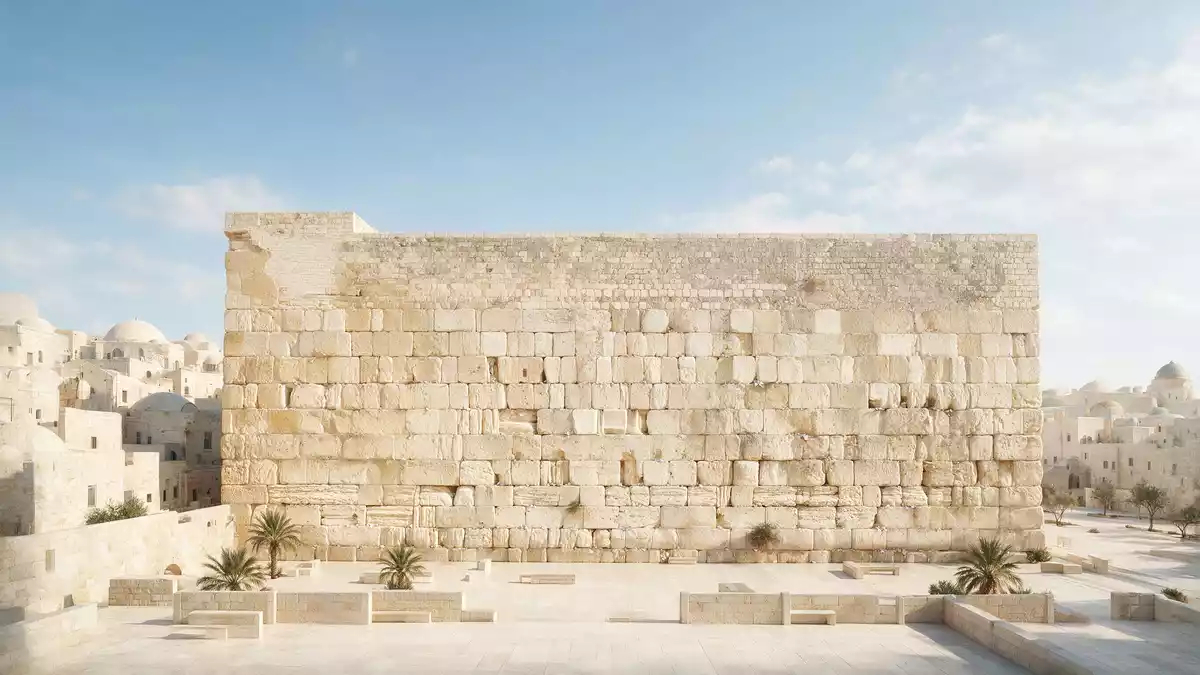
HaKotel HaMa'aravi, known in English as the Western Wall, is an exposed stretch of ancient masonry on the western side of Jerusalem’s Temple Mount where stone, history and prayer meet in one compact space. Rising from the bedrock of the Old City, it forms part of a retaining wall whose lower courses date to the expansion of the Temple Mount under Herod the Great in the first century BC, tying the site directly to the period of the Second Temple.Temple Mount in the Old City This blend of visible archaeology and ongoing religious use gives travellers a rare chance to stand beside stones that were already old when Jerusalem fell to the Romans in 70 CE.retaining wall built to support the elevated plateau
A wall of layers: stones from different eras
Seen from the plaza, HaKotel HaMa'aravi presents a clear cross-section of Jerusalem’s building history, from massive Herodian blocks at the base to later courses added under subsequent rulers. The wall forms part of a much longer barrier, around 488 m (1,601 ft) in total length, running along the western flank of the Temple Mount platform, even though only a portion is exposed in the prayer area.488-metre-long retaining wall on the western side This visible section stands above paving stones that mark the broad plaza, which was laid out to give direct access to the exposed masonry from the surrounding streets of the Old City.Western Wall stands within the Old City of Jerusalem
The lowest courses, dating to the works associated with Herod the Great, consist of large, well-dressed limestone blocks laid in horizontal rows with only thin joints between them.lower half dates to the time of Herod Above these, later stones from early Islamic and Ottoman periods carry their own chisel marks and patched repairs, creating a visual record of successive interventions on the same supporting wall. For visitors standing close to the masonry, the change in stone size, tooling and colour from course to course gives a sense of how long the structure has remained in continuous use.
Prayer, pilgrimage and everyday ritual
HaKotel HaMa'aravi is widely recognised in Jewish tradition as a place of prayer and pilgrimage, closely associated with the destroyed Second Temple.place of prayer and pilgrimage sacred to the Jewish people In this context the wall is valued as the closest accessible point to the site of the former Holy of Holies, a sanctum located on the upper platform of the Temple Mount.closest in proximity to the site of the Holy of Holies The destruction of the Second Temple by the Romans in 70 CE left only the retaining walls of the platform, so the surviving western side acquired a special role in Jewish memory and devotion.remained intact after the destruction of Jerusalem's second Holy Temple
On a visit, the most striking feature is the way religious practice and everyday movement share the same space. The open plaza in front of the wall is divided into separate sections, with people gathering to recite prayers, read from sacred texts or stand quietly near the stones. Paper notes bearing handwritten petitions are placed into the joints between the blocks, a custom that has become strongly associated with the site over the past century. The continuity of use, rather than formal ceremonies alone, shapes the atmosphere: there is no fixed “service” dominating the space, yet the liturgy of holidays and life-cycle events often unfolds directly in front of the masonry.
HaKotel HaMa'aravi within the Old City landscape
Physically, HaKotel HaMa'aravi sits within the Old City of Jerusalem, below the elevated Temple Mount and its Islamic shrines, and above the dense network of streets and houses that fill the surrounding quarters.located in the Old City of Jerusalem In plan, the wall is one of four retaining sides that frame the artificial plateau of the mount, enclosing what had once been the precincts of the First and Second Temples.supporting wall on the western side of the Temple Mount From the plaza, visitors can look up to the higher platform and across to the adjacent quarters of the Old City, seeing how the retaining structure supports a sacred terrace that has carried different religious buildings across the centuries.
Beneath the visible section, the Western Wall continues into a series of tunnels and underground spaces that follow its buried length northwards under later buildings.45 courses of stone of which 28 are above ground and 17 rows are still underground Guided visits in these tunnels reveal additional Herodian courses and earlier street levels, underlining that the exposed stones in the plaza are only part of a much taller and longer retaining wall than the surface view implies. Seen together, the open plaza, the wall and the tunnels frame HaKotel HaMa'aravi not only as a single facade but as one side of a vast man-made platform that reshaped the topography of Jerusalem in the late first century BC.
Visiting HaKotel HaMa'aravi: what travellers from Western Europe should know
- HaKotel HaMa'aravi stands along the western edge of the Temple Mount in the Old City of Jerusalem, south of the Muslim Quarter and close to the Jewish Quarter.
- The plaza in front of the wall is paved and broadly level, but access from surrounding streets involves passing through stone gateways and walking along alleys that may include steps.
- The Old City lies within the modern municipality of Jerusalem in Israel, where the official languages are Hebrew and Arabic and the currency is the Israeli new shekel.
- Entry requirements depend on your nationality; UK travellers can check the FCDO travel advice at gov.uk/foreign-travel-advice, Irish travellers the Department of Foreign Affairs at ireland.ie.
Searching for HaKotel HaMa'aravi on social platforms
These links open searches for HaKotel HaMa'aravi on each platform.
Frequently asked questions about HaKotel HaMa'aravi
Where is HaKotel HaMa'aravi located in Jerusalem?
HaKotel HaMa'aravi stands in the Old City of Jerusalem along the western side of the Temple Mount, above paved alleys that lead out towards the city’s historic quarters.
What can visitors expect when they come to the Western Wall?
Visitors encounter an open plaza facing the exposed stones of the wall, with separate sections where people gather to pray, recite texts, place written notes and mark religious occasions.
What makes HaKotel HaMa'aravi distinctive among historic sites?
The combination of Herodian-era masonry tied to the Second Temple period, its role as a retaining wall of the Temple Mount and its continuous function as a living place of prayer makes it distinctive.


