
HaKotel HaMa'aravi and the layered stones of Jerusalem
Published on 08/31/2026 at 16:24 | Editorial responsibility: Rafael Müller, Editor-in-Chief AD HOC NEWS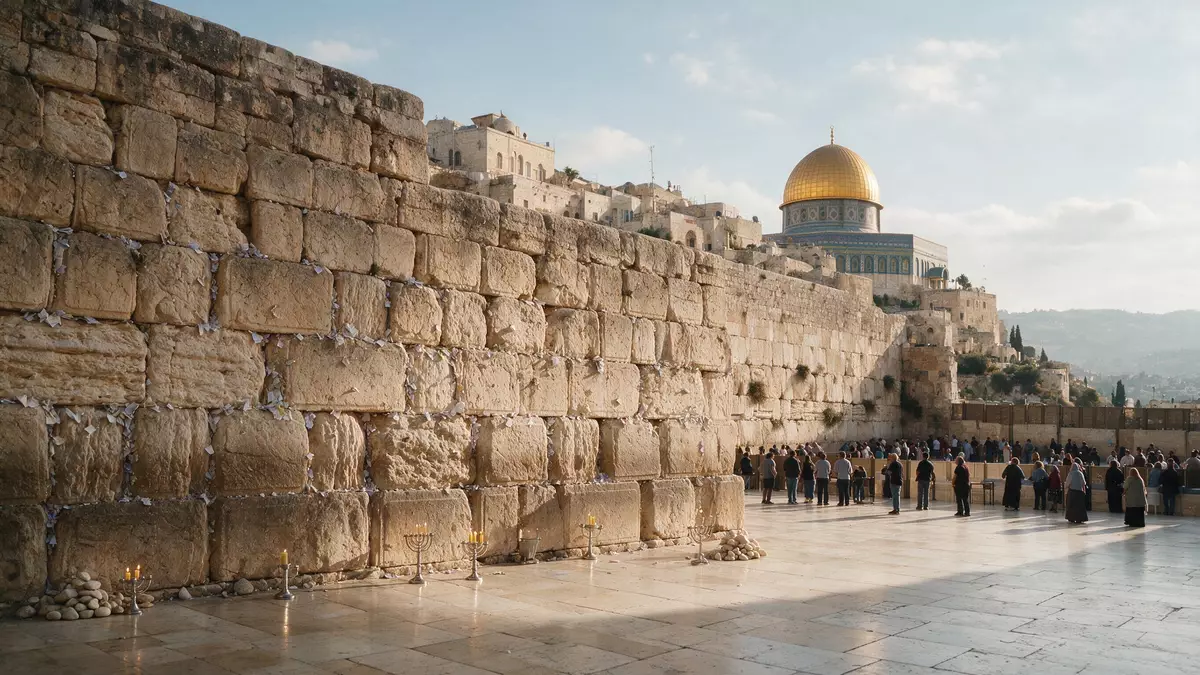
HaKotel HaMa'aravi, also known in English as the Western Wall, is a limestone retaining wall in the Old City of Jerusalem. Its exposed face shows a Herodian core, later rebuilding above it, and a long role in Jewish prayer.
Herodian masonry at the edge of the Temple Mount
The wall belongs to the western side of the Temple Mount, the raised platform associated with the First and Second Temples of Jerusalem. Its earliest visible masonry is generally linked to the reign of Herod the Great and the second century bce. The stones are large, pale, and carefully dressed, with later courses stacked above them.
That mixture of periods gives the wall its layered appearance. The lower courses read as monumental engineering, while the upper bands are slimmer and more varied, recording later rebuilding in the same line of stone.
Prayer, memory and a stone surface
For centuries, the wall has been a place of Jewish devotion. Visitors see a broad stone frontage, a prayer plaza, and the cracks that hold folded notes placed by worshippers.
The site is tied to the destruction of the Second Temple in 70 ce and to the long history of Jewish presence in Jerusalem. The name HaKotel HaMa'aravi itself reflects that relationship: it identifies the western wall, not a decorative monument or a freestanding shrine.
Later layers above the ancient courses
The wall’s upper sections were added after the Herodian phase, and they give the structure a visibly stratified surface. That contrast is one of the clearest things to notice on site: massive blocks below, smaller masonry above.
The whole composition is part of a much larger retaining wall on the Temple Mount’s western side. The result is not a single wall of one moment, but a built edge that carries several periods in one line.
Visiting HaKotel HaMa'aravi: what travellers from Western Europe should know
- The wall stands in Jerusalem’s Old City, at the western edge of the Temple Mount. It is reached on foot through the historic quarter.
- The prayer area sits below surrounding street level in places, and the stone frontage is broad rather than enclosed. The surface combines very large lower stones with smaller upper courses.
- The site is associated with Jewish prayer, folded notes in the wall, and a large open plaza in front of the masonry. The setting is partly archaeological and partly devotional.
- The official language is Hebrew and the currency is the Israeli new shekel.
- Entry requirements depend on your nationality; UK travellers can check the FCDO travel advice at gov.uk/foreign-travel-advice, Irish travellers the Department of Foreign Affairs at ireland.ie.
Searching for HaKotel HaMa'aravi on social platforms
These links open searches for HaKotel HaMa'aravi on each platform.
Frequently asked questions about HaKotel HaMa'aravi
Where is HaKotel HaMa'aravi?
HaKotel HaMa'aravi is in the Old City of Jerusalem, on the western side of the Temple Mount. It is part of a long retaining wall rather than a standalone building.
What does a visit involve?
The visit centres on the stone wall, the open prayer plaza and the surrounding Old City streets. The surface itself is the main attraction, with large blocks below and later masonry above.
What makes HaKotel HaMa'aravi distinctive?
Its most striking feature is the visible layering of periods in one structure. The wall combines Herodian stonework, later additions and a continuing role in Jewish worship.


