
HaKotel HaMa'aravi and the layered stones of Jerusalem
Published on 08/27/2026 at 08:27 | Editorial responsibility: Rafael Müller, Editor-in-Chief AD HOC NEWS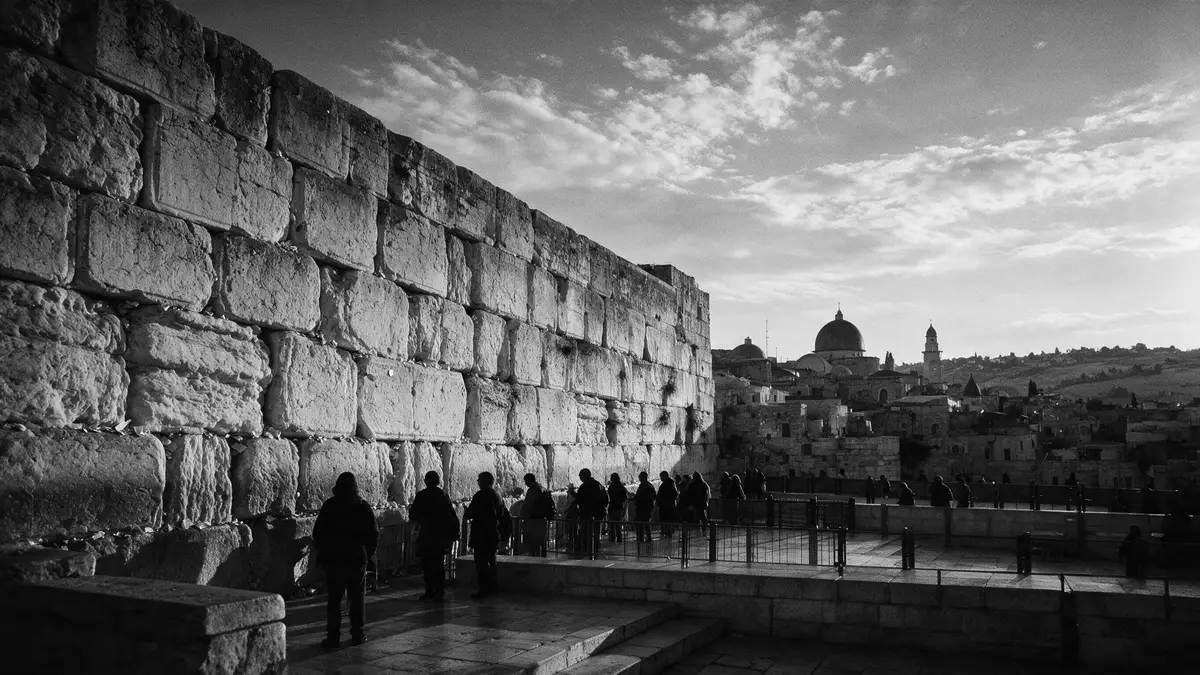
HaKotel HaMa'aravi, known in English as the Western Wall, is the surviving western retaining wall of the Temple Mount in Jerusalem, where courses of ancient stone support a raised sacred platform rooted in the Second Temple period.Western Wall in the Old City The section familiar from countless photographs is only part of a far longer wall that has carried the weight of history since the reign of Herod the Great in the first century BC.retaining wall on the western side
Herodian engineering on the Temple Mount
The core of HaKotel HaMa'aravi belongs to the vast construction project undertaken under Herod the Great, when the hill known as the Temple Mount was reshaped and enclosed within a monumental platform.retaining wall built to support the plateau Herodian builders cut and set enormous limestone blocks, their faces drafted with smooth margins and a slightly raised centre, to create walls that still define the edges of the mount.
Measured along its full extent, the western retaining wall stretches for close to 488 m (about 1,600 ft), following the west flank of the Temple Mount above the streets of the Old City.488 metres long The familiar prayer section exposes part of this length, where courses of stone rise in horizontal bands, some blocks reaching several metres in length and weighing many tonnes, with later masonry sitting above the Herodian stones.
A wall of stones and stories
Standing in front of HaKotel HaMa'aravi means facing a cross-section of Jerusalem’s history, laid out in stone from the Roman period through later Islamic and Ottoman eras.section used for Jewish prayer The lowest visible courses belong to the Herodian phase, identified by their characteristic drafted margins, while higher layers record later rebuilding and repair as the city shifted through empires.
The plaza facing the exposed section lies within the Jewish Quarter of the Old City, with the wall forming the eastern edge of this open space.religious site in the Jewish Quarter From here, the masonry rises above the paving, with further courses extending below the present ground level, some reaching down to bedrock on the slope of Mount Moriah, where foundations once anchored the broader Temple enclosure.height of the exposed section
Prayer, pilgrimage and the modern Old City
HaKotel HaMa'aravi stands within the walls of the Old City of Jerusalem, east of the Armenian and Jewish quarters and below the elevated platform that carries the Dome of the Rock and Al-Aqsa Mosque.plateau supporting later sanctuaries In Jewish religious life the exposed western section is a place of prayer and pilgrimage, closely associated with the memory of the First and Second Temples and the destruction of the Second Temple by the Romans in 70 CE.site of the First and Second Temples
The Hebrew names HaKotel HaMa'aravi and simply Kotel, meaning “the western wall” and “wall”, reflect the way the place is woven into Hebrew-speaking culture, while “Western Wall” remains the standard English term.Hebrew and English names Around the plaza, stone-paved alleys link the site to the rest of the Old City, tying the retaining wall into a wider urban landscape of markets, synagogues, churches and mosques that share the tight topography of Jerusalem’s historic core.Western Wall within the Old City
Visiting HaKotel HaMa'aravi: what travellers from Western Europe should know
- HaKotel HaMa'aravi stands on the western flank of the Temple Mount in the Old City of Jerusalem, reached on foot through gates in the historic city walls.
- The plaza in front of the wall is paved and open to the sky, with a short approach on foot from the surrounding streets and steps leading down from some entrances.
- The site lies within the State of Israel, where the official language is Hebrew and the currency is the Israeli new shekel.
- Entry requirements depend on your nationality; UK travellers can check the FCDO travel advice at gov.uk/foreign-travel-advice, Irish travellers the Department of Foreign Affairs at ireland.ie.
Searching for HaKotel HaMa'aravi on social platforms
These links open searches for HaKotel HaMa'aravi on each platform.
Frequently asked questions about HaKotel HaMa'aravi
Where is HaKotel HaMa'aravi located within Jerusalem?
HaKotel HaMa'aravi stands in the Old City of Jerusalem, along the western side of the Temple Mount above stone-paved alleys that lead into the plaza.
What can visitors expect when they reach the wall?
Visitors step into an open plaza facing massive courses of ancient limestone, where the exposed western section of the retaining wall rises above and below present ground level.
What makes HaKotel HaMa'aravi distinctive among Jerusalem’s sacred places?
HaKotel HaMa'aravi combines Herodian retaining walls from the Second Temple period with a continuous role as a Jewish place of prayer linked to the memory of the destroyed Temple.


