
HaKotel HaMa'aravi and the layered stone of Jerusalem
Published on 09/23/2026 at 05:08 | Editorial responsibility: Rafael Müller, Editor-in-Chief AD HOC NEWS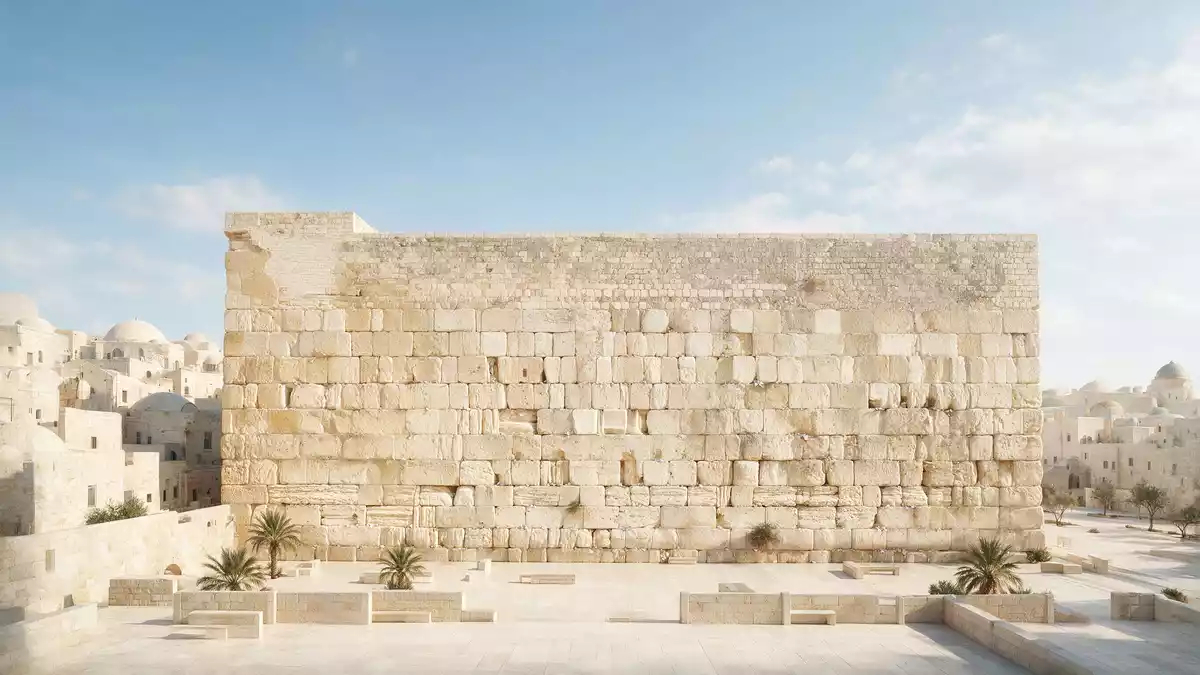
HaKotel HaMa'aravi, also known as the Western Wall, is a place of prayer in Jerusalem’s Old City. Its visible courses of limestone belong to a much larger retaining wall built around the Temple Mount, making the site both a religious sanctuary and a readable section of Jerusalem’s ancient fabric.
HaKotel HaMa'aravi: a wall beneath the visible stones
The prayer area shows only part of the western retaining wall. The full structure extends for about 488 metres, while the section facing the main plaza measures roughly 50 metres in length and about 20 metres in visible height. Much of the wall continues beneath streets, buildings and passages in the Old City.
The lower courses contain large, carefully dressed limestone blocks associated with the Herodian expansion of the Temple Mount. Their broad faces and recessed edges create the distinctive pattern visible beside the prayer plaza. The stonework is not a single uninterrupted surface: different courses record different phases of construction and repair. The Western Wall’s dimensions show how the public prayer space represents only a small part of the surviving structure.
Herod the Great and the Second Temple platform
Herod the Great ruled Judea from 37 to 4 BCE. During his reign, the Temple Mount was enlarged with substantial supporting walls, creating a broad platform for the Second Temple complex. HaKotel HaMa'aravi forms the western side of that retaining system.
The Second Temple was destroyed by Roman forces in 70 CE. The wall survived as part of the platform’s perimeter, while the temple buildings themselves disappeared. Its historical identity therefore rests on both its material survival and its relationship with the sacred precinct above it. Herod’s Temple Mount works belong to the Roman-period history of Jerusalem.
Jewish tradition identifies the wall as a place of prayer and mourning connected with the destruction of the Temple. The name HaKotel HaMa'aravi means the Western Wall in Hebrew. The term “Wailing Wall” is an older English name, but HaKotel HaMa'aravi is the name used for the site in Hebrew and in contemporary descriptions.
Prayer, archaeology and the Old City
The prayer plaza is divided into sections associated with Jewish worship. Visitors encounter a living religious site rather than an archaeological display. Prayer books, shawls, written prayers and gatherings form part of the setting, while the stones remain the central physical feature.
Men and women pray in separate areas according to the arrangements of the plaza. Religious ceremonies, family milestones and individual prayer take place beside the wall. The practice of placing written prayers between the stones is associated with the site, although the wall itself is not a monument designed for this custom.
HaKotel HaMa'aravi lies within the Old City of Jerusalem, a historic urban area containing sites sacred to Judaism, Christianity and Islam. The Old City of Jerusalem and its Walls entered the UNESCO World Heritage List in 1981. The 1981 heritage inscription includes the wider historic setting rather than treating the prayer plaza as an isolated monument.
The wall also connects the open plaza with underground archaeology. Passages beside and beneath the Old City reveal additional sections of the retaining system, including stones concealed below street level. The visible stones therefore belong to a deeper architectural landscape, extending beyond the area seen from the plaza.
Visiting HaKotel HaMa'aravi: what travellers from Western Europe should know
- HaKotel HaMa'aravi is in the Old City of Jerusalem, beside the Temple Mount. Buses and taxis reach approaches near the Old City gates, followed by a walk through the historic streets.
- The route from the gates to the prayer plaza includes slopes, steps and uneven paving. The Old City’s narrow lanes require walking rather than a direct vehicle approach.
- The prayer area is an active religious space. Clothing and behaviour are expected to respect Jewish worship, with separate prayer sections for men and women.
- The official language is Hebrew and the currency is the Israeli new shekel.
- Entry requirements depend on your nationality; UK travellers can check the FCDO travel advice at gov.uk/foreign-travel-advice, Irish travellers the Department of Foreign Affairs at ireland.ie.
Searching for HaKotel HaMa'aravi on social platforms
These links open searches for HaKotel HaMa'aravi on each platform.Frequently asked questions about HaKotel HaMa'aravi
Where is HaKotel HaMa'aravi?
It is in the Old City of Jerusalem, along the western retaining wall of the Temple Mount. The prayer plaza faces the exposed section of the wall.
What can visitors expect at the site?
Visitors encounter an active Jewish prayer space beside ancient limestone masonry. The plaza includes separate prayer sections and connects with narrow Old City streets.
What makes HaKotel HaMa'aravi distinctive?
Its visible stones belong to a retaining wall associated with Herod the Great’s enlargement of the Second Temple platform. The surviving wall combines religious use, Roman-period history and underground archaeology.


