
HaKotel HaMa'aravi and the enduring stones of Jerusalem
Published on 09/10/2026 at 21:39 | Editorial responsibility: Rafael Müller, Editor-in-Chief AD HOC NEWS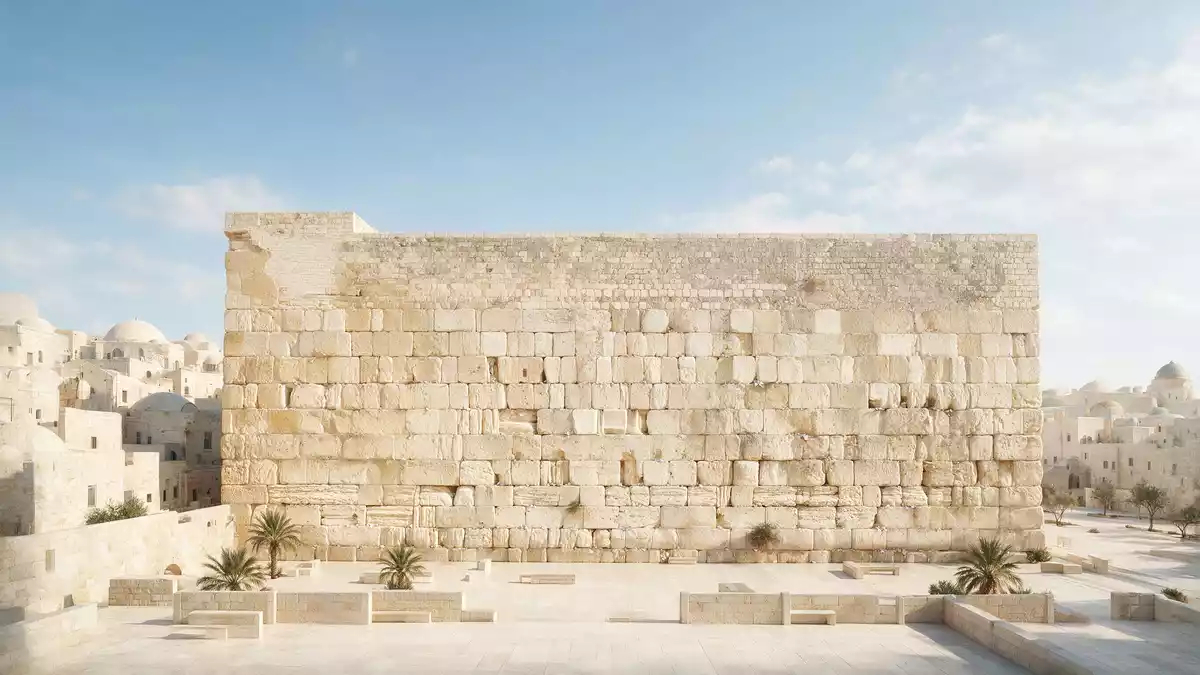
HaKotel HaMa'aravi, known in English as the Western Wall, is the western retaining wall of the Temple Mount in Jerusalem, where ancient limestone blocks rise above an open plaza used for prayer and reflection.Western Wall
The Western Wall of the Temple Mount
HaKotel HaMa'aravi forms part of the massive retaining structure that supports the elevated platform known as the Temple Mount, a hill revered in Jewish and Christian tradition.retaining wall surrounding the Temple Mount The wall stands in the Old City of Jerusalem, along the western edge of this sacred plateau, with stone-paved alleys leading into the wide plaza that frames its visible section.stands inside the walls of the Old City
The structure commonly referred to as the Western Wall is a portion of a much longer retaining wall that stretches along the western side of the Temple Mount, of which a section is accessible as a place of Jewish prayer.entire 488-metre-long retaining wall The visible stones in the plaza face are notably large limestone blocks, laid in courses that reveal distinct historical phases in the wall’s construction and repair.
From Second Temple period stones to later additions
The origins of HaKotel HaMa'aravi reach back to the Second Temple period, when the Temple Mount was expanded and enclosed by substantial retaining walls.dates from about the 2nd century bce Much of the lower masonry is associated with the monumental building works of Herod the Great in the first century BCE, when he undertook a vast renovation and enlargement of the Second Temple and its surrounding platform.Herod the Great built in the 1st century BCE
The visible face of the wall shows several phases of stonework: the lowest courses consist of large, finely dressed blocks with characteristic margins, while higher sections are formed from smaller stones added in later periods.bottom seven layers of stones Above the ancient masonry, further layers were constructed after the Byzantine era and under subsequent Muslim rule, with the uppermost parts completed in the nineteenth century through donations that included support from figures such as the British financier Sir Moses Montefiore.topmost layer was added in the 19th century
A sacred plaza in the Old City of Jerusalem
In front of HaKotel HaMa'aravi stretches a broad stone-paved plaza that serves as a gathering place for prayer, religious ceremonies and personal contemplation, framed by the old city walls and overlooked by the elevated Temple Mount.expanded the plaza in front of the Wall The open space is enclosed by historic buildings and gates, including routes from the Jewish Quarter and other neighbourhoods of the Old City that converge near the wall.
The wall’s Hebrew name, HaKotel HaMa'aravi, literally means “the western wall” and reflects both its position on the Temple Mount and its role in Jewish religious life as a fixed orientation for prayer.hebräisch ha-Kotel ha-Ma?arav? English usage often refers to it as the Western Wall, while the term “Kotel” is widely used in Hebrew as a concise everyday name for the same ancient stretch of limestone masonry.Western Wall
Visiting HaKotel HaMa'aravi: what travellers from Western Europe should know
- HaKotel HaMa'aravi stands in the Old City of Jerusalem on the western side of the Temple Mount, reached on foot through historic lanes and gates that lead into the plaza.
- The approach to the Western Wall plaza involves walking over uneven stone paving, with level changes and broad outdoor steps between surrounding streets and the open space in front of the wall.
- Jerusalem lies in a hilly region, and the Western Wall area is exposed to the elements, with the plaza providing open-air space directly against the ancient limestone blocks.
- The official language is Hebrew and the currency is the Israeli new shekel.
- Entry requirements depend on your nationality; UK travellers can check the FCDO travel advice at gov.uk/foreign-travel-advice, Irish travellers the Department of Foreign Affairs at ireland.ie.
Searching for HaKotel HaMa'aravi on social platforms
These links open searches for HaKotel HaMa'aravi on each platform.Frequently asked questions about HaKotel HaMa'aravi
Where is HaKotel HaMa'aravi located in Jerusalem?
HaKotel HaMa'aravi is situated in the Old City of Jerusalem, along the western side of the Temple Mount, facing an open stone-paved plaza.
What can visitors expect at the Western Wall plaza?
Visitors encounter a broad outdoor space against the limestone blocks of the wall, with areas set aside for prayer, ceremonies and quiet personal moments.
What makes HaKotel HaMa'aravi distinctive among Jerusalem’s historic sites?
The site combines an ancient Second Temple period retaining wall with layered later masonry and a dedicated plaza that focuses Jewish prayer on the western face of the Temple Mount.


