
Hakone Chokoku no Mori Bijutsukan and sculpture in the Hakone mountains
Published on 08/19/2026 at 17:00 | Editorial responsibility: Rafael Müller, Editor-in-Chief AD HOC NEWS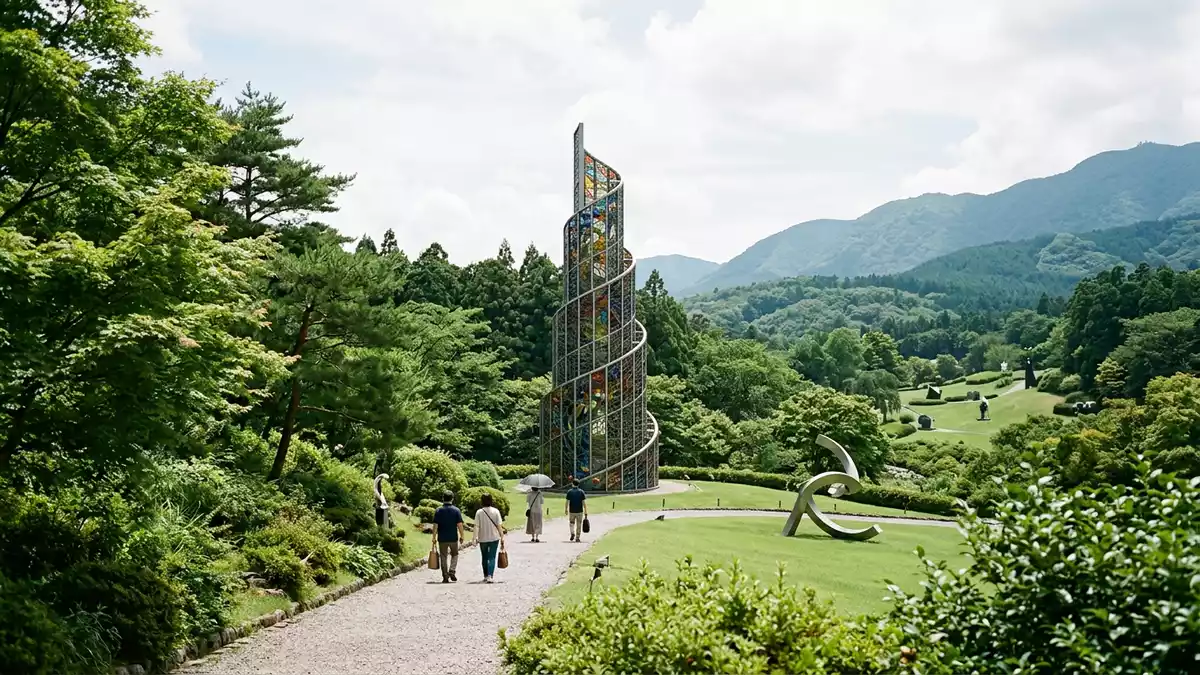
Hakone Chokoku no Mori Bijutsukan is Japan’s first open?air museum dedicated to sculpture, set in the volcanic landscape of Hakone in Kanagawa Prefecture and opened in 1969.Japan’s first open-air museum The museum spreads across a broad park in the mountains, where modern and contemporary works stand outside among lawns and trees as well as in a series of indoor galleries.natural surroundings in Fuji-Hakone-Izu National Park
Sculpture in a mountain park
The defining experience of Hakone Chokoku no Mori Bijutsukan is walking among outdoor sculptures against views of the surrounding valley and wooded slopes.views of valley and mountains The grounds cover about 70,000 m² (around 17 acres), laid out as lawns, terraces and paths where around 120 sculptural works stand on permanent display.70,000-square-metre grounds Pieces by Japanese and international artists are set with ample space between them, so each work can be seen against the landscape rather than crowded by neighbours.modern and contemporary sculpture collection
The sculptures themselves range from abstract forms to figurative works and large geometric structures in materials such as bronze, stone and steel.outdoor sculptures Many pieces are on a scale that interacts with the rising ground, sitting on terraces or shallow slopes rather than in enclosed courtyards. Some works invite visitors to step inside, turning sculpture into a space to enter rather than simply an object to view from the path.interactive artworks in a vast park
From 1969 foundation to a large collection
Hakone Chokoku no Mori Bijutsukan was founded by Nobutaka Shikanai and opened in August 1969 as part of the Fujisankei Communications Group’s cultural activities.opening of the Hakone Open-Air Museum The museum stands in Ninotaira, a district of Hakone-machi in Ashigarashimo District, Kanagawa, within Fuji-Hakone-Izu National Park.address in Ninotaira, Hakone Since its opening, the institution has developed a collection of more than 2,000 works, with modern and contemporary sculpture at its core and additional paintings from the later twentieth century.over 2,000 works including paintings
Among the sculptors represented are Henry Moore, Auguste Rodin, Aristide Maillol, Barbara Hepworth and Japanese artists such as Taro Okamoto and Rokuzan Ogiwara.artists represented in the collection Works by these figures appear both outdoors and in the indoor galleries, giving the museum a role in international sculpture as well as in Japanese art history. Over time, the museum has added new pieces and built further exhibition buildings, so visitors encounter works from several generations across the park.
Picasso Pavilion and stained?glass tower
Alongside the open lawns, Hakone Chokoku no Mori Bijutsukan has several indoor spaces, most notably the Picasso Pavilion.dedicated Picasso Pavilion This hall holds a collection of around 300 works by Pablo Picasso, including ceramics, prints and other pieces that show different phases of his career.around 300 Picasso works The pavilion stands slightly apart from the outdoor sculptures, giving visitors a change of scale and atmosphere as they move from the park into galleries focused on a single artist.
Another distinctive feature is the Symphonic Sculpture, a tower covered inside with stained glass that creates coloured light across the interior surfaces.Symphonic Sculpture stained glass tower The tower rises from the grounds and forms a vertical counterpoint to the horizontal spread of lawns and paths. Visitors can move through the interior of the structure on stairways, surrounded by panels of glass in a wide range of colours and patterns.
Visiting Hakone Chokoku no Mori Bijutsukan: what travellers from Western Europe should know
- Hakone Chokoku no Mori Bijutsukan stands in Ninotaira in Hakone-machi, Ashigarashimo District, Kanagawa, in the Fuji-Hakone-Izu National Park in Japan.museum address in Hakone
- The museum lies a short walk from Chokoku-no-Mori Station on the Hakone Tozan Railway, which connects with other lines at Hakone-Yumoto and Odawara.near Chokoku No Mori Station
- The grounds are extensive and largely outdoors, with paths, lawns and gentle slopes, so a visit involves walking across varied terrain with steps in some areas.extensive outdoor grounds
- Hakone’s mountains give the museum varied weather across the year, and the outdoor sculptures stand in an environment that reflects seasonal changes in vegetation.
- Japan’s official language is Japanese and the currency is the yen (JPY).
Searching for Hakone Chokoku no Mori Bijutsukan on social platforms
These links open searches for Hakone Chokoku no Mori Bijutsukan on each platform.
Frequently asked questions about Hakone Chokoku no Mori Bijutsukan
Where is Hakone Chokoku no Mori Bijutsukan located?
Hakone Chokoku no Mori Bijutsukan is in Ninotaira in Hakone-machi, Ashigarashimo District, Kanagawa Prefecture, within the Fuji-Hakone-Izu National Park in Japan.location details
What can visitors expect on a visit?
Visitors walk through expansive outdoor grounds dotted with modern and contemporary sculptures, and can also explore indoor galleries including the Picasso Pavilion with several hundred works.
What makes Hakone Chokoku no Mori Bijutsukan distinctive?
The museum combines a large mountain park setting with a significant sculpture collection, Japan’s first open-air museum and a dedicated Picasso Pavilion, creating a strong link between art and landscape.


