
Hakone Chokoku no Mori Bijutsukan and its ring of sculpture
Published on 09/01/2026 at 20:40 | Editorial responsibility: Rafael Müller, Editor-in-Chief AD HOC NEWS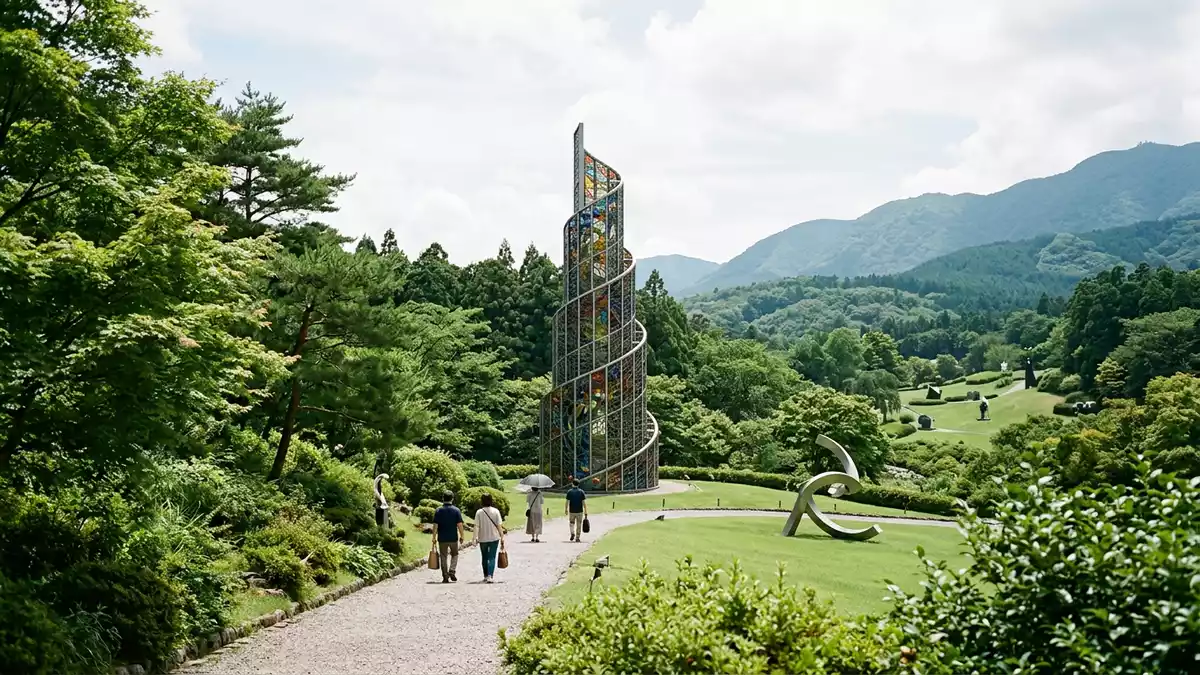
Hakone Chokoku no Mori Bijutsukan sits in Ninotaira, Hakone, and opened in 1969. Its outdoor grounds, indoor galleries and Picasso Pavilion make sculpture the constant subject.
Hakone Chokoku no Mori Bijutsukan among the Hakone hills
The museum stands in Hakone, Kanagawa Prefecture, in a mountain resort landscape that gives the site a strong sense of horizontal spread. The name itself points to sculpture and forest, and the museum uses both as part of its identity.
Its English name, the Hakone Open-Air Museum, is widely used alongside the Japanese title. The museum is linked to Chokoku-no-Mori Station on the Hakone Tozan Railway, which places it within Hakone's rail network and makes the approach part of the geography of the town.museum grounds
1969 and the museum’s open-air identity
The museum opened in 1969, a date that fixes it within Japan’s post-war cultural expansion. It is known as Japan’s first open-air museum, a status that places its outdoor sculpture garden at the centre of its identity.
That format matters in the way the site is experienced: sculpture is not confined to one hall, but spread across lawns, paths and planted areas. The result is a museum shaped by movement between works rather than by a single enclosed sequence.opened in 1969
The Picasso Pavilion and indoor galleries
Inside the museum, the Picasso Pavilion adds a concentrated counterpoint to the outdoor spaces. The pavilion holds a substantial group of Pablo Picasso works, while the broader museum combines that focus with sculptures by modern and contemporary artists.
This pairing of open grounds and enclosed rooms gives the place a clear double character. Visitors move from landscape-scale sculpture to galleries centred on a single name, Pablo Picasso, and the contrast is part of the museum’s appeal as a cultural site in Hakone.Picasso Pavilion
Visiting Hakone Chokoku no Mori Bijutsukan: what travellers from Western Europe should know
- The museum is in Ninotaira, Hakone, and the nearest rail stop is Chokoku-no-Mori Station on the Hakone Tozan Railway. It sits within Hakone’s mountain district rather than in a flat urban centre.
- The grounds combine lawns, paths and open sculpture spaces with indoor galleries. The site rewards a slow circuit because the outdoor works and the pavilion read as separate parts of the same place.
- The museum includes the Picasso Pavilion as a named indoor section. That makes it more than a sculpture park, with paintings and other works adding a second layer of viewing.
- The English name Hakone Open-Air Museum is used for the same place. The Japanese title Hakone Chokoku no Mori Bijutsukan remains the primary name.
Searching for Hakone Chokoku no Mori Bijutsukan on social platforms
These links open searches for Hakone Chokoku no Mori Bijutsukan on each platform.
Frequently asked questions about Hakone Chokoku no Mori Bijutsukan
Where is Hakone Chokoku no Mori Bijutsukan?
It is in Ninotaira, Hakone, in Kanagawa Prefecture, Japan. The museum is associated with Chokoku-no-Mori Station on the Hakone Tozan Railway.
What does a visit include?
The museum combines outdoor sculpture spaces with indoor galleries. The Picasso Pavilion adds an enclosed section with works by Pablo Picasso.
What makes it distinctive?
Its open-air format, established in 1969, gives sculpture equal footing with the surrounding grounds. The mix of landscape, gallery space and the Picasso Pavilion gives the museum a clear identity.