
Hakone Chokoku no Mori Bijutsukan and its landscape of sculpture
Published on 09/18/2026 at 20:16 | Editorial responsibility: Rafael Müller, Editor-in-Chief AD HOC NEWS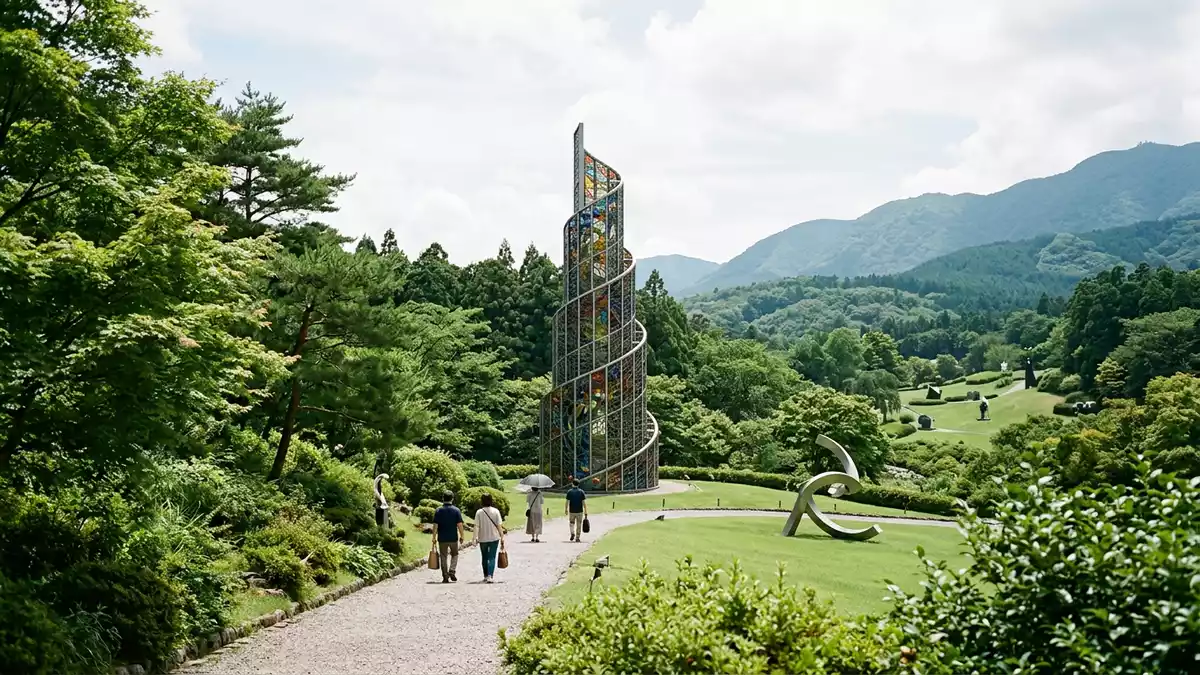
Hakone Chokoku no Mori Bijutsukan is an open-air sculpture museum in Hakone in eastern Japan, where modern and contemporary artworks are set across a wide landscape of lawn, trees and indoor galleries within Fuji-Hakone-Izu National Park.Fuji-Hakone-Izu National Park The museum opened in 1969 as Japan’s first open-air museum dedicated to sculpture, giving it a fixed place in the country’s post-war art history and in the story of Hakone as a resort town.opened in 1969
Sculpture spread across a garden of paths and lawns
The defining experience at Hakone Chokoku no Mori Bijutsukan is the encounter between sculpture and landscape, spread through a garden measuring about 70,000 square metres, where paths loop across grass and between clusters of planting.70,000 square metres Abstract and figurative works stand on plinths, emerge directly from the turf or sit by low shrubs, so that every turn in the route brings a new form against the slopes of the Hakone hills.
Across this outdoor area Hakone Chokoku no Mori Bijutsukan presents around 120 sculptural works on long-term display, representing artists from Japan, Europe and the Americas.around 120 sculptural works The permanent exhibits include pieces by Rodin and Henry Moore among other twentieth-century sculptors, bringing the bronze and stone vocabulary of European modernism into dialogue with the volcanic landscape of Hakone.Rodin and Henry Moore
Picasso, stained glass and indoor galleries
Although the museum’s name foregrounds its open-air character, Hakone Chokoku no Mori Bijutsukan also has indoor galleries that extend the sculpture park into a more conventional museum setting. One of the most notable is the Picasso Pavilion, a dedicated building housing a large collection of works by Pablo Picasso, including paintings, sculptures and ceramics drawn together around the Spanish artist’s long career.Picasso Pavilion houses works
The museum grounds also contain the Symphonic Sculpture, a tower whose interior walls are entirely lined with coloured stained glass, creating a vertical gallery of light that visitors move through as they ascend.Symphonic Sculpture in stained glass Elsewhere, children’s areas include outdoor interactive sculptures designed for climbing and play, and a naturally fed footbath allows visitors to immerse their feet in warm spring water while remaining within the museum grounds.interactive sculptures and footbath
Hakone, the museum’s wider setting and context
Hakone Chokoku no Mori Bijutsukan stands in the Ninotaira district of Hakone, in Kanagawa Prefecture, a mountainous area known for hot springs and views towards Mount Fuji.Ninotaira, Hakone Hakone itself lies within the Fuji-Hakone-Izu National Park designation, which shapes the museum’s setting by surrounding it with hills, forested slopes and changing seasonal vegetation.Fuji-Hakone-Izu National Park
The foundation behind Hakone Chokoku no Mori Bijutsukan focuses its collection on modern and contemporary sculpture, while also holding paintings from the second half of the twentieth century, giving the museum a clear emphasis on art from the modern period onwards.modern and contemporary sculpture Within Japan the museum occupies the particular position of being the first outdoor art museum devoted to sculpture, with its 1969 opening marking the point at which this kind of open-air display became a recognised institutional form.Japan’s first open-air museum
Visiting Hakone Chokoku no Mori Bijutsukan: what travellers from Western Europe should know
- Hakone Chokoku no Mori Bijutsukan is in Ninotaira in Hakone, south-west of Tokyo, and is reached by the Hakone Tozan Railway to Chokoku-no-Mori Station followed by a short walk.
- The museum grounds are extensive, with a network of outdoor paths across lawns and gentle slopes, and visitors spend time walking between the sculptures and indoor pavilions.
- Hakone lies in a mountainous area with marked seasons; in colder months the air temperature in the garden can be low, while summer brings lush vegetation around the works.
- The official language is Japanese and the currency is the yen.
- Entry requirements depend on your nationality; UK travellers can check the FCDO travel advice at gov.uk/foreign-travel-advice, Irish travellers the Department of Foreign Affairs at ireland.ie.
Searching for Hakone Chokoku no Mori Bijutsukan on social platforms
These links open searches for Hakone Chokoku no Mori Bijutsukan on each platform.
Frequently asked questions about Hakone Chokoku no Mori Bijutsukan
Where is Hakone Chokoku no Mori Bijutsukan located?
Hakone Chokoku no Mori Bijutsukan is in the Ninotaira district of Hakone in Kanagawa Prefecture in eastern Japan, within the wider Fuji-Hakone-Izu National Park.
What can visitors expect from a visit?
Visitors walk through a large outdoor garden with modern and contemporary sculptures set among lawns and planting, and can also enter indoor galleries such as the Picasso Pavilion and the stained-glass Symphonic Sculpture tower.
What makes Hakone Chokoku no Mori Bijutsukan distinctive among museums in Japan?
The museum is distinctive for combining an extensive open-air sculpture park with indoor spaces and for its 1969 status as Japan’s first dedicated open-air art museum for sculpture.


