
Hakodateyama and the night-time panorama over Hakodate
Published on 08/28/2026 at 13:38 | Editorial responsibility: Rafael Müller, Editor-in-Chief AD HOC NEWS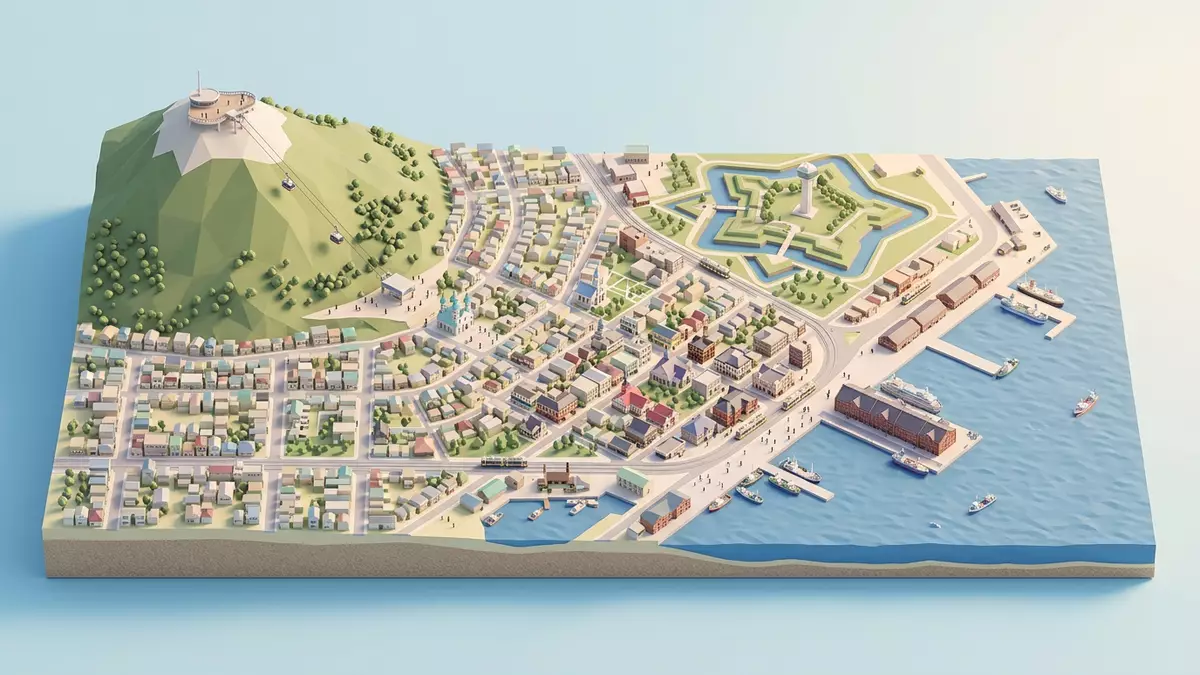
Hakodateyama, better known in English as Mount Hakodate, is a low volcanic mountain rising above the harbour city of Hakodate on the southern tip of Hokkaido in Japan. Its summit lies a little over 330 m (around 1,090 ft) above sea level and forms a compact ridge with broad views in several directions over the city, the surrounding sea and the hills that frame the peninsula.
The mountain above the harbour city
Hakodateyama stands at the southern end of the Hakodate peninsula, directly above the urban districts and port areas that make up central Hakodate. The wooded slopes drop towards the city on one side and towards the coastline on the other, so that the summit area feels close to the water even though it rises several hundred metres above sea level. Visitors looking north see the dense fabric of streets, tram lines and railway tracks, while to the south and west the landscape opens towards the Tsugaru Strait and the hills of southern Hokkaido.
Geologically, Hakodateyama is an inactive volcanic peak composed mainly of dacitic rock and classified as a stratovolcano that has shown no sign of eruptive activity for many thousands of years.inactive volcanic peak The mountain’s shape is softened by forest, with the main ridge forming the backdrop to Hakodate’s harbour and older residential districts. Much of the city lies on the low ground of the peninsula below, and the contrast between the flat urban area and the compact height of Hakodateyama is part of what makes the view from the summit distinctive.
Reaching the summit of Hakodateyama
Hakodateyama’s summit can be reached by ropeway, road or bus from the city below. A cable car known as the Hakodateyama Ropeway runs from a lower station in the Motomachi district near the Jujigai tram stop to the ridge, climbing in a short, direct line above the wooded slope.Hakodateyama Ropeway The base station sits among older streets where tram tracks and small buildings press up against the hillside, and the cabins rise quickly enough that the city view opens out in the first moments of the ascent.
Besides the ropeway, buses link Hakodate Station and the summit area during the main visitor season, climbing a mountain road that approaches the ridge from the inland side.buses between Hakodate Station and the summit There is also a toll-free road whose alignment follows the contours of the slope and which is open in the warmer months, giving access for vehicles to reach the summit area. The combination of cable car, bus and road means that several approaches converge at the ridge, where paths connect the transport stops with the main observation platforms.
Night views and summit facilities
The summit of Hakodateyama carries free observation platforms, souvenir shops, a cafe and a restaurant, clustered on and around the highest part of the ridge.observation platforms and summit facilities From these terraces, the view north over Hakodate stretches along the length of the peninsula, with the city’s lights tracing the street grid and the lines of the harbour. On clear nights, the shape of the coastline is marked by points of light, and the peninsula appears as a narrow strip of land between two bodies of water.
The night view from Hakodateyama is widely described as one of Japan’s three outstanding urban night panoramas, alongside those seen from Mount Inasa above Nagasaki and Mount Rokko above Kobe.Mount Hakodate elevation and status During daylight, the same vantage points reveal the wooded slopes dropping towards the harbour and the pattern of neighbourhoods that climb partway up the hillside, but the summit facilities themselves remain compact, so that the ridge retains a sense of being a mountain rather than an extended built-up zone.
Visiting Hakodateyama: what travellers from Western Europe should know
- Hakodateyama rises immediately south-west of central Hakodate on the peninsula that carries much of the city, with the ropeway’s lower station in the Motomachi district near the Jujigai tram stop.
- The summit approaches involve a noticeable climb on foot between transport stops and observation platforms, including outdoor stairways and paved paths on the ridge.
- The surroundings of Hakodateyama include Hakodate’s harbour areas to the north and east and the open water of the Tsugaru Strait beyond the peninsula to the south.
- The official language is Japanese and the currency is the yen.
- Entry requirements depend on your nationality; UK travellers can check the FCDO travel advice at gov.uk/foreign-travel-advice, Irish travellers the Department of Foreign Affairs at ireland.ie.
Searching for Hakodateyama on social platforms
These links open searches for Hakodateyama on each platform.
Frequently asked questions about Hakodateyama
Where is Hakodateyama located?
Hakodateyama is an inactive volcanic mountain on the southern tip of the Hakodate peninsula in Hokkaido, Japan, rising just south-west of central Hakodate.
What can visitors expect on a visit to Hakodateyama?
Visitors find observation platforms, summit facilities and wide views over Hakodate’s cityscape, harbour and surrounding sea, reached by ropeway, bus or mountain road from the city.
What makes Hakodateyama distinctive among Japanese city mountains?
Hakodateyama combines a relatively low elevation with a narrow peninsula setting, creating a night panorama over city and sea that is widely ranked among Japan’s notable urban views.


