
Habana Vieja, Havanna’s stone grid of plazas and port
Published on 09/18/2026 at 13:56 | Editorial responsibility: Rafael Müller, Editor-in-Chief AD HOC NEWS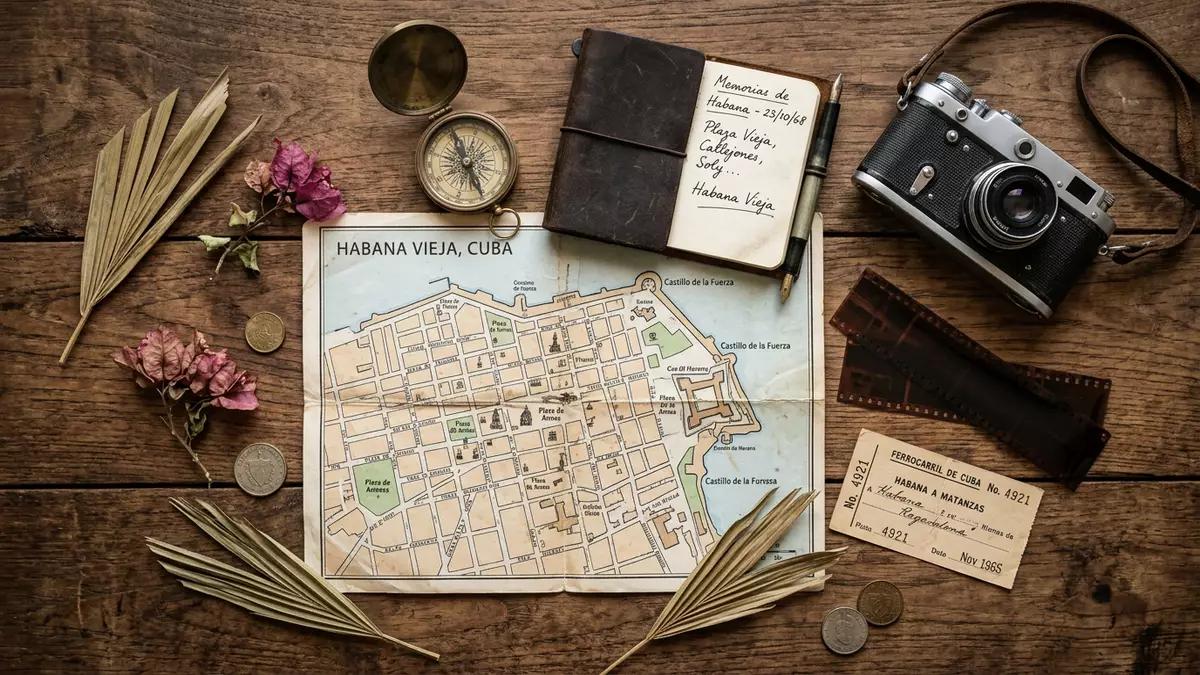
Habana Vieja, known in English as Old Havana, is the historic centre of Havanna and the part of the Cuban capital where the city first took shape beside the bay in the early sixteenth century.
A compact colonial city beside the harbour
Habana Vieja forms one of the municipalities of Havana and contains the core of the original city laid out under Spanish rule, its streets running towards Havana Bay and the harbour entrance.one of the 15 municipalities The district occupies a relatively compact area measured in several square kilometres, where dense blocks of buildings line narrow streets and open out onto plazas arranged close to the waterfront.old city centre with extensions
From the bay, the outline of Habana Vieja is marked by stone fortifications built to guard the entrance and protect the port from attack, part of the fortification system included with the historic centre in the World Heritage listing.Old Havana and its Fortification System Behind the defensive works, the urban fabric is defined by short blocks and a grid that preserves the pattern laid down by Spanish engineers in the sixteenth century, giving the area a clear contrast between military stonework at the edge and tightly packed civil streets further inland.streets unchanged in layout
UNESCO-listed mix of baroque, neoclassical and everyday houses
Habana Vieja, together with its fortification system, was inscribed on the UNESCO World Heritage List in 1982 as a cultural site, recognised for its baroque churches, neoclassical monuments and a relatively homogeneous ensemble of private houses.World Heritage inscription in 1982 Across the district, heavy stone facades sit beside plastered townhouses, with arcades, balconies, wrought-iron grilles and internal courtyards forming an urban catalogue of Spanish colonial domestic architecture in the Caribbean.mix of monuments and private houses
Religious and civil buildings punctuate the streets, from convents and churches around the main plazas to former palaces and mercantile houses that once faced the port. Many of these date from the sixteenth to nineteenth centuries, when Havana was an important staging point on transatlantic routes linking Spain and the Americas, and they give Habana Vieja a layered architectural profile in which ornate facades and simpler dwellings stand within the same small blocks.historic centre with centuries of architecture
Plazas as the framework of everyday streets
Within Habana Vieja, a sequence of plazas anchors the district and offers clear points of reference for understanding how the colonial city worked. Plaza de Armas, Plaza Vieja, Plaza de San Francisco de Asís, Plaza del Cristo and Plaza de la Catedral form a loose chain from the harbour edge into the interior, each surrounded by townhouses and public buildings that reflect its historic role in political, religious, commercial or civic life.sequence of principal plazas Around these squares, streets with stone paving and grouped arcades frame views towards church towers, cupolas and corner houses.
Between the plazas, everyday streets carry a dense mixture of residential buildings and small premises, many arranged around internal courtyards that are hidden behind heavy timber doors and wrought-iron gates. Some blocks include former tenement houses known locally as solares, where multiple households occupy subdivided historic structures, underscoring that Habana Vieja is both heritage site and lived-in neighbourhood.buildings, homes and solares The close relationship between grand squares and tight side streets gives the district a distinct rhythm: open stone-framed spaces followed by shaded corridors of housing.
Visiting Habana Vieja: what travellers from Western Europe should know
- Habana Vieja occupies the eastern section of central Havana, along the western side of Havana Bay, and is reached by road from other parts of the city, including areas with hotels and newer neighbourhoods.historic core beside the waterfront
- The district is largely walkable, with many streets paved in stone and a network of plazas linked by short blocks; exploring involves frequent use of staircases within historic buildings and occasional uneven surfaces.
- Habana Vieja lies in Cuba, where the official language is Spanish and the currency is the Cuban peso.
- Entry requirements depend on your nationality; UK travellers can check the FCDO travel advice at gov.uk/foreign-travel-advice, Irish travellers the Department of Foreign Affairs at ireland.ie.
Searching for Habana Vieja on social platforms
These links open searches for Habana Vieja on each platform.Frequently asked questions about Habana Vieja
Where is Habana Vieja in Havanna?
Habana Vieja occupies the historic core of Havana along the western side of Havana Bay, forming one of the city’s inner municipalities.
What should a visit to Habana Vieja involve?
A visit centres on walking its stone-paved streets and plazas, viewing churches, fortifications and townhouses, and exploring courtyards and interiors where access is possible.
What makes Habana Vieja distinctive among historic districts?
The combination of sixteenth-century fortifications, a colonial street grid, baroque and neoclassical monuments and lived-in houses within a compact port-side area gives Habana Vieja its character.


