
Habana Vieja, Havanna’s stone grid of plazas and fortresses
Published on 09/17/2026 at 10:29 | Editorial responsibility: Rafael Müller, Editor-in-Chief AD HOC NEWS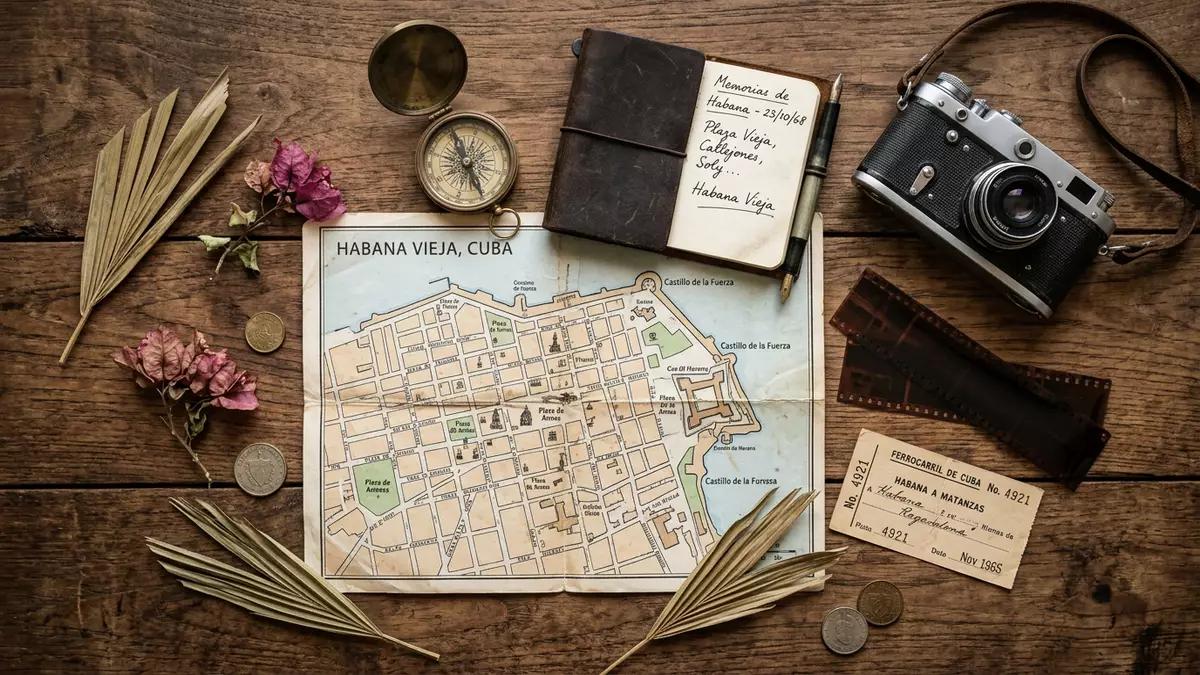
Habana Vieja, Old Havana, is the historic centre of Havanna on the edge of Havana Bay, a compact urban district where Spanish colonial town planning, stone fortifications and intimate plazas form a dense grid of streets shaped since the early sixteenth century.Founded in 1519 by the Spanish, it grew into a key Caribbean port and arsenal and was recognised in 1982 as part of the UNESCO World Heritage site “Old Havana and its Fortification System”.World Heritage listing
Stone streets, plazas and the colonial grid
Habana Vieja occupies the eastern section of Havana’s inner city beside Havana Bay, covering a compact area where the outlines of former city walls still correspond broadly to the present district boundary.Mapped World Heritage core Within this area, the streets form a tight grid radiating from the old harbour and the Plaza de Armas, the early administrative and ceremonial centre of colonial Havana.Plaza de Armas as historic core
Walking through Habana Vieja means crossing short blocks of stone or concrete paving, passing houses with arcades, ironwork balconies and interior courtyards that reflect centuries of Spanish and Cuban urban life.Mixture of monuments and houses Between these domestic facades, the grid opens out into plazas with different characters: Plaza de Armas, Plaza de la Catedral, Plaza Vieja, Plaza de San Francisco and Plaza del Cristo are all named squares within the historic centre, each bordered by a constellation of religious, civic or commercial buildings.Principal plazas of Habana Vieja
Churches, palaces and the Cathedral square
One of the most striking ensembles in Habana Vieja is Plaza de la Catedral, a square framed by eighteenth?century buildings and dominated by the Cathedral of San Cristóbal de La Habana, a major example of Cuban Baroque architecture.Baroque Cathedral of San Cristóbal Its facade and towers rise beside palaces such as the Palacio de los Marqueses de Aguas Claras, the Palacio de los Condes de Casa Bayona and the Palacio del Marqués de Arcos, which frame the square with arcades, carved stonework and timber balconies.
Elsewhere in the district, religious and civic buildings cluster around the other plazas, giving each square a distinct architectural profile while maintaining the overall harmony of the historic centre.UNESCO description of Habana Vieja Museums, convents and former mansions repurposed for cultural use line these spaces, their interiors often organised around shaded courtyards that insulate them from the street and underline the importance of enclosed open space in Havana’s traditional urban houses.Historic heart of the city
Fortifications and Havana Bay
Habana Vieja’s World Heritage status explicitly links the historic urban fabric with a ring of colonial fortifications that once protected the harbour and the approach from the sea.Old Havana and its Fortification System Within the old town, the Castillo de la Real Fuerza stands near Plaza de Armas, a stone fortress whose bastions and tower recall the period when Havana was a strategic Spanish stronghold in the Caribbean.Castillo de la Real Fuerza
Across the entrance to Havana Bay, further fortifications complete the defensive ensemble: the Castillo de los Tres Reyes del Morro and the Fortaleza de San Carlos de la Cabaña form part of the Parque Histórico Militar Morro?Cabaña, a complex of coastal batteries and ramparts that frame the view back towards Habana Vieja.Morro and La Cabaña fortresses Together, the grid of streets, the plazas and the fortifications illustrate the evolution of a colonial port city whose fabric still carries Baroque, Neoclassical and vernacular elements shaped over generations of building and rebuilding.Architectural mix recognised by UNESCO
Visiting Habana Vieja: what travellers from Western Europe should know
- Habana Vieja lies on the eastern side of central Havanna along Havana Bay and is reached by road from districts such as Centro Habana and Vedado, with the historic core compact enough to explore on foot once inside.
- The streets in Habana Vieja are generally narrow and many are paved, with frequent kerbs, uneven surfaces and occasional stairways or ramps between levels, so moving through the district involves regular short walks and some changes in gradient.
- Several viewpoints and fortifications around the entrance to Havana Bay sit on elevated ground with masonry steps and open ramparts, which means ascents and descents on stone staircases and exposed terraces when visiting these parts of the historic ensemble.
- The official language is Spanish and the currency is the Cuban peso.
- Entry requirements depend on your nationality; UK travellers can check the FCDO travel advice at gov.uk/foreign-travel-advice, Irish travellers the Department of Foreign Affairs at ireland.ie.
Searching for Habana Vieja on social platforms
These links open searches for Habana Vieja on each platform.
Frequently asked questions about Habana Vieja
Where is Habana Vieja located within Havanna?
Habana Vieja forms one of the municipalities of the Cuban capital and occupies the eastern part of the inner city along the edge of Havana Bay, including streets close to the historic harbourfront.Municipality in Havana
What should visitors expect on a first walk through Habana Vieja?
A first walk reveals narrow streets laid out from the sixteenth century, opening into plazas framed by churches, palaces and arcaded houses whose facades combine Baroque and Neoclassical elements recognised in the UNESCO inscription of 1982.UNESCO inscription in 1982
What makes Habana Vieja distinctive among historic city centres?
Habana Vieja is distinctive for the way a compact grid of streets, a sequence of named plazas and a system of harbour fortifications together form a single World Heritage ensemble that reflects Havana’s role as a Spanish colonial port and later Cuban capital.Historic port city with fortifications


