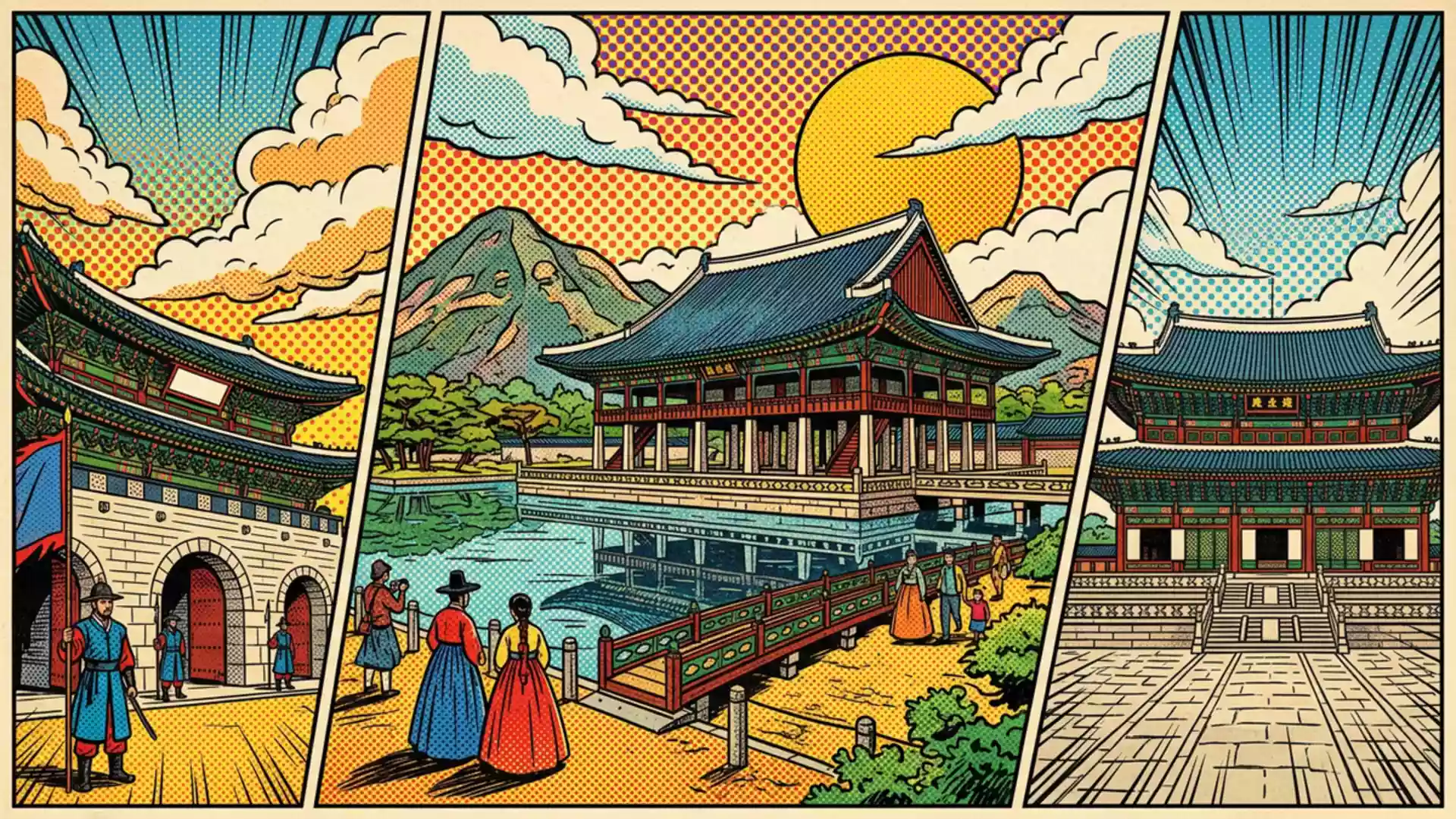
Gyeongbokgung, the grand royal palace framed by Seoul’s mountains
Published on 09/02/2026 at 22:51 | Editorial responsibility: Rafael Müller, Editor-in-Chief AD HOC NEWS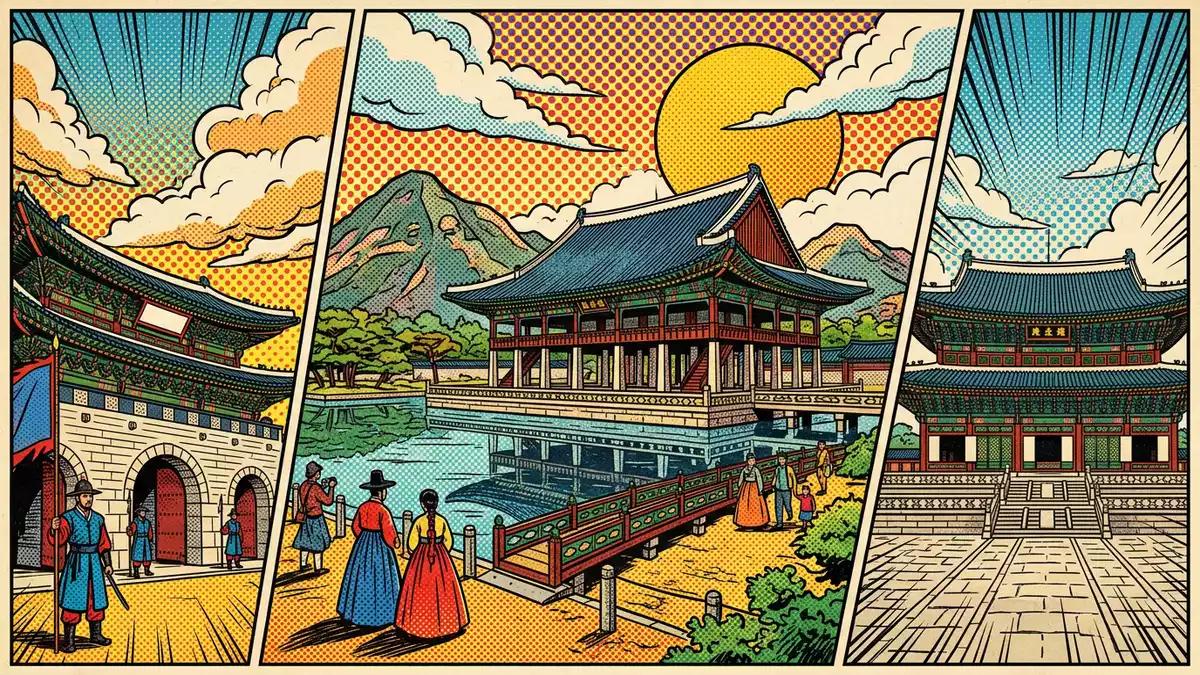
Gyeongbokgung in Seoul is the former main royal palace of the Joseon dynasty, laid out in 1395 at the northern edge of the city against a backdrop of low mountains. Within high palace walls, visitors walk through gateways, courtyards and timber halls that carry centuries of Korean royal history in their geometry and decoration.
A palace born with the Joseon dynasty
Gyeongbokgung was established in 1395, three years after Yi Seong-gye founded the Joseon dynasty and became King Taejo, as the dynasty’s primary seat of power in Seoul.established in 1395 The palace stands in the Jongno District, aligned on an axis that runs from its main gate through the throne hall to the inner residential quarters.Jongno District In Korean palace tradition, this alignment reinforces the formal procession from the outside world into the ceremonial and domestic heart of the court.
The complex belongs to the group of Five Grand Palaces of the Joseon dynasty, and it served as the main royal residence during much of the dynasty’s rule.Five Grand Palaces Within its walled area, Gyeongbokgung housed thousands of rooms, arranged in clusters of offices, audience halls and living quarters that formed the administrative and domestic fabric of the dynasty’s government.thousands of rooms
Stone platforms, timber halls and palace gates
The architectural character of Gyeongbokgung is defined by timber-framed halls resting on stone platforms, with tiled roofs that sweep outward above painted bracket structures. The main throne hall, Geunjeongjeon, stands on a raised platform in an open courtyard, reached through gateways that mark each step of approachGeunjeongjeon throne hall. Inside, rows of wooden columns support the roof structure and frame the king’s throne within a carefully ordered interior.
To the south, the outer gate complex includes Gwanghwamun, which faces the city, and Heungnyemun, leading deeper into the palace courts.Gwanghwamun and Heungnyemun Beyond these gates, stone-paved courtyards open between the main halls, and low galleries connect different parts of the complex, combining formal processional spaces with more intimate routes within the palace.
Pavilions, ponds and museums within the palace walls
Among Gyeongbokgung’s most distinctive structures is Gyeonghoeru Pavilion, set on granite pillars in the centre of a palace pond and used for state banquets during the Joseon period.Gyeonghoeru Pavilion Its open-sided upper floor gives wide views across the water to the surrounding palace buildings, combining ceremony with a setting that foregrounds water and stone. Elsewhere in the complex, Hyangwonjeong Pavilion stands in a garden landscape, reached by a bridge and surrounded by planting that softens the geometry of the palace courtyards.Hyangwonjeong Pavilion
The palace grounds also contain national museums that present Korea’s royal and folk heritage within the historic setting. The National Palace Museum of Korea occupies a site outside Heungnyemun Gate to the west, while the National Folk Museum of Korea stands near Hyangwonjeong within the palace area.National Palace Museum and National Folk Museum Together, these institutions weave exhibition spaces into the royal compound, giving additional context to the architecture and artefacts seen across Gyeongbokgung.
Visiting Gyeongbokgung: what travellers from Western Europe should know
- Gyeongbokgung stands in Jongno District in northern Seoul, with the main gate facing a broad avenue and the interior reached through a sequence of palace gates.
- Within the palace grounds, movement involves crossing wide stone courtyards and walking on paved paths, and stairways link platforms, pavilions and museum entrances.
- Gyeongbokgung is part of South Korea’s capital and is served by Seoul Metro Line 3 at Gyeongbokgung Station and Line 5 at nearby Gwanghwamun Station.
- The official language is Korean and the currency is the South Korean won.
- Entry requirements depend on your nationality; UK travellers can check the FCDO travel advice at gov.uk/foreign-travel-advice, Irish travellers the Department of Foreign Affairs at ireland.ie.
Searching for Gyeongbokgung on social platforms
These links open searches for Gyeongbokgung on each platform.Frequently asked questions about Gyeongbokgung
Where is Gyeongbokgung located in Seoul?
Gyeongbokgung stands in the Jongno District of northern Seoul, with its main gate opening towards one of the city’s principal avenues.
What should visitors expect inside the palace?
Visitors can expect stone courtyards, timber halls with tiled roofs, ceremonial gateways, pavilions set on ponds and museum buildings presenting royal and folk history.
What makes Gyeongbokgung distinctive among Korean palaces?
Gyeongbokgung is distinctive for its role as the primary Joseon royal palace, its axial layout of gates and halls, and landmark pavilions such as Gyeonghoeru above the palace pond.