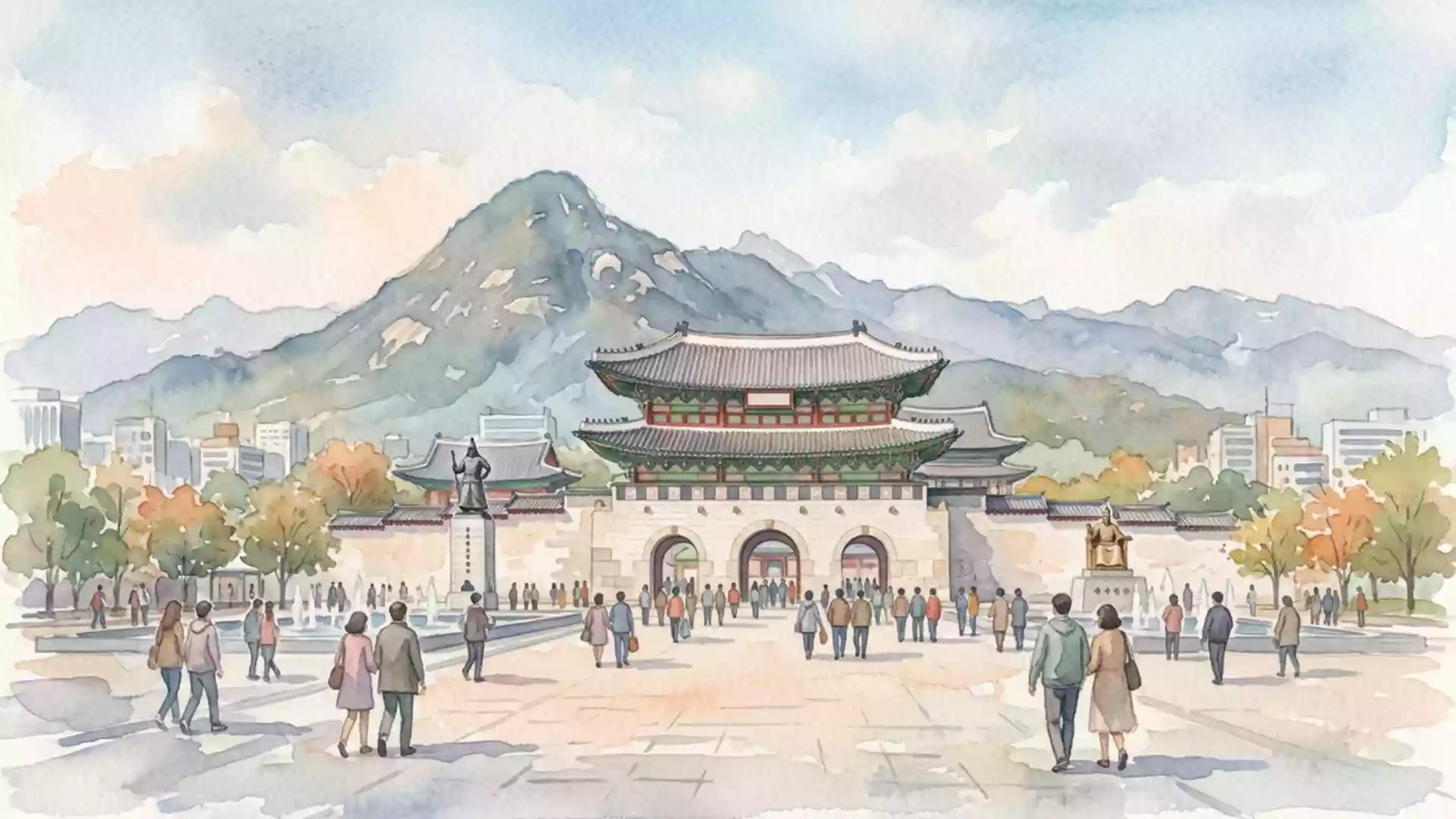
Gwanghwamun, the stone gate that frames Seoul’s royal heart
Published on 09/11/2026 at 08:50 | Editorial responsibility: Rafael Müller, Editor-in-Chief AD HOC NEWS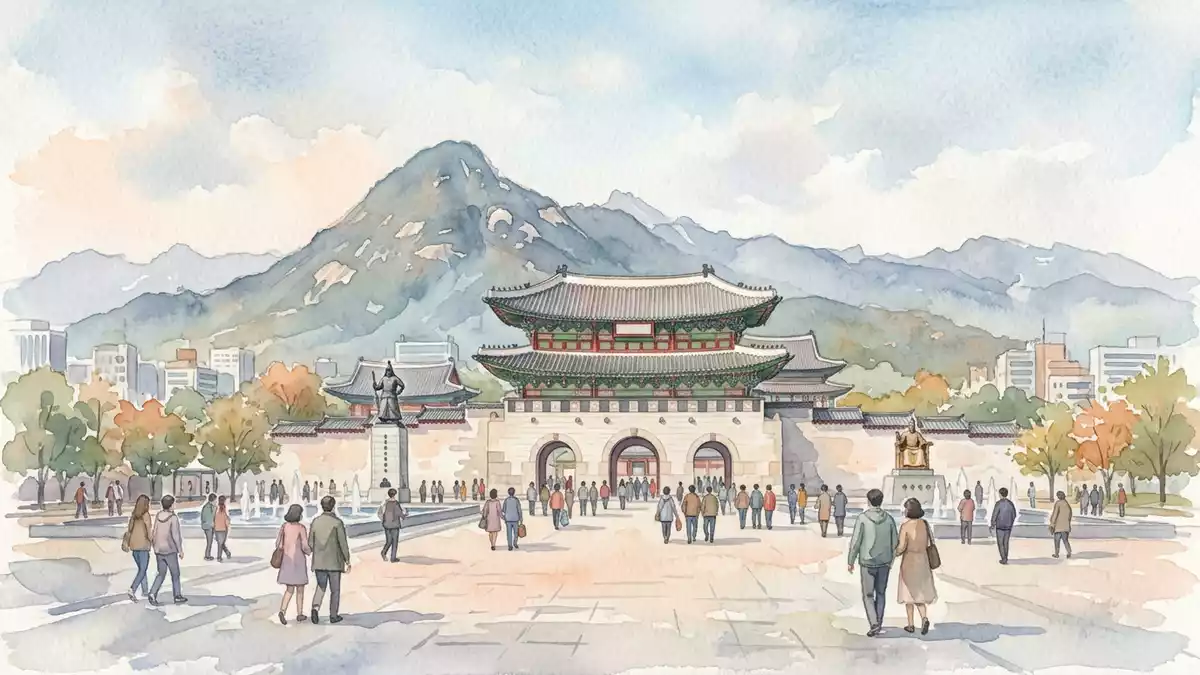
Gwanghwamun stands at the southern edge of Gyeongbokgung Palace, a monumental stone gate that has framed the royal heart of Seoul since the late fourteenth century. Built under King Taejo at the dawn of the Joseon dynasty in 1395, it marks the formal entrance to the main palace complex and faces the city along the broad axis of Sejongno.
A royal gate born with Joseon
When King Taejo founded the Joseon dynasty in 1392, Gyeongbokgung was among the earliest major projects of the new court, and Gwanghwamun was built a few years later as its principal southern gate in 1395.Built in 1395 under the reign of King Taejo The gate’s name combines characters meaning “light” and “transformation”, reflecting a courtly aspiration that royal virtue would radiate outward from the palace. Structurally, Gwanghwamun belongs to the architecture of the Joseon period, with a heavy stone base supporting a timber pavilion that rises above the city-facing side.
The front of the gate presents three distinct arched passages, with the central portal historically reserved for the king and the flanking ones for princes and senior officials.Gwanghwamun Gate consists of three arched gates This arrangement emphasises hierarchy in physical form and gives the facade its rhythm. From the city side, the gate aligns with the long processional avenue that leads towards the palace, while behind it the palace yards and halls step back in sequences of courtyards, creating an extended spatial link between the street and the throne hall.
Destruction, relocation and wooden restoration
Gwanghwamun’s calm appearance hides a turbulent history, marked by fire, relocation and reconstruction over several centuries. During the Imjin War of 1592–1598, a seven-year conflict triggered by Japanese invasions of Korea, the gate and much of Gyeongbokgung were destroyed by fire, and the palace complex lay in ruins for generations.The wooden gate fell when the palace was destroyed during the 1592-98 Japanese invasions Only in the nineteenth century, during the reign of King Gojong, was the palace rebuilt and Gwanghwamun reconstructed at its original location as the formal front gate once more.
In the twentieth century the gate was moved within the palace precincts during Japanese colonial rule, as new administrative buildings were constructed on the original axis in front of Gyeongbokgung.The gate was rebuilt as a concrete structure and later restored at its original location After wartime damage, a reinforced-concrete reconstruction stood for several decades in front of the former Government-General building. A major restoration programme then replaced this with a timber superstructure and returned Gwanghwamun to its historic position on the central axis of Gyeongbokgung by 2010, restoring both its materials and its spatial relationship with the palace and the avenue.
Stone, timber and the avenue of Sejongno
Architecturally, Gwanghwamun is defined by the contrast between massive stone and finely detailed wood. The stone base forms a platform with the three arched openings, each opening framed by heavy blocks that carry the weight of the gatehouse. Above, the wooden pavilion rises in tiers, its roofline articulated by brackets and rafters typical of Joseon palace architecture.Gwanghwamun features a wooden structure with three entrance passages The roof tiles, painted beams and carved details add colour and texture, while the stone platform below keeps the composition grounded.
The gate stands at a prominent three-way intersection at the northern end of Sejongno, the broad boulevard that runs through central Seoul.It is located at a three-way intersection at the northern end of Sejongno In front of it stretches a long public square, lined with statues and water features, that visually links the palace gateway to modern government buildings further down the avenue. From this square, the gate forms a backdrop to civic events and everyday traffic, anchoring the urban scene with its layered stone and timber profile while the glass and concrete of contemporary Seoul rise around it.
Visiting Gwanghwamun: what travellers from Western Europe should know
- Gwanghwamun stands at the northern end of Sejongno in central Seoul, directly in front of Gyeongbokgung Palace in the Jongno District, with Gyeongbokgung and Gwanghwamun subway stations nearby.
- The approach from the square is level and paved, but passing through the gate involves walking under the stone structure and across broad palace courtyards, with extended distances on foot inside the grounds.
- The official language is Korean and the currency is the South Korean won.
- Entry requirements depend on your nationality; UK travellers can check the FCDO travel advice at gov.uk/foreign-travel-advice, Irish travellers the Department of Foreign Affairs at ireland.ie.
Searching for Gwanghwamun on social platforms
These links open searches for Gwanghwamun on each platform.Frequently asked questions about Gwanghwamun
Where is Gwanghwamun in Seoul?
Gwanghwamun stands at the southern edge of Gyeongbokgung Palace in the Jongno District, aligned with the northern end of the Sejongno boulevard in central Seoul.
What should visitors expect at Gwanghwamun?
Visitors encounter a grand stone gate with a timber pavilion, three arched passages and wide palace courtyards behind it, set against the broad public square and government buildings along Sejongno.
What makes Gwanghwamun distinctive among Seoul’s landmarks?
Its combination of Joseon-era stone and timber construction, three arched gateways and its position linking Gyeongbokgung Palace to Sejongno gives Gwanghwamun a role as both royal entrance and civic focal point.