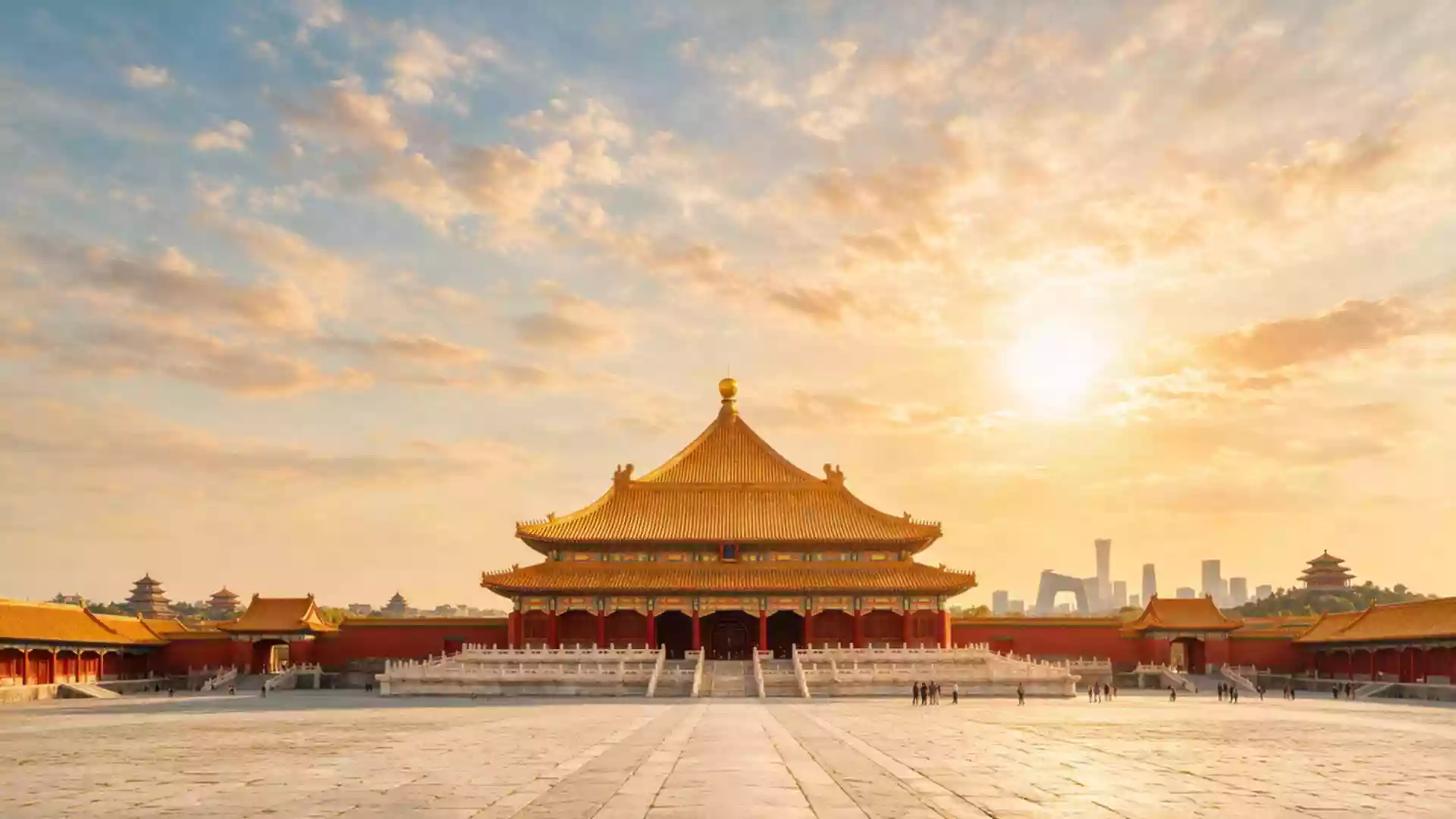
Gugong’s vast courtyards and golden roofs in Peking
Published on 08/08/2026 at 15:04 | Editorial responsibility: Rafael Müller, Editor-in-Chief AD HOC NEWS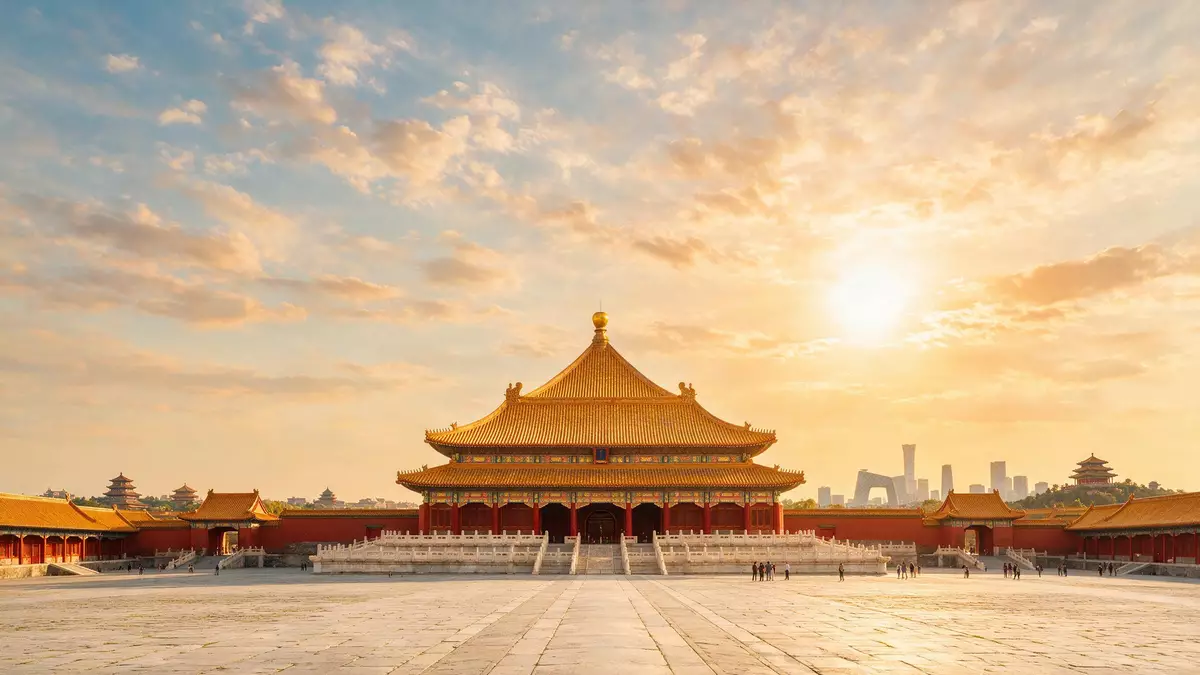
Gugong, the former imperial palace in Peking, is a vast complex of courtyards, halls, gates and walls finished in the early Ming period under the Yongle Emperor. Its yellow roofs, red timber structures and broad axial arrangement make the scale of the place visible long before any detail does.
Gugong’s formal palace axis
The palace complex is organised on a north-south axis, with successive gates and courtyards leading towards the main ceremonial halls. The arrangement gives Gugong a strong linear order, while the surrounding walls keep the interior clearly separate from the city outside.
Much of the appeal lies in the contrast between large open courtyards and enclosed halls with deep eaves and painted timber frames. Marble terraces, balustrades and stairways add another layer of texture to the stone and brick surfaces.
Hall names, roofs and imperial colour
Inside Gugong, the named halls such as the Hall of Supreme Harmony and the Hall of Central Harmony remain the best-known architectural landmarks. Their raised platforms, broad staircases and layered roofs show the formal hierarchy of the palace layout.
Yellow roof tiles, red walls and decorative bracket sets give the complex a consistent palette, while the details vary from hall to hall. The result is a place where repetition and ceremony are part of the architecture itself.
From Ming palace to museum precinct
Gugong was the imperial palace of the Ming and Qing dynasties and later became the Palace Museum. That change of use leaves the complex readable as both a royal seat and a museum precinct, with the old ceremonial spaces still carrying the strongest visual weight.
The courtyards, side halls and enclosed passages create a sequence that rewards slow movement and close attention. Even without relying on spectacle, the place remains one of the clearest surviving expressions of imperial court architecture in China.
Visiting Gugong: what travellers from Western Europe should know
- The site is in central Peking and is reached by metro, bus and taxi.
- Admission arrangements and opening hours are set by the site's operator and change with the season; the official website is the only binding source.
- Spring and autumn are the most comfortable seasons for a visit, with lighter heat than midsummer.
- The complex involves long walks, stone paving, steps and exposed courtyards.
- Payment and signage may be easier with mobile tools and Chinese-language support, though major visitor areas handle international travellers.
- Entry requirements depend on your nationality. UK travellers should check the FCDO travel advice at gov.uk/foreign-travel-advice; Irish travellers the Department of Foreign Affairs at ireland.ie; EU and EEA citizens their own national foreign ministry.
Searching for Gugong on social platforms
These links open searches for Gugong on each platform.
Frequently asked questions about Gugong
Where is Gugong?
Gugong is in Peking, in the centre of the old imperial city. It is the former palace complex of the Ming and Qing dynasties.
What should visitors expect?
Expect large courtyards, formal gates, raised halls and a long walking route through a walled complex. The experience is architectural rather than landscaped.
What makes Gugong distinctive?
Its size, axis and imperial colour scheme create a strict ceremonial order across the site. The survival of the palace as a museum adds a second layer to the historical setting.