
Grotta Azzurra and Capri’s blue-lit sea chamber
Published on 09/22/2026 at 18:28 | Editorial responsibility: Rafael Müller, Editor-in-Chief AD HOC NEWS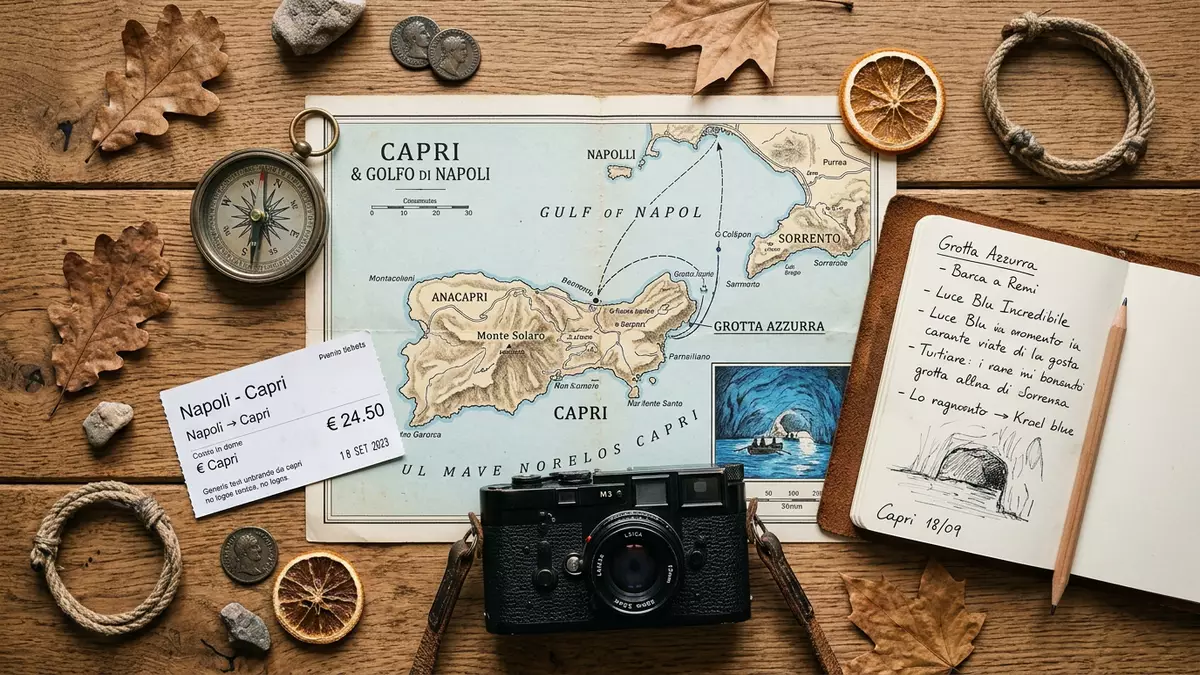
Grotta Azzurra is a sea cave on the north-western coast of Capri, beneath Anacapri. Its defining feature is the blue light that rises through the seawater and spreads across the flooded chamber, while small boats pass through the low entrance.
The cave combines limestone, seawater and Roman history in a space measuring roughly 60 metres long and 25 metres wide. Its name became established after August Kopisch and Ernst Fries visited it in 1826.
Grotta Azzurra: a chamber lit from beneath the sea
Grotta Azzurra is entered through a narrow opening at the base of the cliff. A small rowing boat carries visitors through the low passage into the main cavern, where the water occupies the floor and the limestone walls rise above it.
The blue appearance comes from daylight entering through an opening beneath the waterline. Seawater filters the light before it reaches the cave, while the pale seabed reflects the blue tones upwards across the enclosed chamber. The effect belongs to the cave’s physical arrangement, not to coloured lamps or painted rock. the submerged light opening is a defining feature of the grotto.
Published measurements vary within a narrow range, but the principal dimensions are clear. The interior extends for several dozen metres, reaches about 25 metres across, and contains water above a sandy floor. The roof rises several metres over the chamber, giving the cave a broad interior beyond its small entrance.
From Roman nymphaeum to nineteenth-century name
Grotta Azzurra was used during the Roman imperial period as a maritime nymphaeum, a waterside sanctuary associated with bathing, sculpture and the enjoyment of water. The cave stood within the landscape of Roman Capri, an island closely connected with Emperor Tiberius.
Roman marble statues were found on the seabed inside the cave and are displayed at the Casa Rossa in Anacapri. The remains connect the natural chamber with the villas, gardens and coastal retreats that shaped Capri’s Roman history. the Roman maritime temple is part of the grotto’s recorded history.
For centuries, local stories associated the dark cavern with spirits and danger. The name Grotta Azzurra entered wider use after the 1826 visit by the German writer August Kopisch and the painter Ernst Fries, who reached the cave with the fisherman Angelo Ferraro.
Kopisch later wrote about the cavern, while artists and travellers carried its image through nineteenth-century Europe. The visit placed the blue chamber within the cultural geography of the Grand Tour, when Capri appeared in travel books, paintings and journeys around the Mediterranean.
The limestone coast beneath Anacapri
Grotta Azzurra lies within the limestone coast of Capri, in the municipality of Anacapri. From the landward side, the approach descends towards the coastal landing place near Gradola, while the sea route follows the island’s cliffs from Marina Grande.
The cave is part of a coastline shaped by rock, water and submerged passages. Its entrance sits close to sea level, and the main chamber is flooded. The low access point creates a sharp visual contrast between the open Mediterranean outside and the enclosed blue water inside.
The cave’s dimensions become apparent only after the boat crosses the entrance. Outside, the opening appears compact against the cliff. Inside, the water extends beneath a ceiling that rises to several metres, with the sandy bottom visible through the illuminated sea.
Capri’s geology also appears in the cave’s practical form. The passage is low enough for passengers to lie back in the boat while entering, and access depends on the relationship between the sea and the rock threshold. The interior is therefore experienced as both a natural chamber and a carefully controlled boat passage.
Visiting Grotta Azzurra: what travellers from Western Europe should know
- Grotta Azzurra lies on Capri’s north-western coast, within Anacapri. It is reached by boat from Marina Grande or by road and footpaths from Anacapri.
- The final entry uses a small rowing boat. The entrance is low, and passengers lie back while the boat passes beneath the rock.
- The interior is a flooded limestone chamber with a sandy seabed. The blue light is strongest as daylight enters through the submerged opening.
- The official language is Italian and the currency is the euro.
Searching for Grotta Azzurra on social platforms
These links open searches for Grotta Azzurra on each platform.
Frequently asked questions about Grotta Azzurra
Where is Grotta Azzurra?
Grotta Azzurra is on the north-western coast of Capri, within the municipality of Anacapri in Italy.
What happens during a visit?
Visitors transfer to a small rowing boat, lie back to pass beneath the low entrance, and enter the flooded limestone chamber.
What makes Grotta Azzurra distinctive?
Daylight enters through an opening beneath the sea and produces intense blue illumination across the water, sandy floor and rock walls.


