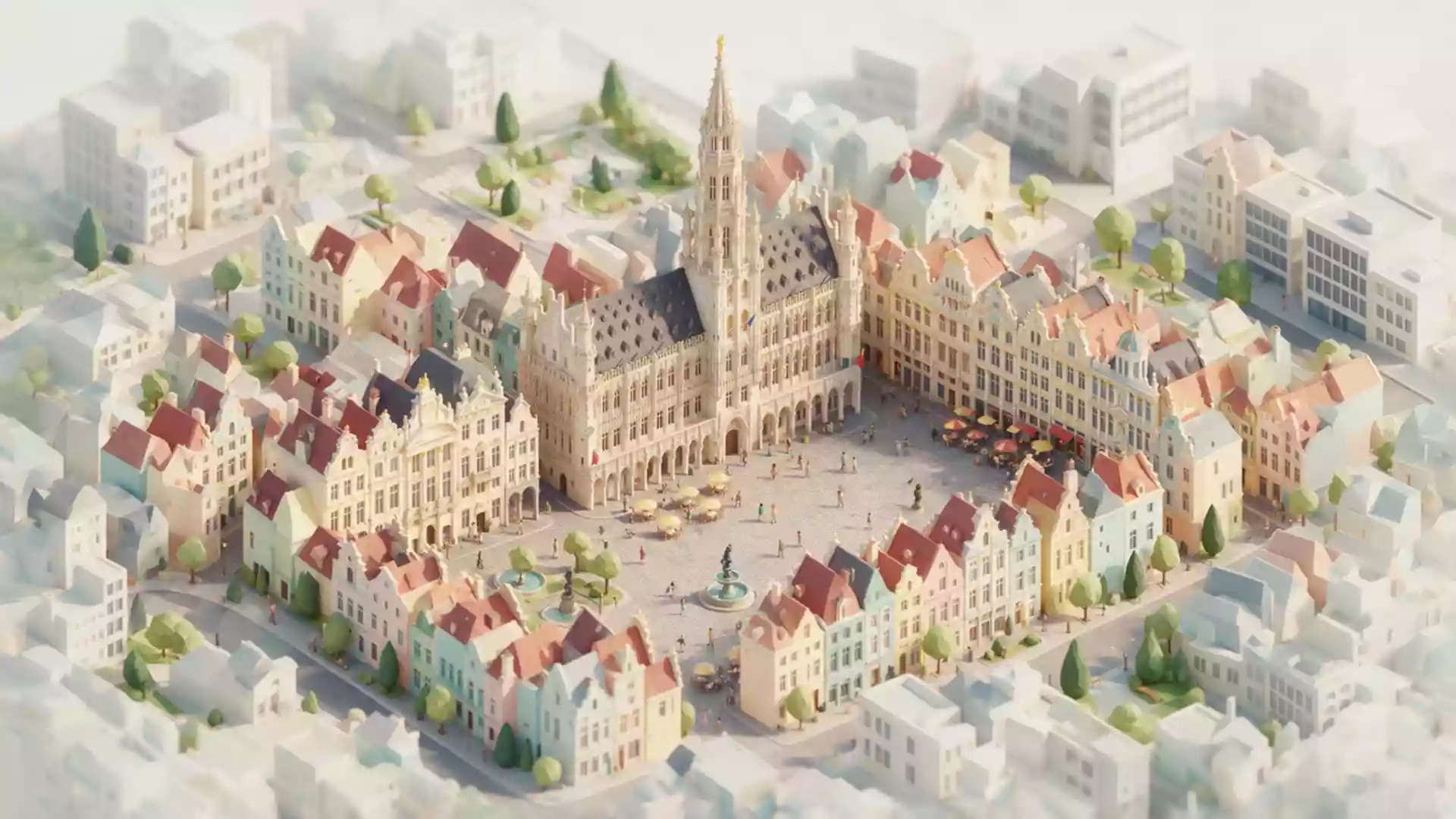
Grote Markt in Brüssel, a crafted theatre of stone façades
Published on 09/14/2026 at 14:23 | Editorial responsibility: Rafael Müller, Editor-in-Chief AD HOC NEWS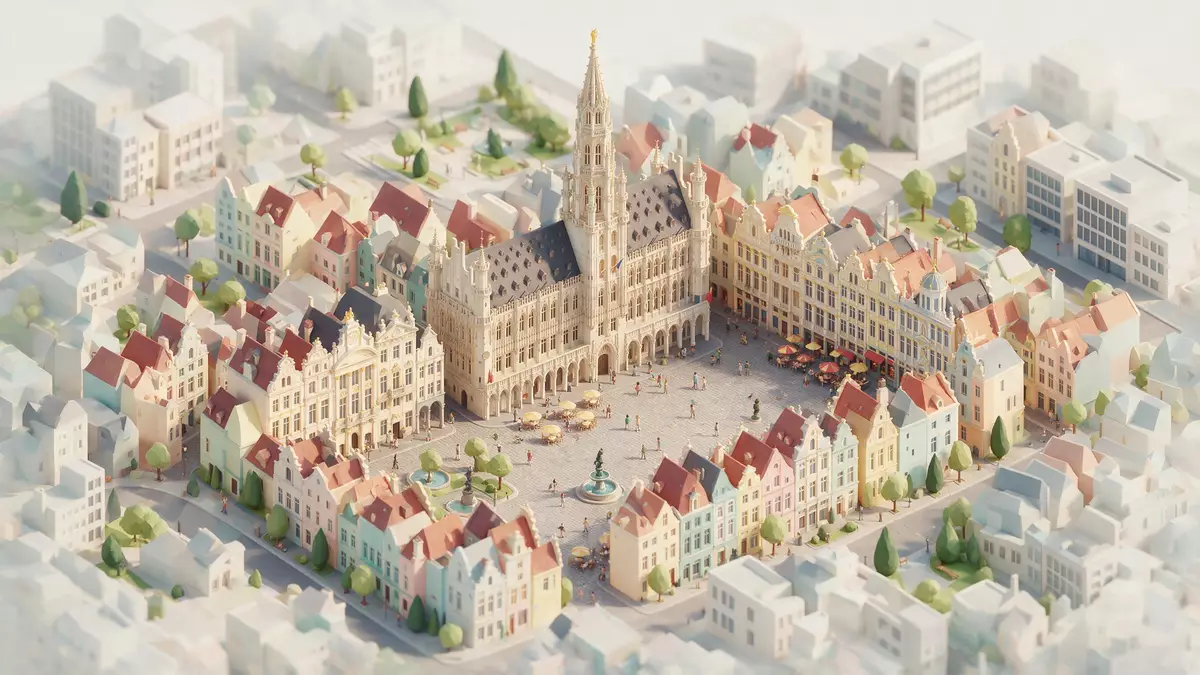
Grote Markt in Brüssel, also known as Grand-Place, is the central cobbled square of Belgium’s capital, framed by dense rows of historic guild houses and civic buildings from the late seventeenth century.The ensemble is recognised as a UNESCO World Heritage Site, anchoring the historic core of Brussels in a single enclosed space.
A rectangular stage of guild façades and civic power
Grote Markt forms a roughly rectangular cobbled square, enclosed on all sides by stone and masonry buildings that rise directly from the paving and create an almost continuous wall of façades.The square measures around 68 by 110 m (223 by 361 ft), giving it an intimate scale where architectural detail can be read from ground level without feeling distant.
On one side stands the tall Gothic town hall of Brussels, with its slender tower and sculpted stone detailing acting as a vertical counterpoint to the lower guild houses around it.Construction of this Hôtel de Ville began in 1402 and was completed in 1455, giving the square a civic anchor that predates most of the surrounding façades.
From medieval market to late seventeenth-century stone ensemble
The roots of Grote Markt lie in a medieval trading space on low, marshy ground near the Senne river, where an open market grew into the city’s commercial centre.The earliest written reference dates from 1174, under the name Nedermarckt, marking it out as the lower market distinct from higher ground nearby.
The present appearance of the square largely dates from the late seventeenth century, when bombardment severely damaged the medieval buildings and prompted systematic reconstruction of the façades.Guilds and civic authorities rebuilt the houses in coordinated styles, producing a remarkably coherent ensemble that mixes Baroque forms with surviving Gothic elements.
UNESCO recognition and architectural character
Grote Markt is inscribed on the UNESCO World Heritage List under cultural criteria that emphasise both the architectural quality of the buildings and the role of the square as a public space in a mercantile city.The listing, made in 1998 under reference 857, highlights the way different Western European styles are woven together around the cobbled rectangle.
The façades display sculpted stone, gilded ornament and a mixture of gables and towers, reflecting the ambitions of the guilds and magistrates who built along the square during the late seventeenth century.Gothic civic architecture stands alongside Baroque guild houses, creating a concentrated cross-section of Brussels’ architectural history in a single open space.
Visiting Grote Markt: what travellers from Western Europe should know
- Grote Markt lies within the historic centre of Brussels, in the Brussels-Capital Region of Belgium, a short walk from Brussels-Central railway station and near key city streets.
- The square is level and paved with cobbles, with narrow streets leading into it and steps at the entrances of several guild houses and civic buildings.
- Several tram and bus routes serve the surrounding streets, and the area connects on foot to nearby landmarks such as the Galeries Royales Saint-Hubert and the Manneken Pis statue.
Searching for Grote Markt on social platforms
These links open searches for Grote Markt on each platform.
Frequently asked questions about Grote Markt
Where is Grote Markt located within Brussels?
Grote Markt sits in the historic centre of Brussels, in the Brussels-Capital Region of Belgium, close to Brussels-Central station and major city thoroughfares.
What can visitors expect when they arrive at Grote Markt?
Visitors encounter a compact cobbled square enclosed by ornate guild houses and the tall Gothic town hall, with narrow streets feeding into the open space.
What makes Grote Markt distinctive among European squares?
Grote Markt stands out for its late seventeenth-century ensemble of Gothic and Baroque façades and its recognised status as a UNESCO World Heritage Site.