

Grosser Aletschgletscher: the great river of ice above Fiesch
Published on 08/21/2026 at 08:31 | Editorial responsibility: Rafael Müller, Editor-in-Chief AD HOC NEWS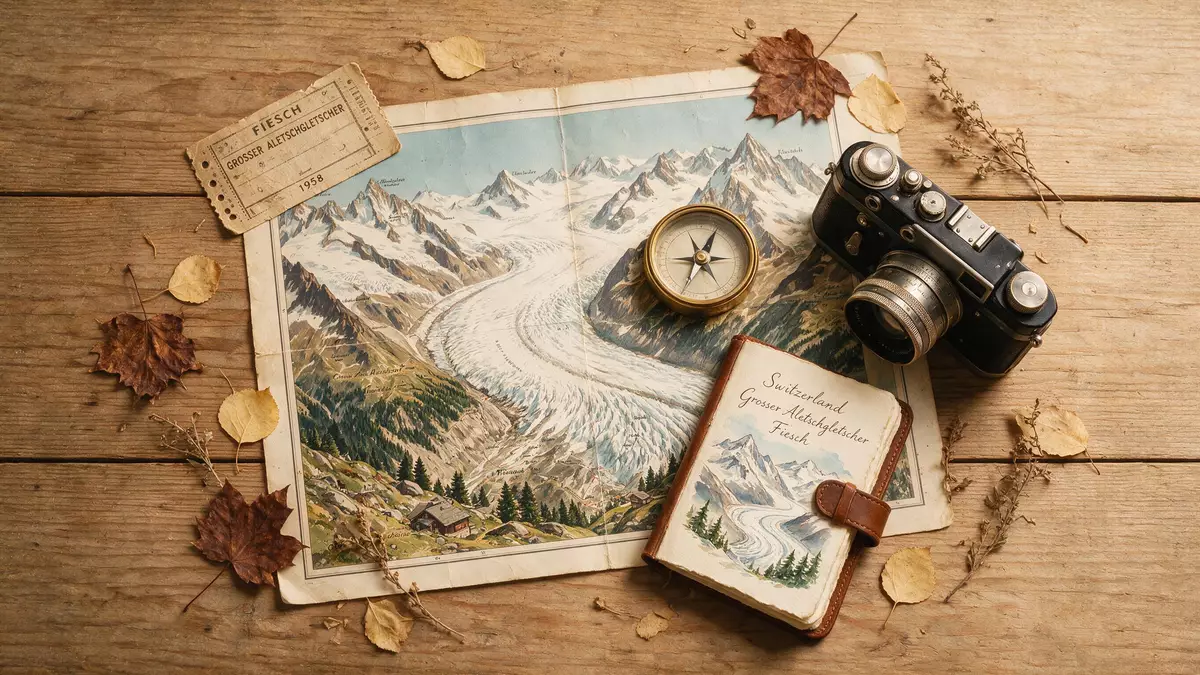
Grosser Aletschgletscher, high above Fiesch in the Swiss canton of Valais, is a vast river of ice curving through the Bernese Alps and dominating the Jungfrau-Aletsch landscape. As the largest glacier in the Alps, it has become a defining natural feature of this part of Switzerland and a central element of the Jungfrau-Aletsch World Heritage region.
The largest glacier in the Alps
Grosser Aletschgletscher lies on the southern slopes of the Bernese Alps, flowing towards the Rhone valley in Valais. It is a valley glacier whose ice tongue descends from high accumulation basins down to an elevation of around 1,500 m (4,921 ft), where the ice gives way to rock and debris.The southern slopes of the Bernese Alps From head to snout the glacier extends for well over 20 km (12.4 mi), making it the longest single body of ice in the Alpine chain.Measures around 21 km in length
The ice surface covers tens of square kilometres and stores a vast volume of frozen water, giving Grosser Aletschgletscher a massive presence in the landscape. Estimates based on glaciological inventories describe an area of more than 80 km² (30.9 sq mi) and an ice thickness at Konkordiaplatz of several hundred metres, making it both the longest and the most voluminous glacier in the Alps.The most voluminous glacier in the Alps Its meltwater drains through the Massa river into the Rhone, linking high mountain snowfields to the main valley.
Ice from Jungfrau, Mönch and their neighbours
The distinctive curve of Grosser Aletschgletscher is shaped by the way several firn basins feed into a single trunk of ice. At its head, near the lofty peaks of the Jungfrau region, three major accumulation areas merge: Grosser Aletschfirn, Jungfraufirn and Ewigschneefeld. These broad fields of compacted snow occupy altitudes above 3,000 m (9,843 ft) and funnel ice towards an extensive central basin known as Konkordiaplatz.The merger of three firn streams at Konkordiaplatz
Konkordiaplatz forms a wide plateau of ice where the separate flows meet and continue as a single glacier tongue bending gently towards the south-east. At this junction the ice is extraordinarily thick, reaching several hundred metres and creating a broad, crevassed surface. Distinctive medial moraines, formed where debris from the valley sides is carried between the merging ice streams, run like dark stripes along the glacier’s length, offering a visible record of how the tributary glaciers combine.The glacier formed by merging firn basins Above the glacier, peaks such as Jungfrau, Mönch and their neighbours frame the high-altitude ice fields that sustain the flow.
Heart of the Jungfrau-Aletsch World Heritage
Grosser Aletschgletscher sits at the centre of a protected high mountain landscape recognised as a UNESCO World Heritage site. The Jungfrau-Aletsch region encompasses hundreds of square kilometres of peaks, ridges, glaciers and high-alpine ecosystems straddling the border between Valais and the Bernese Oberland. Within this area, the glacier forms a core feature, representing a large continuous body of Alpine ice with associated forests, rocky slopes and mountain pastures.Part of the Jungfrau-Aletsch World Heritage
The World Heritage designation reflects both the geomorphology and the ecological value of the wider region. The protected area includes the great glacier, the surrounding summits and the Aletsch forest on its flank, forming a relatively intact high-alpine environment. Seen from viewpoints on the northern rim or from vantage points closer to Fiesch, Grosser Aletschgletscher appears as a continuous band of ice sweeping through a mountainous amphitheatre, with its tongue dropping towards the Massa gorge and its upper reaches anchored among some of Switzerland’s best-known peaks.Part of a wider protected landscape
Visiting Grosser Aletschgletscher: what travellers from Western Europe should know
- Grosser Aletschgletscher lies above the Rhone valley near Fiesch in Valais, Switzerland, and is reached via mountain transport routes leading to viewpoints along the northern rim and in the Aletsch Arena.
- The terrain around the glacier is high-alpine, with steep slopes, rocky paths and substantial height differences between valley settlements and vantage points, so access typically involves cable cars or mountain railways and walking over uneven ground.
- The region around Grosser Aletschgletscher forms part of a broader network of marked mountain paths and viewing platforms, and anyone approaching closer to the ice surface encounters glacial terrain with crevasses, loose debris and changing snow cover.
- Switzerland’s official languages include German, French and Italian, and the national currency is the Swiss franc.
- Entry requirements depend on your nationality; UK travellers can check the FCDO travel advice at gov.uk/foreign-travel-advice, Irish travellers the Department of Foreign Affairs at ireland.ie.
Searching for Grosser Aletschgletscher on social platforms
These links open searches for Grosser Aletschgletscher on each platform.
Frequently asked questions about Grosser Aletschgletscher
Where is Grosser Aletschgletscher located?
Grosser Aletschgletscher is in the Swiss canton of Valais, on the southern side of the Bernese Alps above the Rhone valley and close to resorts such as Fiesch.
What should visitors expect when they see the glacier?
Visitors encounter a broad, curving river of ice stretching over many kilometres, framed by high Alpine peaks, with steep slopes and rocky paths around the viewing points.
What makes Grosser Aletschgletscher distinctive among Alpine glaciers?
Its length, large surface area and thick ice at the merging basin of Konkordiaplatz make it the longest and most voluminous glacier in the Alps and the core of the Jungfrau-Aletsch World Heritage region.


