

Grosser Aletschgletscher: a vast river of ice above Fiesch
Published on 08/13/2026 at 14:01 | Editorial responsibility: Rafael Müller, Editor-in-Chief AD HOC NEWS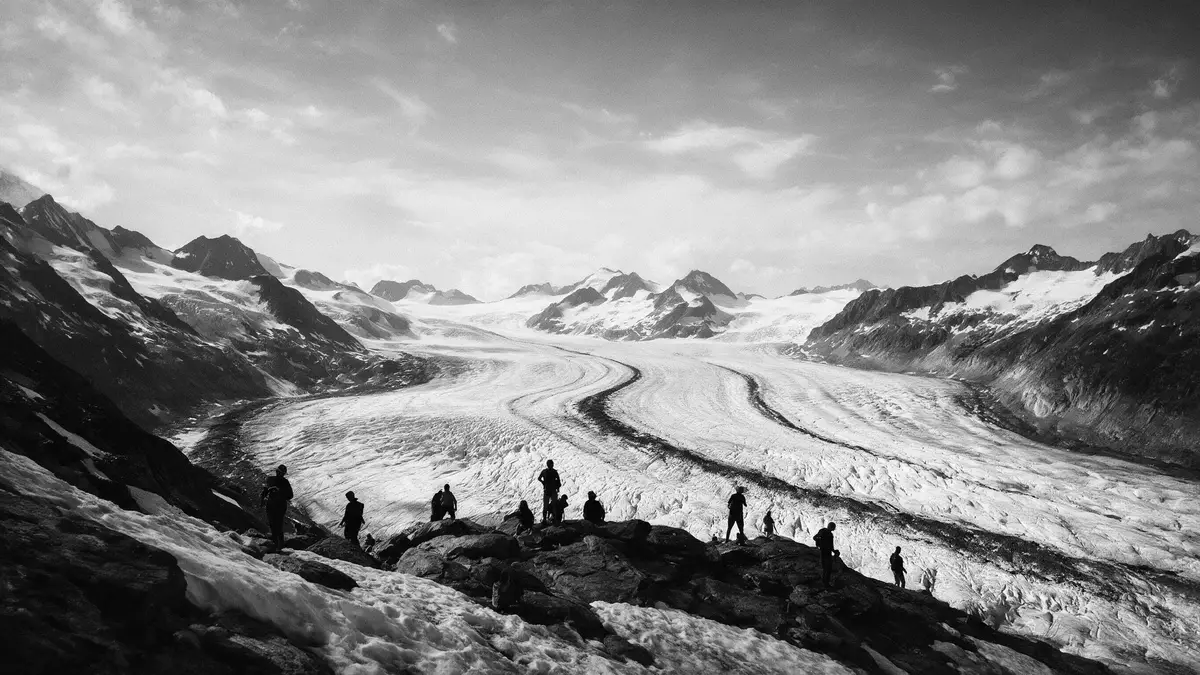
Grosser Aletschgletscher, the Great Aletsch Glacier above Fiesch in Switzerland, is a vast curving river of ice running through the eastern Bernese Alps. It is widely recognised as the largest and longest glacier in the Alps, forming the icy core of the Jungfrau-Aletsch mountain landscape and anchouring a protected high-alpine region that has gained international recognition as part of a UNESCO World Heritage listing.
An immense glacier shaped by the Alps
The bulk of Grosser Aletschgletscher lies in the Swiss canton of Valais on the southern flank of the Bernese Alps, where layers of ice spill down from some of the region’s highest peaks towards the valley carved by the Massa river. The glacier’s main body forms a broad tongue of ice that bends in a sweeping curve from its high accumulation area around Konkordiaplatz down towards the outlet of the Massa, which ultimately feeds into the Rhône.southern flank of the Bernese Alps The glacier descends from elevations above 4,000 m (13,123 ft) in its catchment area to lower levels in the inner Alps, creating a marked vertical drop across its length.
Measured from head to terminus, Grosser Aletschgletscher extends for over 20 km (12.4 mi) and has long been documented as the longest glacier in the Alps.longest glacier in the Alps Its surface area lies in the tens of square kilometres, and the ice thickness reaches several hundred metres in places, notably around Konkordiaplatz where the glacier’s main tributaries merge.ice thickness at Konkordiaplatz Together, the ice volume stored here represents one of the largest single bodies of glacier ice in western Eurasia, giving the area enduring scientific importance for the study of glacial processes and climate.
From high firn fields to a sweeping tongue of ice
The origins of Grosser Aletschgletscher sit high in the Jungfrau Region, where several vast firn basins feed the glacier. Three main ice streams converge at Konkordiaplatz: Grosser Aletschfirn from the south-west, Jungfraufirn from the north-west, and the Ewigschneefeld from the north. At the point of their confluence, the separate flows blend into a broad ice field that then narrows and curves, forming the single glacier tongue that visitors recognise from classic views over the ice.confluence of firn streams
Along its length, Grosser Aletschgletscher is marked by striking medial moraines, dark bands of rock debris carried within the ice where former side glaciers once joined the main flow.markanten Mittelmoränen These moraines trace the glacier’s structure and movement, running in long parallel lines down the surface and hinting at how the different tributary streams have combined over time. Crevasses and seracs punctuate the upper reaches, while the lower parts tend to show more subdued relief, where the ice has stretched and thinned on its way towards the valley.
A World Heritage landscape above Fiesch
Grosser Aletschgletscher forms the icy heart of the Jungfrau-Aletsch protected area, which has been inscribed on the UNESCO World Heritage List as Swiss Alps Jungfrau-Aletsch.Swiss Alps Jungfrau-Aletsch listing The wider property encompasses high peaks, glacier fields and steep valleys, offering a textbook example of how the High Alps were formed and how glacier systems interact with the surrounding rock. Grosser Aletschgletscher is highlighted within this landscape as the largest and longest glacier in Europe, providing a long record of glacial history that has made it a reference point for discussions about glacier change.largest glacier in Europe
The valley communities around the glacier, including Fiesch, look up towards this high-alpine ice field and the surrounding summits of the Bernese Alps. Infrastructure on nearby plateaus and ridges offers access to views over the glacier tongue and its tributaries from several vantage points, connecting the everyday life of the valley with the dramatic world of ice and rock above.
Viewing Grosser Aletschgletscher from Eggishorn and the Aletsch Arena
For travellers based in Fiesch and the surrounding Aletsch Arena, Eggishorn is one of the most prominent viewpoints on Grosser Aletschgletscher. From the Eggishorn ridge, listed at 2,869 m (9,413 ft) above sea level in local information, visitors can survey nearly the full sweep of the glacier tongue, from the confluence at Konkordiaplatz to the lower reaches leading towards the Massa valley.View Point Eggishorn On clear days, the view also extends to surrounding peaks such as Eiger, Mönch and Jungfrau, framing the glacier within a ring of high mountains.
Eggishorn is one of several vantage points in the Aletsch Arena, a high plateau region above the Rhône valley with direct sightlines to Grosser Aletschgletscher. Paths and marked routes on ridge tops and alpine meadows allow walkers to follow the curve of the ice from different angles, while information boards explain the basic glacial features visible from the viewpoints. From these locations the glacier appears as an immense, slow-moving landscape feature, with its mid-surface moraines and gently curving tongue emerging clearly against the surrounding grey rock and green slopes.Aletsch Arena
Visiting Grosser Aletschgletscher: what travellers from Western Europe should know
- Grosser Aletschgletscher lies above the upper Rhône valley in the canton of Valais in south-western Switzerland, with Fiesch acting as an access point to the Aletsch Arena and nearby viewpoints.
- Routes to Eggishorn and other viewpoints involve high-altitude terrain, including mountain paths and exposed ridge sections where sturdy footwear and suitable clothing for changing alpine conditions are important.
- Several vantage points over Grosser Aletschgletscher sit above 2,000 m (6,562 ft), so travellers should be prepared for thinner air and cooler temperatures than in the valley.
- The official language of this part of Switzerland is German and the national currency is the Swiss franc.
Searching for Grosser Aletschgletscher on social platforms
These links open searches for Grosser Aletschgletscher on each platform.
Frequently asked questions about Grosser Aletschgletscher
Where is Grosser Aletschgletscher located?
Grosser Aletschgletscher lies in the canton of Valais on the southern side of the Bernese Alps, above the upper Rhône valley and the communities of the Aletsch Arena including Fiesch.
What can travellers expect when visiting the glacier area?
Travellers encounter high-alpine terrain with ridge viewpoints, marked paths and expansive views over the glacier tongue and surrounding peaks, in an area where altitude and exposure demand suitable clothing and footwear.
What makes Grosser Aletschgletscher distinctive among Alpine glaciers?
Grosser Aletschgletscher is distinguished by its exceptional length and size, its striking medial moraines and the way several major firn basins converge at Konkordiaplatz to create a single sweeping river of ice.


