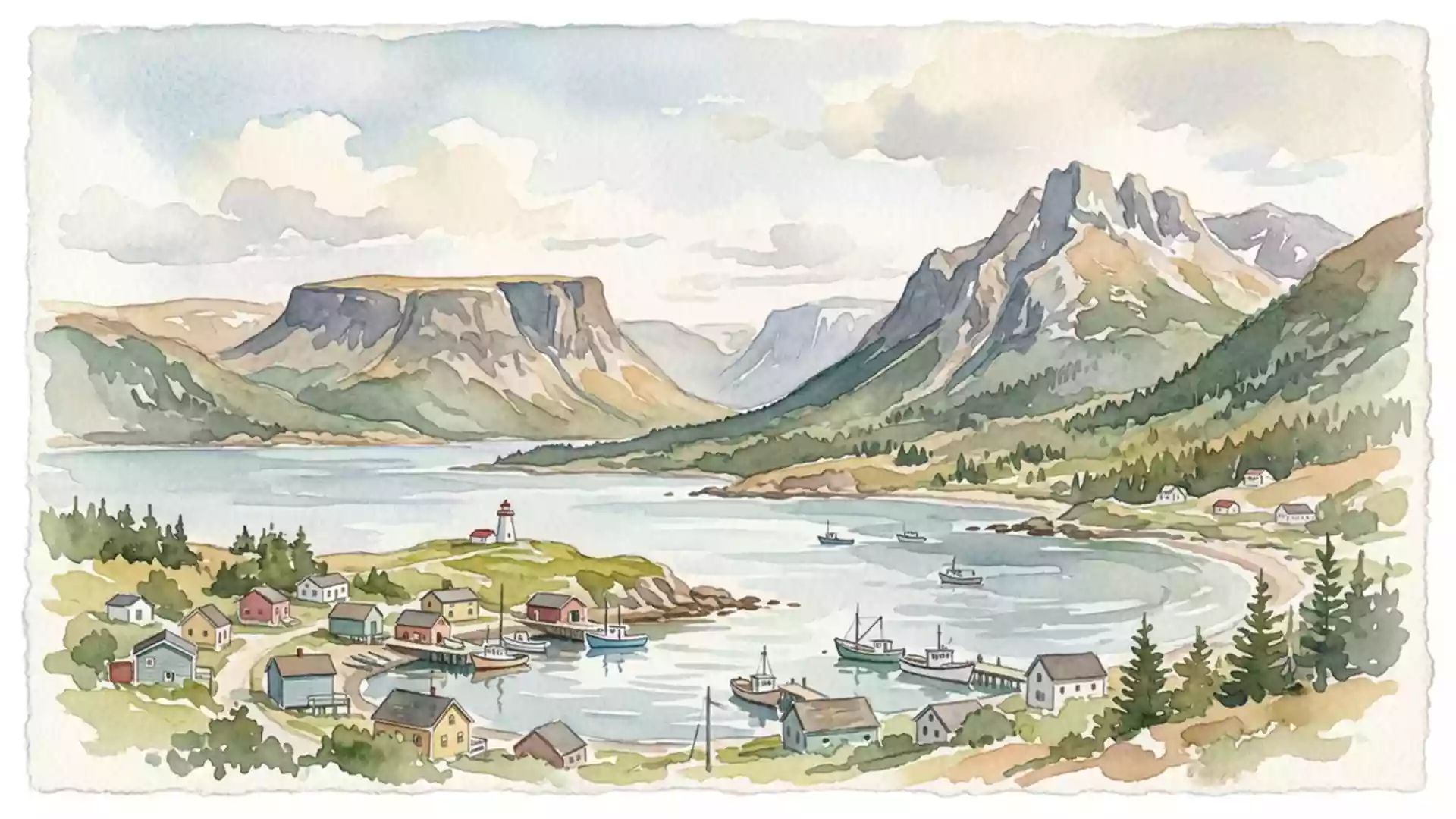
Gros Morne National Park’s exposed mantle and fjord landscape
Published on 09/03/2026 at 15:13 | Editorial responsibility: Rafael Müller, Editor-in-Chief AD HOC NEWS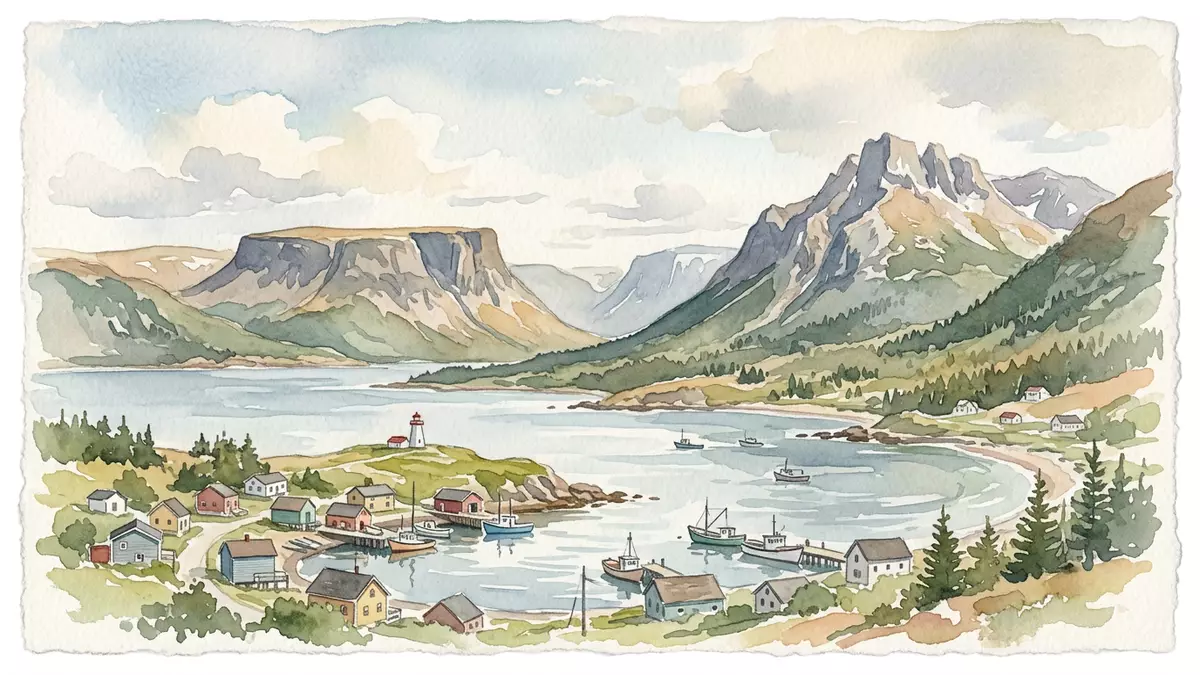
Gros Morne National Park on the west coast of Newfoundland is one of the few places where the bones of the planet are laid bare in a landscape of cliffs, fjords and long northern shorelines. Rising inland from Rocky Harbour, the park combines coastal lowlands with high plateaus and a striking zone where rock from deep within the Earth forms a barren, rust-coloured slope.
The park where plate tectonics is written in stone
Gros Morne National Park lies on the Great Northern Peninsula of Newfoundland in the Canadian province of Newfoundland and Labrador, with Rocky Harbour acting as one of its main service communities.Great Northern Peninsula The protected area covers a large sweep of coastline and interior highlands and is recognised both as a national park of Canada and as a World Heritage Site under UNESCO criteria. In 1987 it was placed on the World Heritage List for geological formations that demonstrate major stages in Earth’s history as well as for the scenery they create.World Heritage Site in 1987
The park’s rocks are described as a textbook illustration of plate tectonics, the theory that continent-sized plates have collided and separated over geological time.textbook illustration of plate tectonics Within the boundaries of Gros Morne National Park, ancient continental crust, preserved oceanic crust and fragments of Earth’s mantle sit side by side. Sedimentary strata along the coast preserve fossils from the Palaeozoic era, while Precambrian gneisses and granites in the Long Range Mountains form part of an old basement massif in the Appalachian chain.Precambrian gneisses and granites For visitors, this scientific significance translates into walking trails, viewpoints and boat routes arranged through a landscape where each valley and headland has a deep-time story attached to it.
The Tablelands and the highland–lowland contrast
Among the most distinctive areas inside Gros Morne National Park are the Tablelands, a broad slope of ochre and brown rock that stands in marked contrast to the surrounding green hills.the internationally known Tablelands The rock here is ultramafic material, including varieties of peridotite and serpentinite, brought to the surface during a plate collision several hundred million years ago.ultramafic mantle rocks Because soil developed on this mantle-derived rock is low in nutrients and contains metals that restrict plant growth, the Tablelands appear comparatively bare, with scattered vegetation and open views across the slope.
Elsewhere in the park, the Long Range Mountains form an eroded remnant of an ancient mountain belt, with highland plateaus cut by deep valleys and ponds.Long Range Mountains Glacial action carved troughs and cirques into these highlands and left hanging valleys above water bodies such as Western Brook Pond, where near-vertical rock faces rise above the long, narrow lake.glacier-scoured highlands and fiords These highlands descend towards coastal lowlands along the Gulf of St Lawrence, where rivers, beaches and tuckamore forests occupy a gentler terrain. Moving between the mantle slopes, the high plateaus and the coastal edges within a single visit gives a clear sense of the park’s internal contrast.
Fjords, cliffs and coastal culture
One of the most widely recognised sights within Gros Morne National Park is the land-locked fjord of Western Brook Pond, where steep cliffs rise above the water and cascades descend from the plateau.glacier-carved land-locked fjord The lake occupies a glacially carved valley whose outlet to the sea has been cut off, leaving a long body of freshwater framed by billion-year-old rocks and sculpted faces. Boat trips operate on the pond, giving views of waterfalls dropping from high ledges and of the cross-sections of rock that helped geologists piece together the history of continental drift in this region.
Along the coast, the park includes headlands, coves and low cliffs that show the relationship between the geological story and Newfoundland’s rural culture.Newfoundland’s rural culture Features such as the Lobster Cove Head Lighthouse, set on a rocky point, recall the fishing communities that have worked the waters off the Gros Morne coast for generations. Small settlements including Rocky Harbour sit just outside or at the edge of the park, providing accommodation, services and local interpretation of both the scientific and human stories connected with the landscape.
Visiting Gros Morne National Park: what travellers from Western Europe should know
- Gros Morne National Park is located on the west coast of Newfoundland, in Newfoundland and Labrador, with road access from Rocky Harbour and other nearby communities.west coast of the island of Newfoundland
- The terrain inside the park ranges from coastal lowlands to high plateaus, with some hiking routes crossing steep slopes and long sections on uneven ground, particularly in the Long Range Mountains.Gros Morne Mountain trail
- Several viewpoints and trailheads are reached by paved roads, but approaches to mantle rock areas such as the Tablelands include exposed sections where weather and underfoot conditions can change quickly.official park map
- English is the official language in Newfoundland and Labrador and the currency is the Canadian dollar.
- Entry requirements depend on your nationality; UK travellers can check the FCDO travel advice at gov.uk/foreign-travel-advice, Irish travellers the Department of Foreign Affairs at ireland.ie.
Searching for Gros Morne National Park on social platforms
These links open searches for Gros Morne National Park on each platform.
Frequently asked questions about Gros Morne National Park
Where is Gros Morne National Park located?
Gros Morne National Park is on the west coast of Newfoundland in Newfoundland and Labrador, with Rocky Harbour and nearby communities providing access and services.west coast of Newfoundland
What can visitors expect on a visit to Gros Morne National Park?
Visitors encounter a combination of coastal lowlands, high plateaus, mantle-derived slopes and glacial fjords, alongside small communities and cultural sites such as Lobster Cove Head Lighthouse.Lobster Cove Head Lighthouse
What makes Gros Morne National Park distinctive among Canadian parks?
The park exposes oceanic crust and sections of Earth’s mantle at the surface and includes glacier-carved fjords, earning recognition as a UNESCO World Heritage Site for geology and scenery.geology illustrates plate tectonics