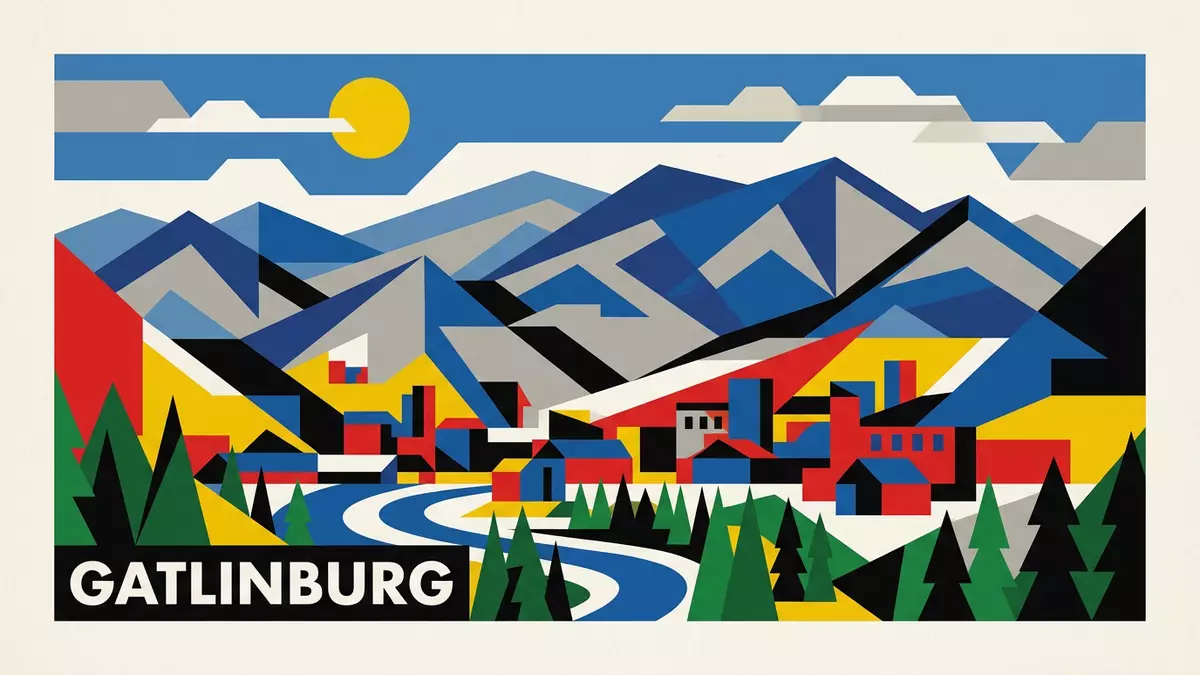
Great Smoky Mountains National Park and its ridgelines
Published on 08/10/2026 at 15:02 | Editorial responsibility: Rafael Müller, Editor-in-Chief AD HOC NEWS
Great Smoky Mountains National Park is a broad landscape of ridges, coves and forested valleys on the Tennessee–North Carolina border. Its most distinctive feature is its scale: long mountain lines, layered tree cover and a road network that meets a protected wilderness setting.
Ridgelines, coves and forest depth
The park extends across one of the most varied mountain landscapes in the eastern United States. Douglas fir, hemlock, oak and cove hardwood forest shape different elevations, while streams cut through narrow valleys and dark ravines.
That range gives the park a strong sense of distance and enclosure. A visitor moving from low valleys to higher slopes passes through very different vegetation, stone outcrops and river corridors.
Historic structures in a mountain setting
Within the park are preserved buildings, churches and cabins from the southern Appalachian backcountry. Some of the best-known structures date from the nineteenth century and from the early decades of the twentieth century, when families lived and farmed in the mountains.
Elkmont, Cades Cove and Roaring Fork each present a different chapter of settlement and land use. Churches, log homes and barns remain part of the park’s identity alongside the forests and roads.
Trails, drives and river valleys
The park’s roads follow river bends and mountain grades, while trails reach viewpoints, falls and high-country forests. Newfound Gap Road crosses the main crest, and the Blue Ridge Parkway meets the park at its eastern edge.
Many visitors come for short walks, scenic drives and longer hikes into the backcountry. The park works as both a protected mountain interior and a network of accessible valleys and overlooks.
Visiting Great Smoky Mountains National Park: what travellers from Western Europe should know
- The park is reached from Gatlinburg and other gateway towns by road. It also connects with the wider southern Appalachian road network.
- Admission arrangements and opening hours are set by the site's operator and change with the season; the official website is the only binding source.
- Spring brings wildflowers and flowing water, while autumn brings strong colour on the slopes. Higher elevations are cooler and can hold cloud and mist.
- Some trails are steep, rooty or rocky, and many walks involve sustained uphill sections. Distances can feel longer at altitude and on uneven ground.
- Cashless payment is not universal in surrounding mountain towns, and cellular coverage can be limited in parts of the park. Basic supplies, maps and water are sensible to carry.
- Entry requirements depend on your nationality. UK travellers should check the FCDO travel advice at gov.uk/foreign-travel-advice; Irish travellers the Department of Foreign Affairs at ireland.ie; EU and EEA citizens their own national foreign ministry.
Searching for Great Smoky Mountains National Park on social platforms
These links open searches for Great Smoky Mountains National Park on each platform.
Frequently asked questions about Great Smoky Mountains National Park
Where is Great Smoky Mountains National Park?
It lies on the Tennessee–North Carolina border, with Gatlinburg serving as a principal gateway on the Tennessee side. The park covers a large mountain area rather than a single summit or compact valley.
What should a visitor expect?
Expect a mix of scenic roads, wooded trails, river valleys and historic buildings. The terrain varies sharply, so a short drive can take you from developed gateways into deep mountain landscape.
What makes it distinctive?
The combination of protected high forest, old settlement sites and long mountain ridges gives the park its character. The landscape is broad, layered and strongly tied to southern Appalachian history.