
Great Barrier Reef, a living ribbon of coral off Cairns
Published on 08/20/2026 at 20:07 | Editorial responsibility: Rafael Müller, Editor-in-Chief AD HOC NEWS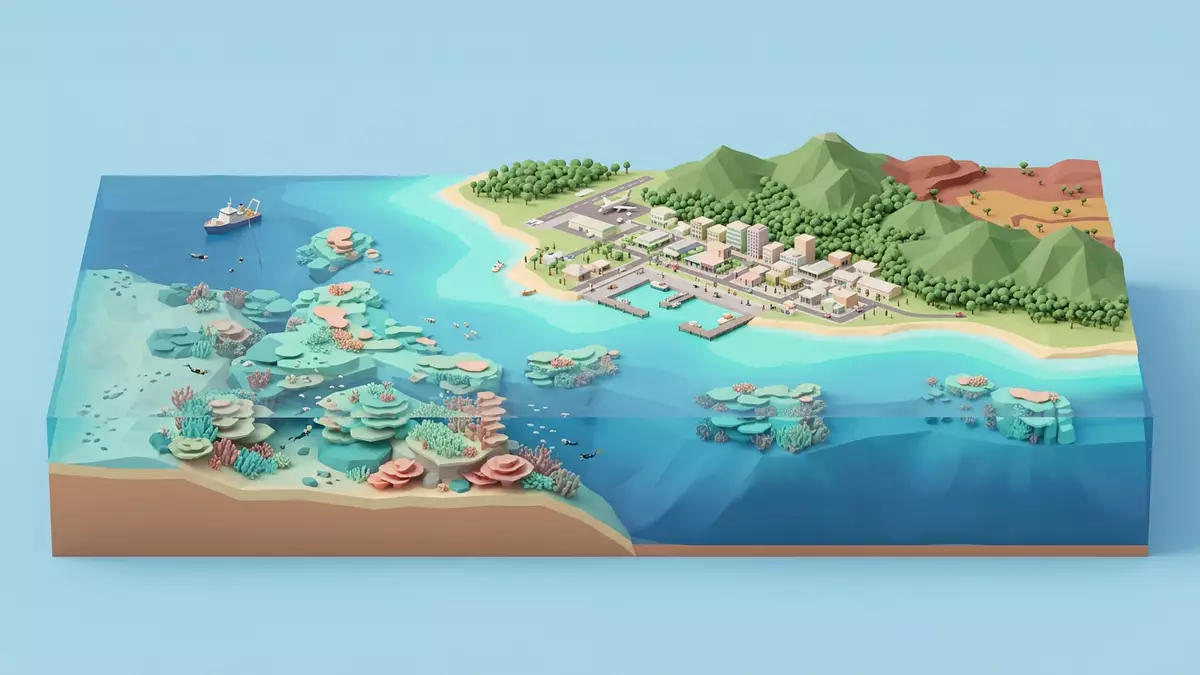
Off the coast of Queensland in north?east Australia, the Great Barrier Reef forms a vast living ribbon of coral stretching through the Coral Sea. As the world’s most extensive coral reef ecosystem, it covers hundreds of thousands of square kilometres and has been recognised as a UNESCO World Heritage Site since 1981, reflecting its global environmental and scientific importance.
A reef that runs for thousands of kilometres
The Great Barrier Reef extends for more than 2,000 km along the north?eastern coast of Australia, broadly following the line of the Queensland mainland from the Torres Strait southwards towards the Tropic of Capricorn.extends in a northwest–southeast direction for more than 2,000 km In many areas the reef sits tens of kilometres offshore, separated from the continent by a lagoon?like channel of deeper water that forms a clear boundary between coastal shallows and the outer reef. From cities such as Cairns, boats cross this channel to reach sections of the reef that lie well out in the Coral Sea.located in the Coral Sea off the coast of Queensland
The overall reef system occupies an immense area measured in the hundreds of thousands of square kilometres, making it larger than many countries.covers an area of about 348,700 km² Within that broad belt, individual coral formations range from small coral patches to barrier and fringing reefs that rise from the sea floor towards the surface. The system also includes numerous sand cays and low islands formed over time by the accumulation of coral fragments, shells and other marine sediments.
World Heritage status and biological richness
The Great Barrier Reef has been inscribed on the World Heritage List since 1981 under natural criteria that recognise its outstanding beauty, geological history, ecological processes and biodiversity.inscribed on the World Heritage List in 1981 The World Heritage Area covers hundreds of thousands of hectares and is divided into management zones that include a Cairns–Cooktown section among others.World Heritage Area divided into several management areas including Cairns–Cooktown This formal recognition anchors the reef within a global framework that values its long?term conservation.
Biologically, the Great Barrier Reef is one of the richest marine environments on earth, supporting a vast array of life forms that depend on coral structures for shelter and food.one of the most complex and biodiverse natural systems on earth Within the reef are hundreds of species of hard coral that build the skeleton of the reef, alongside soft corals, sponges and algae. Fish diversity runs into the thousands of species, ranging from tiny reef fish that occupy crevices in the coral to larger pelagic species that pass along reef edges. Marine turtles, dugongs and various species of whales and dolphins also occur within the broader reef region, reflecting the range of habitats from shallow seagrass beds to deeper open water.
Experiencing the reef from Cairns
Cairns in tropical Queensland is a major coastal city that provides an access point to the Great Barrier Reef through its harbour and nearby marinas.the Great Barrier Reef lies along the east coast of Queensland with a section off Cairns From here, vessels travel to outer and inner reef locations, where sections of coral rise towards the surface and form complex structures of bommies, ridges and shallow platforms. Above the water, low coral islands and sandy cays often carry sparse vegetation adapted to saline conditions, while some larger islands within the reef are covered with tropical forest or woodland.
On a visit, travellers encounter a layered seascape rather than a single continuous wall of coral. Approaches by boat usually start with views of the coastline and the forested ranges inland, then open out to expanses of blue water where reef structures begin to appear as lighter patches beneath the surface. At specific mooring points, coral heads, sand patches and channels form a mosaic under the water, with varying depths that can be appreciated through snorkelling, diving or glass?bottom viewing. Each section reveals its own mix of coral forms and marine life, shaped by local currents, exposure to waves and water clarity.
Visiting Great Barrier Reef: what travellers from Western Europe should know
- The reef lies off the north?eastern coast of Australia, with Cairns in Queensland serving as a major gateway city; boat trips from Cairns cross the coastal channel to reach reef sites.
- Access to individual reef locations often involves boarding vessels and moving across decks, with ladders or steps leading down to platforms close to the water.
- The terrain at coral cays combines sand, broken coral and occasional rock, and walking areas may be uneven underfoot, especially near the waterline.
- The official language is English and the currency is the Australian dollar.
- Entry requirements depend on your nationality; UK travellers can check the FCDO travel advice at gov.uk/foreign-travel-advice, Irish travellers the Department of Foreign Affairs at ireland.ie.
Searching for Great Barrier Reef on social platforms
These links open searches for Great Barrier Reef on each platform.
Frequently asked questions about Great Barrier Reef
Where is the Great Barrier Reef in relation to Cairns?
The reef lies offshore in the Coral Sea along the coast of Queensland, with Cairns positioned on the mainland as one of the principal urban gateways.
What should travellers expect on a visit to the Great Barrier Reef?
A visit generally involves boat travel from the coast to reef sites, with time spent on vessels, platforms, coral cays or islands and opportunities to view marine life around the coral structures.
What makes the Great Barrier Reef distinctive among marine environments?
Its exceptional scale, long recognised through World Heritage status, and its remarkable biodiversity across thousands of reefs and islands together make it an outstanding coral ecosystem.


