
Gravensteen, the stone stronghold in Gent’s old centre
Published on 09/05/2026 at 15:51 | Editorial responsibility: Rafael Müller, Editor-in-Chief AD HOC NEWS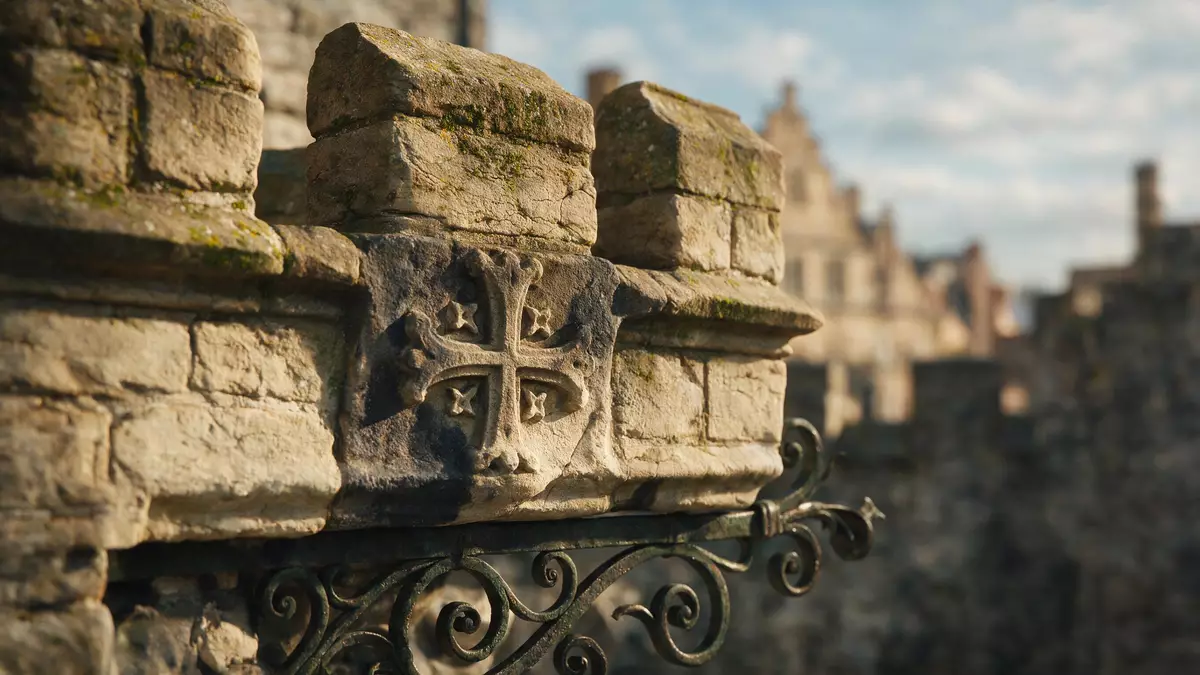
Gravensteen is a medieval stone castle in Gent, a fortress of thick walls and towers set among the narrow streets and waterways of Belgium’s historic centre. The castle’s name, meaning “castle of the counts”, reflects its long association with the Counts of Flanders, whose power shaped the city and the wider region in the twelfth and thirteenth centuries. Built as a substantial stone stronghold in 1180 under Philip of Alsace, it still presents a complete outline of walls, keep and gatehouse that gives Gent an unmistakable profile.
A concentric stone fortress in Gent
Gravensteen occupies a compact site in Gent’s old town, enclosed by curtain walls, towers and battlements that form a largely intact medieval defence system.moated medieval stone fortress Within these outer walls stands a central stone keep, the main residential and defensive block of the castle, flanked by service ranges and smaller structures added over time.large stone keep The whole ensemble is surrounded by water and sits close to the confluence of local waterways, integrating the castle with Gent’s network of canals and rivers.
The castle’s plan reflects a medieval approach to fortified residence, with the keep at the centre and an outer circuit of walls and towers providing an additional layer of protection.concentric layout with keep and outer wall From the exterior, Gravensteen presents a compact mass of grey stone, with crenellations, arrow slits and a fortified gate marking it out against the surrounding townhouses. Inside the walls, a sequence of courtyards and passages links the different parts of the castle, including staircases rising within the towers and high walkways along the battlements. These features make the building a rare example of a medieval urban fortress that still reads clearly as a defensive complex.
From comital residence to civic monument
The present stone Gravensteen was built in 1180 by Philip of Alsace, Count of Flanders, on a site already used for earlier fortifications that date back to the ninth and tenth centuries.built in 1180 by Philip of Alsace Before the stone castle, the counts established wooden and then more substantial early structures here, beginning with a defensive work attributed to Baldwin I in the ninth century and later developments under Arnulf I.early fortification dates back to the 9th century Philip’s project transformed the site into a robust stone fortress, aligning Gent with wider European trends in castle construction during the high Middle Ages.
For much of the period between 1180 and the mid fourteenth century, Gravensteen served as the principal residence of the Counts of Flanders and a centre of comital authority.primary residence of the Counts of Flanders After the counts withdrew to other residences, the castle remained closely tied to governance and justice: it housed the Council of Flanders, functioned as a courthouse and prison and accommodated the Ghent mint.seat of the Council of Flanders and Ghent Mint In the nineteenth century the fortress even entered the industrial era, with parts of its interior adapted for factory use and workers’ housing. Around the turn of the twentieth century, major restoration campaigns returned Gravensteen to a medieval appearance, and in the later twentieth century it took on its present role as a museum and historic monument in the care of the city of Gent.restored over 1893–1903 and is now a museum
Experiencing Gravensteen’s spaces and views
Walking through Gravensteen today reveals a sequence of spaces that reflect its layered history: robust gateworks and corridors once used by guards, larger halls where comital or judicial functions could be carried out and narrower rooms and chambers associated with imprisonment and the castle’s harsher past. The museum collections include items linked to warfare and justice, such as armour, weapons and instruments associated with judicial torture, underscoring the castle’s former role in law and conflict.collection that recalls its harder past Interpretive displays in these rooms give context to the fortress’s role in medieval and early modern Flanders.
Gravensteen also serves as a vantage point over Gent. The battlements and tower levels offer views across tiled roofs, church spires and the winding course of the Leie river, illustrating how the castle sits within the urban fabric. Its position in the centre of Gent means that the transition from busy streets to enclosed stone courtyards is immediate, creating a pronounced contrast between the open city and the contained world within the walls.medieval fortress in the city centre The combination of preserved defensive architecture and accessible interior routes makes Gravensteen one of the most legible medieval structures in Belgium’s urban landscape.
Visiting Gravensteen: what travellers from Western Europe should know
- Gravensteen stands in Gent’s historic centre, on Sint-Veerleplein, close to the Leie and other inner-city waterways, and is reached on foot or by local tram lines.
- The castle interior includes narrow tower staircases, passages with steps and elevated walkways along the battlements, requiring secure footing and comfort with heights.
- The surrounding streets form part of Gent’s old town, with cobbled surfaces and close-packed buildings that frame the castle and link it to nearby squares and churches.
- The official language is Dutch and the currency is the euro.
Searching for Gravensteen on social platforms
These links open searches for Gravensteen on each platform.
Frequently asked questions about Gravensteen
Where is Gravensteen located?
Gravensteen is located in the centre of Gent, in Belgium’s East Flanders province, close to key waterways and historic streets of the old town.
What can visitors expect inside Gravensteen?
Visitors encounter stone halls, towers, battlements and museum rooms displaying weapons, armour and justice-related objects linked to the castle’s past roles.
What makes Gravensteen distinctive among castles?
Gravensteen combines a well-preserved medieval defensive layout and keep with an urban setting, reflecting its evolution from comital residence to civic monument and museum.


