
Gravensteen in Gent: a stone fortress of the counts
Published on 08/28/2026 at 22:28 | Editorial responsibility: Rafael Müller, Editor-in-Chief AD HOC NEWS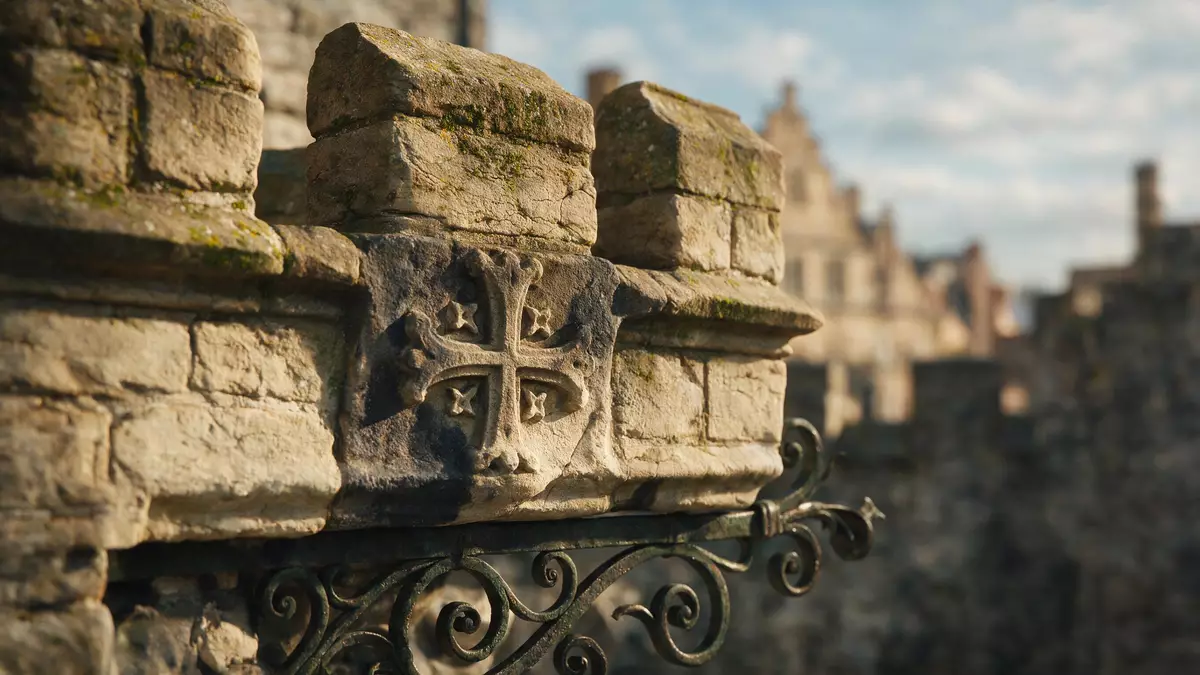
Gravensteen in Gent is a compact medieval stone fortress whose curtain walls and towers still enclose a self-contained castle world in the centre of the city. Built as the residence of the Counts of Flanders in the late twelfth century, it later shifted through roles as mint, court, prison and factory before restoration turned it into a museum.
A castle of the Counts of Flanders
Gravensteen stands in the historic core of Gent, in East Flanders, surrounded by streets and canals yet enclosed behind high stone walls. The present castle dates to 1180 and was built under Philip of Alsace, Count of Flanders, on a site that had already been fortified earlier in the Middle Ages.The current castle dates from 1180 From that year until 1353 Gravensteen served as the residence of the Counts of Flanders, a secular stronghold rather than a religious complex.Residence of the Counts until 1353
The castle rises between branches of the river Lys, forming a kind of water castle with its stone circuit bordered by water and urban fabric.Water castle in Gent Within the walls, a central keep dominates the complex, surrounded by inner buildings and defensive structures. The name Gravensteen, literally “castle of the counts”, reflects this long association with comital power in the County of Flanders.Castle of the counts in Ghent
Stone defences, towers and battlements
Gravensteen is a textbook example of a medieval stone fortress, with moated curtain walls, ramparts and a prominent central keep. The outer walls form a roughly irregular polygon punctuated by towers and battlements, giving the castle a dense, fortified silhouette when viewed from the surrounding streets or from canal level.Moated medieval stone fortress As a secular Gothic structure, its defensive system – walls, towers and gatehouse – has remained remarkably complete compared with other castles in Flanders.Defensive system virtually intact
The keep itself was built as a substantial stone block raised above the inner court, replacing earlier timber buildings from the ninth and tenth centuries.Stone keep replacing wooden structures Inside the walls, visitors encounter staircases, halls and chambers arranged across several levels, together with walkways along the ramparts. The whole complex was restored around the turn of the twentieth century, when Gent acquired the castle and undertook a substantial programme to recover a medieval appearance, working in a romanticised Gothic spirit.Restoration between 1893 and 1903
From mint and cotton mill to museum
After the Counts of Flanders moved their residence elsewhere in the fourteenth century, Gravensteen’s role changed and its interiors adapted to new uses. From 1353 the castle housed the mint of Gent, producing Flemish coinage within its walls for more than a century.Mint between 1353 and 1491 Later it served as a court and prison, the seat of the Council of Flanders, with justice and confinement embedded within the fortified structure.Used as court and prison
During the nineteenth century Gravensteen took on an industrial life when its interiors and adjacent spaces were converted into a cotton mill, with workers’ housing built inside and against its medieval walls.Converted into a cotton mill This industrial phase left the castle in a dilapidated condition by the late nineteenth century, when Gent began buying parts of the complex and planning a full restoration. Between 1893 and the early years of the twentieth century, the city cleared the later buildings and reconstructed the castle according to historicist principles, returning Gravensteen to a form that recalls its medieval role as fortress and residence. Since 1903 it has functioned as a museum, presenting its history and architecture inside the very fabric of the castle.Museum from 1903
Visiting Gravensteen: what travellers from Western Europe should know
- Gravensteen stands in central Gent in East Flanders, close to the river Lys and Gent’s historic streets, and is reached on foot, by bicycle or by public transport.
- Inside the castle, access to towers, ramparts and upper levels involves staircases and stone steps, including narrow flights within the towers.
- The official language is Dutch and the currency is the euro.
Searching for Gravensteen on social platforms
These links open searches for Gravensteen on each platform.
Frequently asked questions about Gravensteen
Where is Gravensteen located?
Gravensteen is a medieval castle in Gent, a city in East Flanders in Belgium, close to the river Lys and Gent’s historic centre.
What can visitors expect inside Gravensteen?
Visitors encounter stone halls, a central keep, towers and ramparts, together with exhibitions that present the castle’s history as residence, mint, court, prison and factory.
What makes Gravensteen distinctive among castles?
Gravensteen combines a late twelfth-century stone fortress built for the Counts of Flanders with a defensive system that remains largely intact and a documented sequence of changing uses.


