
Gravensteen in Gent, a stone fortress above the city canals
Published on 09/14/2026 at 09:22 | Editorial responsibility: Rafael Müller, Editor-in-Chief AD HOC NEWS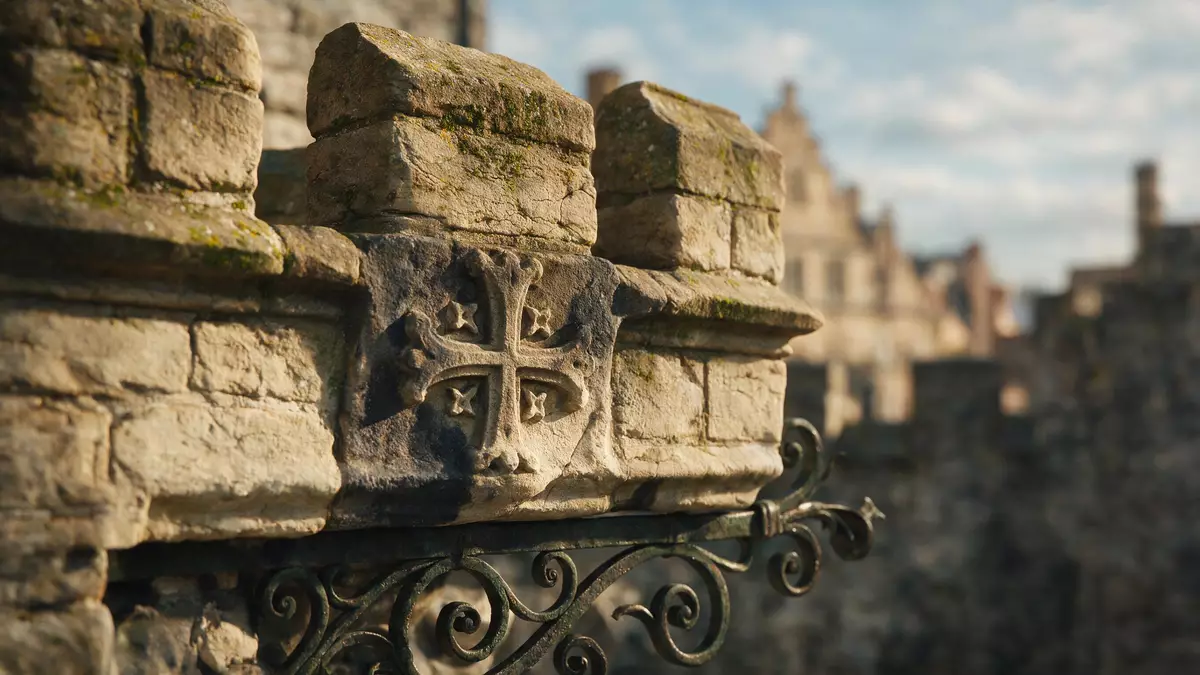
Gravensteen in Gent is a compact medieval stone fortress whose high walls and battlements rise directly above the city’s canals, giving a rare sense of a castle woven into an active urban fabric. Built in the twelfth century for the Counts of Flanders, it survives as a largely intact defensive ensemble and as a museum that turns its towers, halls and ramparts into a walkable cross?section of medieval power.
A castle of the Counts in the centre of Gent
Gravensteen stands in the historic core of Gent, in East Flanders in Belgium, surrounded on several sides by water and closely packed streets. Its name, meaning “castle of the counts”, reflects its long role as the main residence of the Counts of Flanders in the late twelfth and thirteenth centuries, a period when Gent was emerging as a major trading and textile city in northern Europe.main residence of the Counts of Flanders The principal stone castle is dated to 1180 and associated with Philip of Alsace, the Count of Flanders whose rule began in 1168 and who is linked in several historical accounts with the decision to rebuild the stronghold in durable masonry.dated to 1180 and associated with Philip of Alsace
The layout that visitors see belongs to the high medieval phase, when the castle was organised as a fortified water castle with a central keep ringed by an outer curtain wall and towers. This configuration remained in place during its time as a comital seat until the middle of the fourteenth century, when the Counts of Flanders moved their main residence elsewhere and Gravensteen’s role began to shift.fortified water castle with a central keep The surrounding district, centred on Sint?Veerleplein, still bears traces of that era, with narrow streets, gabled houses and views back to the stone walls over the canal.
Architecture in stone: keep, walls and battlements
Architecturally, Gravensteen is defined by its tall central keep, encircled by thick stone walls that are articulated with battlements and corner towers. The keep rises to around 30 m (98 ft), giving it sufficient height to overlook the surrounding townscape and waterways while remaining compact enough to sit within a relatively small footprint compared with rural castles.keep rises to around 30 m The masonry is constructed primarily from locally quarried stone, with walls reported to vary in thickness between roughly 2.5 m and 3 m (8.2 ft and 9.8 ft), reinforcing the perception of Gravensteen as a compact but very solid fortress.walls reported to vary in thickness
Within the outer defences, a visitor moves between towers, the keep, inner courtyards and a sequence of stone halls whose architectural language blends Romanesque robustness with later Gothic detailing. Narrow staircases within the towers connect multiple levels, while the battlements provide a continuous walk along the upper edges of the curtain wall. From these ramparts, views open across Gent’s roofs, church towers and canals, underscoring the way Gravensteen sits not on a remote hill but in the dense weave of the city. In several places, defensive features such as arrow slits, machicolations and crenellations can be observed at close range, illustrating how the castle was organised to project authority and control movement around its perimeter.
From power centre to museum and city landmark
After its period as a residence of the Counts of Flanders ended in the fourteenth century, Gravensteen went through a series of other uses that reflected changes in Gent’s civic and judicial life. These phases included roles connected with law and administration, and they left behind objects and spaces that later became part of the castle’s museum collections. In the late nineteenth century, a programme of restoration reshaped the fortress, with works recorded between 1893 and 1903 that repaired and, in some areas, reconstructed elements of the medieval structure, guided by prevailing ideas about historical restoration in that era.restoration between 1893 and 1903
Gravensteen is now owned by the City of Gent and operated as a museum and monument, open to visitors who explore its towers, ramparts and halls on structured routes.owned by the City of Gent and operated as a museum Exhibition areas in the interior include displays connected with arms and judicial history, set against a backdrop of stone vaults and heavy timber roofs. Outside, the presence of the castle is reinforced by its reflection in the canal and its proximity to other historic buildings, making it one of the most recognisable silhouettes in Gent’s inner city.
Visiting Gravensteen: what travellers from Western Europe should know
- Gravensteen stands by the canal at Sint?Veerleplein in central Gent, a short walk from the Korenmarkt and reachable by tram services that link Gent?Sint?Pieters station with the old town.
- The castle interior includes multiple staircases inside its towers, with long flights of stone steps and narrow passages on the way to the ramparts and upper rooms.
- In winter, rain and low temperatures make the exposed battlements and courtyards feel markedly different from the sheltered interior halls and towers.
- The official language is Dutch and the currency is the euro.
Searching for Gravensteen on social platforms
These links open searches for Gravensteen on each platform.
Frequently asked questions about Gravensteen
Where is Gravensteen located?
Gravensteen is in the centre of Gent in East Flanders, Belgium, beside the canal at Sint?Veerleplein and within the historic old town streets.
What can visitors expect inside Gravensteen?
Visitors move through stone halls, tower rooms and exhibition spaces, then climb staircases to reach the battlements and walk sections of the curtain wall above the canals and rooftops.
What makes Gravensteen distinctive among castles?
Gravensteen combines a thick?walled water?fortress layout, a high central keep and largely preserved battlements with an urban setting that brings medieval castle architecture directly into Gent’s dense cityscape.


