
Grachten van Amsterdam and the seventeenth-century canal ring
Published on 09/03/2026 at 11:54 | Editorial responsibility: Rafael Müller, Editor-in-Chief AD HOC NEWS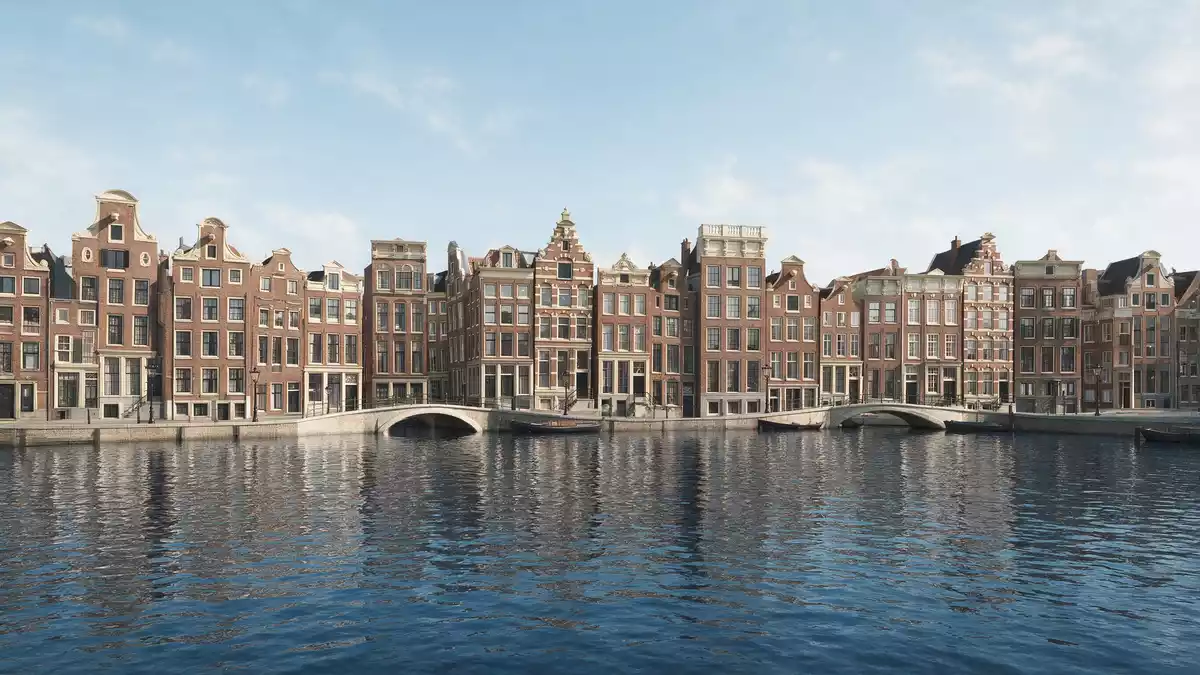
Grachten van Amsterdam in Amsterdam is the city’s canal ring, a seventeenth-century urban landscape of water, gabled houses and bridges. Its clean geometry is the attraction: a broad belt of canals that turns the centre into a readable map.
The canal ring as a seventeenth-century city plan
The canal district is part of the UNESCO World Heritage listing for the Seventeenth-Century Canal Ring Area of Amsterdam inside the Singelgracht. That designation recognises a large planned expansion created at the end of the sixteenth century and in the seventeenth century.
The main canals of the ring are the Singel, Herengracht, Keizersgracht and Prinsengracht. Together they form a concentric layout that frames the historic centre rather than hiding it.
Water, façades and bridges in one urban ensemble
The canal district presents water as the organising element, with masonry quays, narrow plots and stepped or crow-stepped gables lining the streets. The result is a dense sequence of houses and crossings, with the canal edges carrying most of the visual weight.
UNESCO describes the district as a model of large-scale town planning and as an artificial port city. The World Heritage Foundation in the Netherlands also notes the network’s 14 km of canals and 80 bridges.
Architecturally, the area belongs to the Dutch Golden Age, when Amsterdam expanded through disciplined plotting and canal construction. The historic fabric remains strongly tied to commerce, residence and the civic ambition of the period.
Why the canal ring matters in Amsterdam
What makes Grachten van Amsterdam distinctive is the way the canal ring remains legible across the city centre. It is not a single monument but a connected urban ensemble, with water, streets and façades forming one continuous composition.
The canal belt also carries the story of Amsterdam’s growth into a major port city in the seventeenth century. Its present-day appeal lies in that visible structure: canals in arcs, bridges across them and houses that still line the historic route.
Visiting Grachten van Amsterdam: what travellers from Western Europe should know
- The canal ring lies in central Amsterdam, within the historic city centre. Tram, metro, train and bicycle routes all reach the area easily.
- The district is level and urban, with bridges, narrow streets and canal-side pavements. A walk along the quays brings repeated crossings and changing views of the water.
- The Singelgracht marks the outer edge of the UNESCO-listed area. The main canals inside it remain the clearest way to read the historic layout.
- The official language is Dutch and the currency is the euro.
- Entry requirements depend on your nationality; UK travellers can check the FCDO travel advice at gov.uk/foreign-travel-advice, Irish travellers the Department of Foreign Affairs at ireland.ie.
Searching for Grachten van Amsterdam on social platforms
These links open searches for Grachten van Amsterdam on each platform.
Frequently asked questions about Grachten van Amsterdam
Where is Grachten van Amsterdam?
It is in central Amsterdam, inside the historic canal belt around the old city core. The UNESCO-listed area is the canal ring inside the Singelgracht.
What does a visit involve?
The setting is urban and level, with canals, bridges and streets that can be followed on foot. The layout is easy to read because the waterways run in arcs through the centre.
What makes it distinctive?
The distinctive feature is the seventeenth-century ring plan, not a single building. The canals, façades and bridges form a coherent historic ensemble.


